
The Dáil, Ireland’s national parliament, is scheduled to hold a confidence vote concerning the current government on Tuesday. This vote follows a week of widespread disruption caused by protests against fuel prices, which saw blockades at fuel depots and on major roadways across the country.
A motion of no confidence was initially formally lodged by the opposition. Typically, if such a motion is passed against the Taoiseach, the prime minister, or the government as a whole, the administration is required to resign. However, the government subsequently presented its own confidence motion. This procedural move takes precedence, and the debate on this motion is currently underway among Irish members of parliament, known as TDs.
Ministerial Resignation Expected
Anticipation within the Dáil suggests that most TDs will vote in favor of the government’s confidence motion, thereby affirming their support. Nevertheless, Michael Healy-Rae, a Junior Minister of State within the Department of Agriculture, has announced his intention to vote against the confidence motion. This decision means he will step down from his ministerial role.
Healy-Rae’s brother, Danny Healy-Rae, was also rumored earlier in the day to be considering a vote against the government. Both TDs from Kerry are part of an independent bloc that has previously supported the ruling coalition. Tensions were palpable within the Dáil chamber on Tuesday, with exchanges between TDs from both government and opposition parties during the debate.
Government Defends Handling of Fuel Crisis
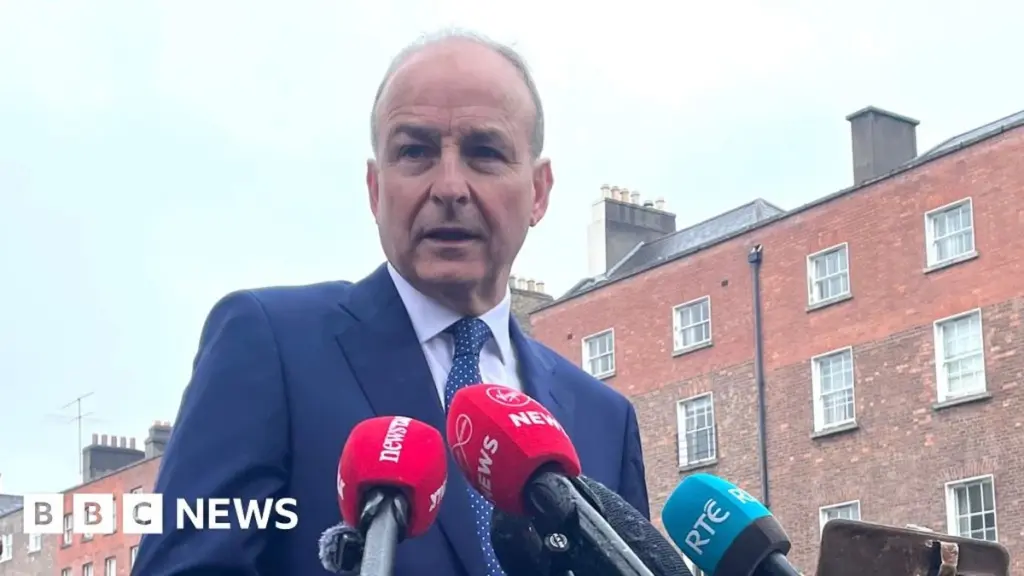
During the proceedings, Taoiseach Micheál Martin asserted that government measures, implemented since 2022, have successfully “shielded consumers” from the most extreme fuel price fluctuations. He directly challenged what he termed “false claims” by the opposition, specifically refuting Sinn Féin’s assertion that Ireland has been the “biggest profiteer” from elevated fuel costs, describing it as “flat out untrue.”
Martin detailed that the government’s expenditure on measures to alleviate fuel costs for citizens significantly surpasses the revenue generated from additional fuel taxes. He characterized the blockades at fuel depots and an oil refinery last week as “destructive.” The Taoiseach emphasized that no group has the authority to unilaterally represent the populace, condemning what he described as the “targeting” of An Garda Síochána (the Irish police force) and lorry drivers, alongside threats directed at politicians. He expressed concern over attempts to introduce “extreme ideologies” into public discourse.
Opposition Calls for General Election
Tánaiste (Deputy Prime Minister) Simon Harris contrasted Ireland’s response to economic shocks with that of other governments and administrations, including Northern Ireland. He noted Ireland’s entry into 2026 from a position of relative economic stability, projecting continued, albeit slower, economic growth.
Harris also criticized the opposition, particularly Sinn Féin, who interrupted his remarks. He stated unequivocally that no individual within the Republic has the right to impede the movement of others. Mary Lou McDonald, leader of Sinn Féin and the official opposition, called for a general election, declaring it was “time to go” for the current administration. She accused the government of consistently refusing to listen and of exacerbating an already critical situation. McDonald pointed to the government’s budget last October as the genesis of the current problems, and criticized the Dáil’s extended 20-day recess over Easter, suggesting the Taoiseach was “completely out of touch.” She conveyed that there is widespread demand for “real action” and “real leadership.”
Pearse Doherty, Sinn Féin’s finance spokesperson, echoed these sentiments, stating that the government has demonstrated “no real leadership” regarding fuel costs. He alleged that the government’s default response to citizens struggling with fuel expenses and subsequently protesting has been to “threaten them,” rather than to offer support.