
A remarkable advancement in medical treatment has seen a woman with three severe autoimmune conditions achieve near complete remission for almost a year, thanks to a novel therapy involving genetically modified immune cells. These modified cells were designed to eliminate the faulty immune cells responsible for attacking her own body.
Fabian Müller, based at the University Hospital of Erlangen in Germany, described the patient’s initial state as “deathly sick and bedridden” before the treatment. He noted that just seven days after the intervention, she was able to get out of bed. Within months, her recovery appeared to be substantial. Speaking eleven months post-treatment, Müller shared, “I just saw her yesterday. She’s perfectly fine.”
This case marks a significant development, as the woman is the first individual with three distinct autoimmune diseases to be successfully treated simultaneously using this method. Müller highlighted the “really crazy thing” about the situation: the ability to address all three conditions with a single therapeutic approach.
Understanding Autoimmune Diseases and the Body’s Defense Mechanisms
Normally, after encountering a threat like a viral infection, the body rapidly produces a large number of new immune cells. These cells undergo a rigorous selection process. Those that develop mutations are screened to identify cells capable of producing antibodies that effectively target the invading virus. Simultaneously, cells that mistakenly generate antibodies directed against the body’s own tissues are identified and eliminated.
However, this protective mechanism can falter. In some instances, self-targeting immune cells manage to bypass the screening process. Once they persist, these rogue cells have the potential to cause chronic health issues throughout a person’s life.
The Patient’s Journey Through Complex Autoimmune Conditions
For the patient in question, this failure in immune system regulation became apparent over a decade ago, coinciding with a pregnancy. Her body began producing antibodies that attached to her red blood cells, which are crucial for oxygen transport throughout the body. This attack led to the destruction of her red blood cells, a potentially life-threatening condition known as autoimmune haemolytic anaemia.
Compounding her health challenges, her immune system also initiated an assault on her platelets. These are cell fragments vital for blood clotting. This condition is termed immune thrombocytopenia.
Adding to the complexity, her immune system started producing antibodies that interfered with proteins responsible for preventing blood clots. This created a paradoxical risk: a heightened chance of forming dangerous blood clots, a state known as antiphospholipid syndrome.
Previous Treatments and the Advent of CAR T-Cell Therapy
Prior to this experimental treatment, the woman had undergone various therapies involving immune-suppressing drugs. Unfortunately, these treatments proved largely ineffective. Her survival depended on regular blood transfusions to compensate for the loss of red blood cells and on blood-thinning medications to mitigate the risk of clotting.
Her case was eventually referred to Müller and his team, pioneers in applying CAR T-cell therapy to autoimmune conditions, a technique they first employed in 2022. Previously, CAR T-cell technology had been exclusively utilized for the treatment of cancer.
How CAR T-Cell Therapy Works
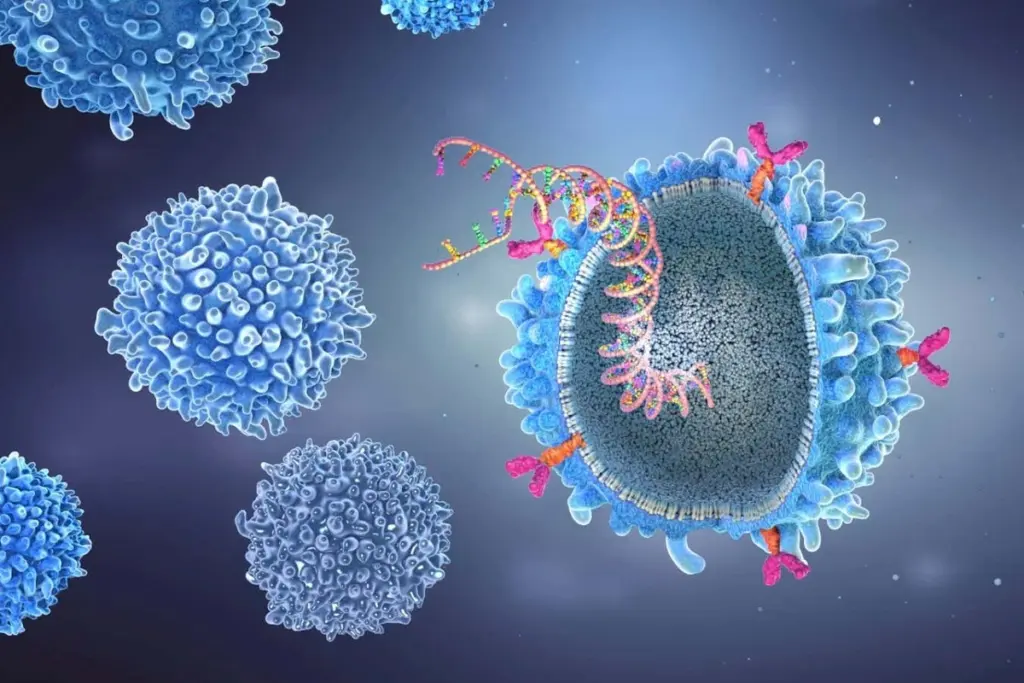
CAR T-cells, or Chimeric Antigen Receptor T-cells, are a specialized type of T-cell, which are immune cells normally tasked with identifying and destroying infected or cancerous cells. The process involves extracting a patient’s own T-cells. In a laboratory setting, these cells are genetically engineered to express CARs, enabling them to target specific molecules on harmful cells.
Once modified, these CAR T-cells are reinfused back into the patient. In this woman’s case, the CAR T-cells were engineered to specifically target and eliminate the immune cells responsible for producing antibodies.
Following infusion, the modified cells effectively destroyed her antibody-producing cells. This intervention did not result in the complete obliteration of her immune system. She retained unmodified T-cells, as well as her oldest antibody-producing cells, which are essential for long-term immunity against childhood infections and vaccinations. Müller explained, “They sit in the bone, they’re unaffected.”
Furthermore, her immune system recognized the CAR T-cells as foreign entities and eventually cleared them from her body within a few months. This allowed for the regeneration of new antibody-producing cells. The therapeutic outcome is a restored immune system, but critically, without the specific subset of antibody-producing cells that were causing her multiple autoimmune diseases.
Broader Potential and Observed Side Effects
The CAR T-cell approach has demonstrated significant promise for a spectrum of autoimmune disorders, including lupus, multiple sclerosis, colitis, and severe asthma. While CAR T-cell therapy for cancers can frequently trigger severe side effects, these have not been observed to the same extent in patients with autoimmune conditions.
Müller posits that the severity of side effects in cancer treatment may be linked to the massive destruction of cancerous cells. In the context of autoimmune diseases, a significantly smaller number of cells need to be eliminated, potentially explaining the milder side effect profile.
The woman in this report experiences some minor residual effects, which the medical team attributes to her prior drug therapies rather than the CAR T-cell treatment itself. Reuben Benjamin from King’s College London remarked on the remarkable nature of the therapy, noting its power while resulting in very few side effects in this instance, leading to the resolution of the underlying condition. He described the outcome as “fantastic.”
Current Status and Future Considerations
Benjamin also stated that most individuals treated for autoimmune conditions using CAR T-cell therapy have so far remained free of disease. However, he acknowledged that in some instances, the self-targeting cells have reappeared, necessitating a repeat CAR-T treatment.
“Longer follow-up is needed before anyone can speak confidently about cure,” advised Jun Shi at the Chinese Academy of Medical Sciences in Tianjin. His team is currently conducting a trial where CAR T-cell therapy is being administered to 15 individuals with autoimmune haemolytic anaemia.
The prohibitive cost of CAR T-cell treatments, which for cancers can range from $200,000 to $600,000 due to their personalized nature, is a significant hurdle. Müller, however, pointed out that the cumulative long-term costs associated with managing chronic autoimmune conditions can ultimately exceed this initial investment. He also emphasized the effectiveness of the therapy, often enabling patients to return to work, thus suggesting long-term financial benefits. “It costs a lot to start with, but you save a lot of money in the long run,” he commented.