
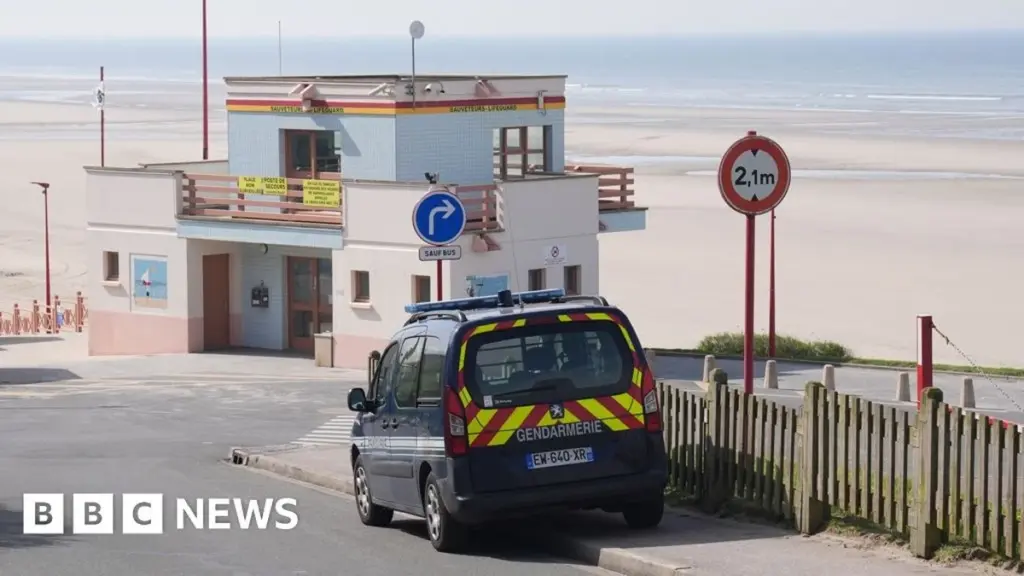
Four individuals have died off the northern coast of France while attempting to board a vessel destined for the English Channel. Local authorities confirmed the tragic incident, detailing how the group encountered peril while trying to embark.
The Pas-de-Calais prefecture reported that two men and two women perished after they “tried to board a water taxi.” They were subsequently “swept away” by the dangerous currents prevalent in the area. The prefecture stressed that the current death toll remains “provisional.”
In the immediate aftermath of the event, thirty-eight individuals were successfully rescued. Three of these required emergency medical attention from authorities on site. Among the rescued were two children, who were transported to a hospital as a precautionary measure.
The vessel in question managed to continue its voyage towards the United Kingdom, carrying approximately thirty passengers. A spokesperson for the UK government expressed deep sorrow upon learning of the fatalities. This individual characterized each death in the Channel as a “tragedy” and a “stark reminder.” The statement highlighted the dangers posed by criminal organizations that exploit vulnerable people for financial gain.
The UK government affirmed its commitment to “working relentlessly” with French authorities and international partners to prevent such hazardous journeys from occurring. Rescue operations commenced at dawn on Thursday, around 07:30 local time, following the incident near Saint-Etienne-au-Mont, south of Boulogne-sur-Mer in the Pas-de-Calais region.
Francois-Xavier Lauch, representing the Pas-de-Calais prefecture, indicated that the four deceased individuals were already a considerable distance out at sea when the incident unfolded. This brings the total number of confirmed deaths related to migrant crossings in the English Channel to six this year, following two recorded cases earlier in the year by the UN’s International Organization for Migration.
The frequency of attempted crossings has seen an increase in recent days, attributed to favorable weather conditions offering calmer seas in the Channel. This development follows reports from French media suggesting the French government had declined a proposal from UK Home Secretary Shabana Mahmood. The proposal aimed to deploy British Border Force vessels to intercept and turn back small boats.
Chris Philp, the Conservative shadow home secretary, commented on the extreme risks associated with Channel crossings, particularly on “often faulty and defective dinghies.” He criticized the Labour party’s approach, stating that their perceived inaction allows these crossings to continue, leading to loss of life. Philp argued that Labour’s reluctance to implement decisive measures on illegal immigration exacerbates the crisis.
He posited that halting these crossings requires more than just interdictions on beaches. Swift removal of individuals entering the country illegally, he believes, is necessary to diminish the incentive for undertaking such perilous journeys. Imran Hussain, director of external affairs at the Refugee Council charity, contended that dangerous Channel crossings will persist unless the UK establishes more “safe routes.”
Hussain explained that a “lack of safe routes to the UK” forces individuals to feel they have no viable alternatives for rebuilding their lives. He emphasized that border policing in the Channel alone is insufficient to prevent dangerous crossings. Hussain advocates for enhanced collaboration with European neighbors to share responsibilities and create more secure pathways for individuals seeking to reach the UK.
The Home Office has been approached for comment regarding these matters. Over the past three years, Channel crossings have escalated significantly. In 2025, 41,472 individuals arrived in the UK via small boat. Between January 1 and April 8 of the current year, a total of 5,062 people crossed the English Channel from France by small boat. This figure represents a 30% decrease compared to the 7,228 individuals who had arrived by the same point last year.
People smugglers have reportedly begun employing “taxi-boats” as a new tactic to evade law enforcement. Rather than inflating their vessels in coastal dunes, which are often under police surveillance, smuggling gangs are launching them from more concealed locations, sometimes many kilometers from the primary departure beaches. The boats then travel along the coastline, functioning similarly to taxis or buses, to collect their paying passengers who now wait out at sea, beyond the immediate reach of police patrols.