
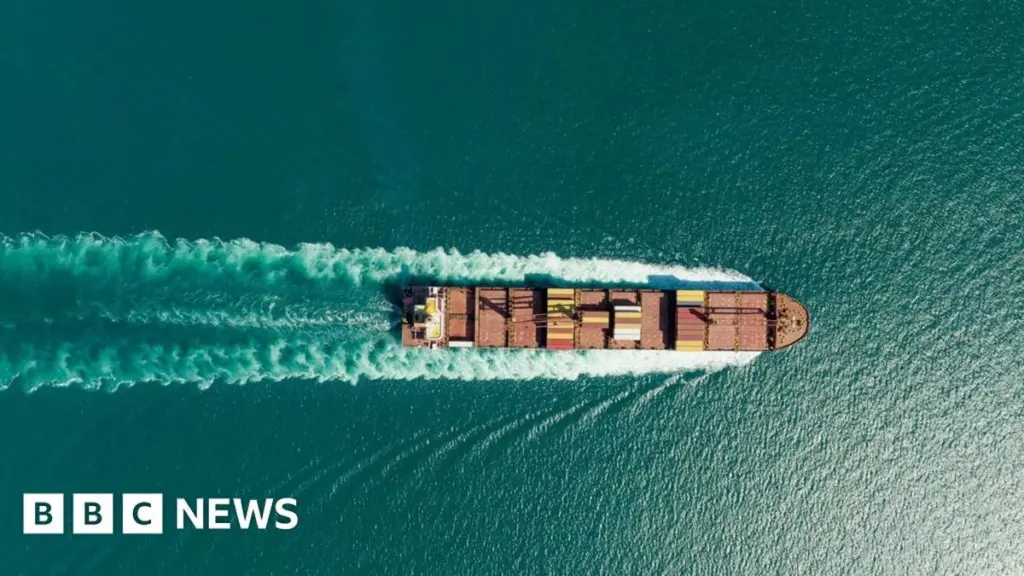
A ship with French ownership has successfully transited the Strait of Hormuz. This passage occurs more than a month after the US-Israeli conflict with Iran effectively disrupted this critical maritime artery.
The container ship, operating under the Malta flag and belonging to the French company CMA CGM, proceeded through the strait on Friday. This confirmation came from BFM TV, a media organization that is itself owned by the shipping company. CMA CGM has not provided any commentary on the matter.
Shipping analysts at Kpler have identified this as the first ship associated with a major Western European firm to traverse the strait since hostilities commenced. Despite Iran’s stated allowance for “non-hostile vessels” to use the waterway, the ongoing conflict, marked by several ship attacks, has significantly curtailed normal transport operations.
Tracking data indicates the French-owned vessel passed in proximity to the Omani coastline, on the side of the waterway opposite Iran. The nature of its cargo remains undisclosed.
A Japanese oil tanker also followed a similar route exiting the Strait of Hormuz.
Maritime news and intelligence service Lloyd’s List reported that several vessels transiting the strait on Thursday maintained an “unusually close” proximity to the Omani coast.
Broader Context and Trade Impact
US President Donald Trump has publicly suggested that the United States could facilitate the reopening of the strait. He posted on Truth Social, stating, “With a little more time, we can easily OPEN THE HORMUZ STRAIT, TAKE THE OIL, & MAKE A FORTUNE.” He further questioned, “IT WOULD BE A ‘GUSHER’ FOR THE WORLD???”
The Strait of Hormuz serves as a crucial conduit for approximately one-fifth of the world’s oil and liquefied natural gas exports originating from the Gulf countries.
Following the outbreak of the conflict in late February, shipping services were suspended. According to Lloyd’s List, this suspension left around 200 vessels stranded in the adjacent waters.
The substantial reduction in traffic through the strait has precipitated a sharp increase in global oil prices. This, in turn, has driven up fuel costs and heightened concerns about escalating inflation worldwide.
Continued, Though Reduced, Traffic
While maritime traffic through the strait has seen a decrease of approximately 95% compared to pre-conflict levels, it has not ceased entirely.
Data analyzed by BBC Verify in late March indicated that around 100 vessels have managed to pass through the Strait of Hormuz, averaging about five to six ships per day.
Verify’s analysis further revealed that roughly one-third of these vessels had connections to Iran. Other ships observed in transit were linked to countries such as Pakistan and India.