
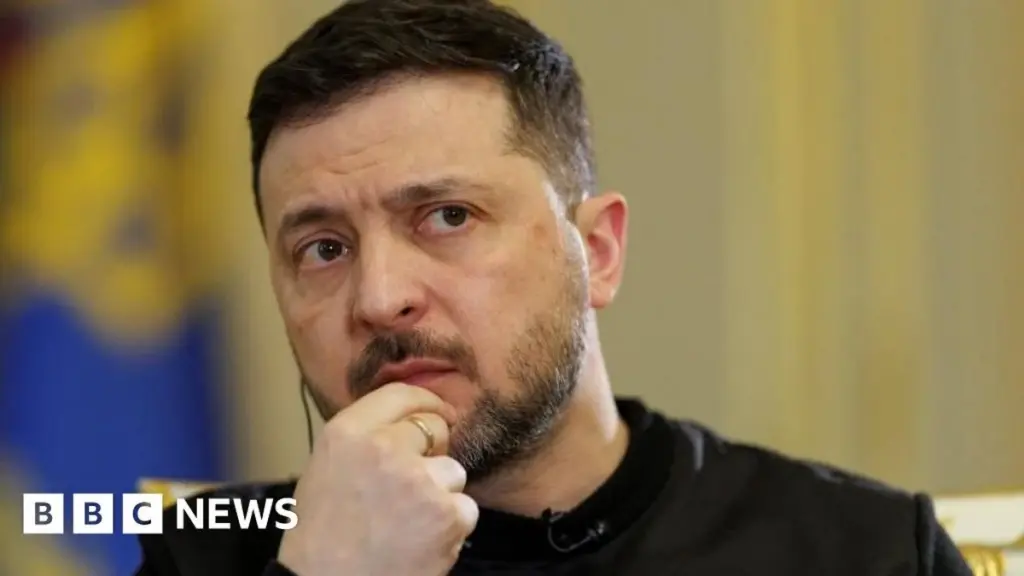
Volodymyr Zelensky, the President of Ukraine, has stated that some of Ukraine’s international partners have encouraged a decrease in attacks targeting Russia’s energy infrastructure. This appeal comes amidst a broader global fuel crisis. However, Zelensky stipulated that such reductions would only materialize if Russia ceased its own attacks on Ukrainian energy facilities.
In a voice message shared with journalists via WhatsApp, the Ukrainian leader explained that Ukraine’s actions against Russia’s energy system were a direct response to prior Russian aggression. The specific nations that have conveyed these requests remain unspecified. It is noted, however, that China and India continue to rely significantly on Russian oil, while the European Union maintains a substantial dependence on Russian gas supplies.
Zelensky’s remarks follow a series of long-range Ukrainian strikes aimed at Russia’s energy sector. Notably, these operations have included targeting the crucial oil export terminal located at the port of Ust-Luga, near St. Petersburg.
“We have received messages from some of our partners asking about how our responses against Russia’s oil sector – the energy sector – can be reduced,” Zelensky said in the voice message. “If Russia is ready not to strike Ukraine’s energy, then we’ll respond by not attacking theirs.”
The global energy landscape has been significantly impacted by the conflict. In response to escalating energy prices, partly attributed to the war and disruptions in key shipping routes like the Strait of Hormuz, the United States recently relaxed certain sanctions previously imposed on Russian oil. Despite this, China and India remain the principal purchasers of Russian crude oil. In February, these two nations accounted for 85% of Russia’s oil exports, according to data from the Centre for Research on Energy and Clean Air (CREA).
Concurrently, the European Union represents the largest market for Russian gas, absorbing 34% of its total volume, and 49% of its liquefied natural gas (LNG) exports. Ukraine, following repeated Russian assaults on its own oil refineries, has become heavily reliant on fuel imports. These imports are largely channeled through countries such as Poland, Greece, Lithuania, and Turkey. Previously, a significant portion of Ukraine’s gas imports originated from Hungary. However, these supplies were reportedly halted after Budapest accused Kyiv of delaying the repair of a pipeline carrying Russian oil, purportedly linked to Hungary’s dissatisfaction with Ukraine’s stance on an EU loan.
Details regarding the precise targets of Ukraine’s strikes on Russian energy infrastructure and their resultant impact are maintained as closely guarded secrets. This lack of transparency limits public understanding of the full scope of these operations.
While attention has recently been drawn to Ukrainian strikes on energy facilities, industrial defense plants have also been targets. Zelensky mentioned on a Saturday that Ukrainian attacks on the Ust-Luga oil terminal earlier that week had reduced the port’s operational capacity by 60%.
These statements were made following Zelensky’s visit to Saudi Arabia, the United Arab Emirates, Qatar, and Jordan. These nations have themselves faced significant challenges due to what Zelensky described as “marauded” Iranian aerial attacks. During his tour, he offered Ukraine’s drone technology and expertise, while also seeking assistance for Ukraine’s defense against Russian missile strikes.
The rise in global oil prices, while providing a financial boost to Russia’s war effort, also poses challenges to Ukraine’s capacity to sustain its defense. In response to a question posed by the BBC on Saturday, Zelensky confirmed that while the Ukrainian army currently possessed adequate fuel reserves, he had aimed to secure additional supplies during his visit to the Gulf region.
He further noted that Ukraine possesses valuable experience in unblocking trade routes, citing its success in repelling Russian attempts to disrupt grain exports via the Black Sea. This experience, he suggested, could be relevant to managing the situation concerning the Strait of Hormuz. Russian attacks have inflicted considerable damage on Ukraine’s energy infrastructure, resulting in widespread power and heating outages for over a million people during winter months.