
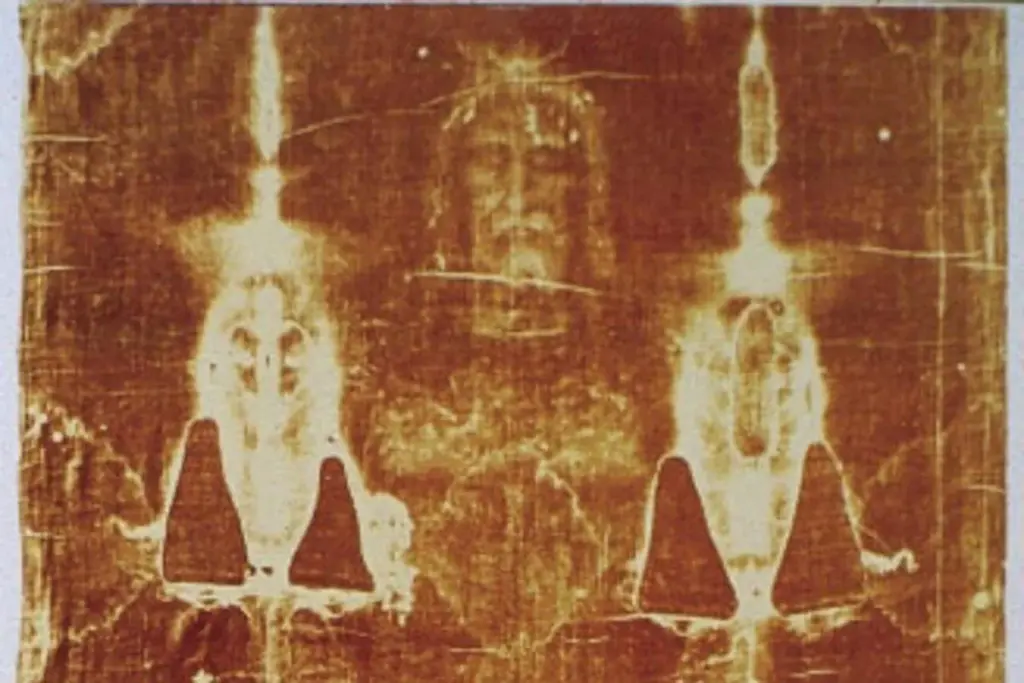
Extensive DNA analysis has revealed a wide spectrum of animal, plant, and human material on the Turin Shroud, presenting a complex picture of the renowned relic. This cloth is believed by some to be the burial shroud of Jesus Christ, having been used to wrap his body after his crucifixion approximately two millennia ago.
Measuring 4.4 meters in length and 1.1 meters in width, the shroud stands as one of the world’s most recognized and debated Christian artifacts. Its earliest documented appearance dates back to France in 1354. For close to five centuries since, it has been housed at the Cathedral of Saint John the Baptist in Turin, Italy.
Initial radiocarbon and accelerator mass spectrometry dating performed by researchers in 1988 indicated that the shroud was created between 1260 and 1390. This timeline effectively ruled out the possibility of its connection to Jesus Christ, suggesting its origin lay in the later medieval period. Nevertheless, this dating remains a point of contention among certain Christian scholars.
A significant development occurred in 2015 when Gianni Barcaccia from the University of Padova, Italy, and his research team examined material gathered from the shroud in 1978. Their initial findings proposed that the cloth might have originated in India.
Barcaccia, who has not provided interviews for this report, has since spearheaded a new study. This latest research involved re-analyzing the same 1978 sample material. His team discovered that the shroud has preserved a remarkably diverse range of DNA from both medieval and modern sources.
The genetic sources identified include common domestic animals such as cats and dogs. Farm animals like chickens, cattle, goats, sheep, pigs, and horses were also detected, alongside wild species including deer and rabbits.
Further analysis uncovered traces of several fish species, identified as grey mullet, Atlantic cod, and various ray-finned fishes. The researchers also found evidence of marine crustaceans, flies, and aphids. Additionally, arachnids, specifically dust mites, skin mites, and ticks, were identified on the fabric.
Among the most prevalent plant species whose DNA was preserved are carrots and multiple types of wheat. The presence of peppers, tomatoes, and potatoes was also noted. These particular plants are believed to have been introduced to Europe after European explorers commenced voyages to Asia and the Americas, suggesting a post-Columbian contamination timeline for these specific traces.
However, the study’s authors noted that it was not possible to pinpoint the precise timing of these contamination events involving both plant and animal materials.
The research team also identified human DNA from numerous individuals who have handled the shroud, including members of the 1978 sampling team themselves. As the researchers stated in their findings, “The Shroud came into contact with multiple individuals, thereby challenging the possibility of identifying the original DNA of the Shroud.”
Approximately 40 percent of the human DNA identified on the shroud originates from Indian lineages. Barcaccia and his colleagues suggest this could stem from historical trade routes or the Roman Empire’s practice of importing linen from regions bordering the Indus Valley.
The research team concluded that, “The DNA traces found on the Shroud of Turin suggests the potentially extensive exposure of the cloth in the Mediterranean region and the possibility that the yarn was produced in India.”
Anders Götherström of Stockholm University in Sweden commented that the earlier 1988 dating of the shroud to the 13th century is widely accepted within the scientific community. He added, “While there is some debate around the 1988 radiocarbon dating, most researchers consider it sufficiently robust.”
Götherström expressed skepticism regarding the theory that the cloth originated in India. He stated, “I still see no reason to doubt that the shroud is French and from the 13th-14th century.”
He further noted, “The shroud has a history of its own as an important relic, and that history may be more interesting than a legendary origin… without scientific support.”