
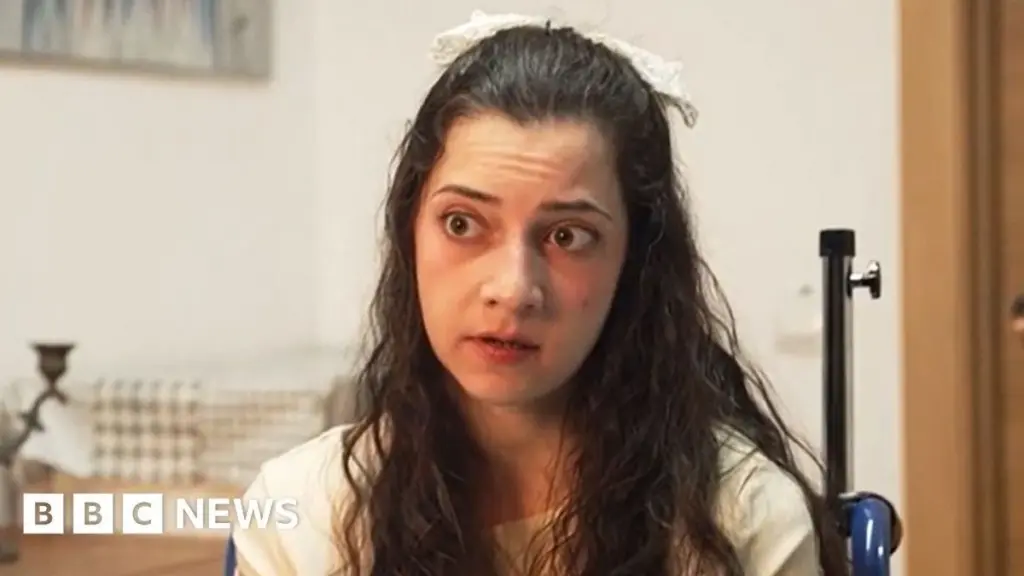
The death of a 25-year-old Spanish woman through euthanasia, following a prolonged legal dispute with her father, has ignited discussions regarding the state’s responsibility in providing care and the reasons for the significant delays in fulfilling her wish to end her life.
Noelia Castillo, who became paraplegic after an attempted suicide in 2022, passed away on Thursday evening at a hospital in Barcelona. The regional government of Catalonia had initially granted her the right to assisted dying in 2024.
However, the process was halted at the eleventh hour due to legal challenges initiated by her father, with support from the advocacy group Christian Lawyers. This case garnered considerable attention across Spain, as Christian Lawyers actively sought to prevent her death until the very end.
After an 18-month legal struggle, the European Court of Human Rights (ECHR) ruled in Noelia Castillo’s favor earlier this week, leading to the confirmation of her death on Thursday evening.
Personal History and Support Lacking
Castillo had spent a significant portion of her childhood in care facilities. She had previously spoken about the profound impact on her mental health stemming from her father’s struggles with alcohol, as well as sexual assaults by an ex-boyfriend and several other men at a nightclub.
In a television interview conducted just days before her death, she stated that no family members supported her decision to pursue euthanasia. She explicitly mentioned that her father “hasn’t respected my decision and never will.”
“I want to go in peace now and stop suffering,” Castillo told Antena 3 TV the day prior to her passing. Her mother, despite disagreeing with the decision, was present with her at the Sant Camil Barcelona clinic.
A former acquaintance, Carla Rodríguez, attempted to access the hospital to dissuade Castillo from her choice. However, Spanish media reported that police prevented Rodríguez from entering the premises.
British pianist James Rhodes, a resident of Spain, made a public appeal via social media for Castillo to reconsider. He also offered to cover her medical expenses until she felt “able to take this decision from a slightly more tranquil place.”
Criticism Directed at Institutional Failures
Christian Lawyers asserted that Castillo’s case highlighted shortcomings in her care provision. José María Fernández, representing Christian Lawyers, commented, “For a girl who obviously has had a very tough life, which we all regret, the only thing that could be offered to her by the healthcare system is death.”
The opposition conservative People’s Party (PP), which had voted against a euthanasia law in 2021, echoed similar sentiments. PP leader Alberto Núñez Feijóo posted on social media, “The institutions that should have protected Noelia failed her.” He further stated, “I refuse to believe that the state did not have the tools to give her care.”
In a related statement, the Catholic Church, which maintains close ties with the PP, described Castillo’s story as reflecting “an accumulation of personal suffering and institutional failures.”
Counterarguments on Legal Obstacles
Conversely, other observers have raised concerns about the father’s and Christian Lawyers’ actions, which they viewed as creating legal impediments to Castillo’s wishes.
The left-leaning newspaper El País, in an editorial, observed that “The desire to put an end to her suffering by using the right to euthanasia was… sabotaged by a legal crusade that added nearly two years of pain to her existence.”
Alberto Ibáñez, a member of Congress for the left-wing Sumar platform, acknowledged the complexity of the issue but stated, “19 doctors have supported her decision and we should be respectful of it.”
Spain’s Euthanasia Legislation
Spain is among a select group of European nations, including the Netherlands, Belgium, and Luxembourg, that have enacted laws permitting physician-administered euthanasia.
Under Spain’s 2021 legislation, any adult over 18 requesting euthanasia must be experiencing an incurable disease or a “serious, chronic and disabling condition.” Their decision must also be demonstrably made free from external pressure.
The process requires the request to be submitted in writing on two separate occasions and subsequently certified by a physician. This physician must then consult with another medical professional. Following this, the request is forwarded to a Guarantee and Evaluation Commission, which is tasked with determining whether all conditions have been met.
According to available government data, 426 requests for assisted dying were approved in 2024. This marks the first instance where a case necessitated a judicial decision by a judge.