
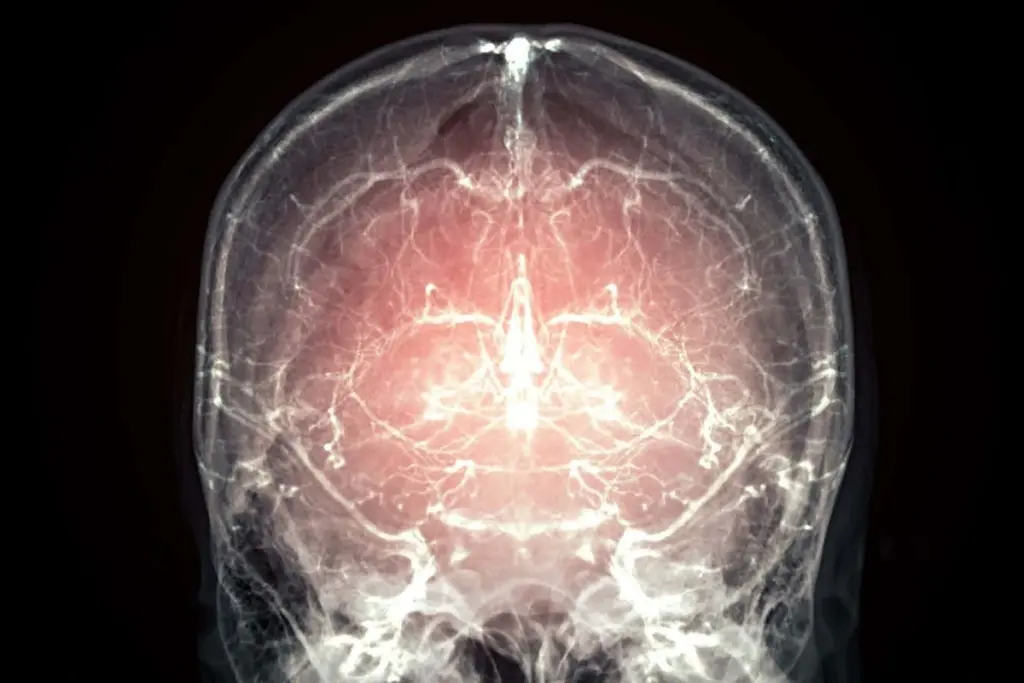
A significant breakthrough in preservation technology has been announced: an entire mammalian brain has been successfully kept intact and is slated to be offered to individuals facing terminal illnesses. The ultimate aspiration behind this technique is to safeguard all neural information deemed essential for the future reconstruction of a person’s mind.
“Individuals would need to donate their brain and body for scientific research,” explained Borys Wróbel of Nectome, a San Francisco-based company specializing in memory preservation. “However, our company’s offering is for their body and brain to be maintained, essentially indefinitely. This is in the hope that, at some point in the future, it will become possible to extract the information held within the brain and reconstruct the individual, allowing them, in a sense, to continue their existence.”
When it comes to preserving the intricate architecture of the brain, the timeframe is exceptionally critical. Within mere minutes of blood circulation ceasing, enzymes begin to degrade neurons, and cells initiate self-digestion.
Cryonics, a practice typically involving the preservation of bodies at sub-zero temperatures, is based on the hope that future advancements might allow for revival if a cure for a person’s medical condition is discovered. Traditionally, this method aims for rapid brain preservation following natural death by cooling the organ and introducing fixatives. However, if a cryonics team is not present at the moment of death, some level of deterioration will have already occurred before preservation can commence.
To overcome this challenge, Wróbel and his team have developed a specialized protocol that works in conjunction with physician-assisted death. This allows individuals with terminal illnesses to determine the timing of their passing. The strategy is to intervene immediately after death, providing scientists with the optimal opportunity to preserve the brain in a condition that closely mirrors its state during life.
Wróbel’s group conducted tests of this protocol on pigs, an animal whose brain and cardiovascular anatomy bears similarities to that of humans. The procedure involved inserting a cannula into the heart approximately one minute after cardiac arrest. Subsequently, the blood was flushed out, and preservation solutions were introduced into the brain. These solutions contain aldehyde chemicals that form molecular bonds between cells, effectively halting cellular activity.
Following this, cryoprotectants are introduced to replace the water within the tissue. This step is crucial for preventing the formation of ice crystals during cooling, which otherwise would cause cellular damage. The brain is then cooled to approximately -32°C, a temperature at which the cryoprotectants solidify into a glass-like state, enabling the brain’s structure to be preserved indefinitely.
To evaluate the effectiveness of this preservation technique, the team extracted samples from the brain’s outer layer for microscopic examination. Initial attempts, where perfusion began around 18 minutes after death, revealed evident signs of cellular damage. However, after reducing the delay to just under 14 minutes, the tissue samples exhibited excellent preservation of fine structures, including neurons, synapses, and their constituent molecules.
“In theory,” Wróbel stated, “we could use this protocol to reconstruct the three-dimensional structure of neurons and their interconnections.” This intricate network is known as the connectome. Mapping the connectome holds the potential to deepen our understanding of how the brain generates thoughts, emotions, and perceptions. Currently, scientists have only managed to map a small portion of a mouse brain using this method, a process that took seven years to complete.
Challenges and Future Prospects
Despite advancements in both cryopreservation and computing, the concept of “reanimation” remains beyond current capabilities. “The approach is essentially a method of fixation using preserving chemicals that maintains the brain and neuron structure, but without any expectation of biological viability,” commented Joao Pedro de Magalhaes from the University of Birmingham, UK. He further elaborated, “There is currently no known way to revive an organ preserved in this manner; it is akin to embalming.”
De Magalhaes also expressed skepticism regarding the possibility of a person “living on” through connectome reconstruction. “Even a perfect replica of my mind would fundamentally be a different entity,” he stated, acknowledging that “some individuals perceive this as a potential route to a form of ‘virtual immortality.'”
Nevertheless, Wróbel’s team remains optimistic about the prospect of recreating the human mind, whether digitally or biologically. “While we are neutral regarding the specific revival methods, we believe we may be able to preserve all the necessary information for revival,” Wróbel noted.
The team at Nectome is reportedly preparing to invite individuals diagnosed with terminal illnesses to Oregon. There, they will have the opportunity to spend time with their families before undergoing the new preservation protocol. “They would come to us, take the medication—which would need to be prescribed by an independent physician, not us—and then, in accordance with legal provisions, we would begin the procedure,” Wróbel explained.
Irrespective of speculative future applications, this research prompts profound philosophical inquiries into our understanding of death. “It has long been recognized that declaring death based on the cessation of blood circulation is a formal prognosis of futility, rather than a metaphysical event,” observed Brian Wowk of 21st Century Medicine in Fontana, California.
“The capacity to preserve the detailed structural and molecular composition of a brain, potentially even retaining what defines a person at their most fundamental level—even after significant periods of stopped blood circulation, as this study demonstrates—underscores that the distinction between life and death is more complex than simply the cessation of vital functions,” he concluded.