
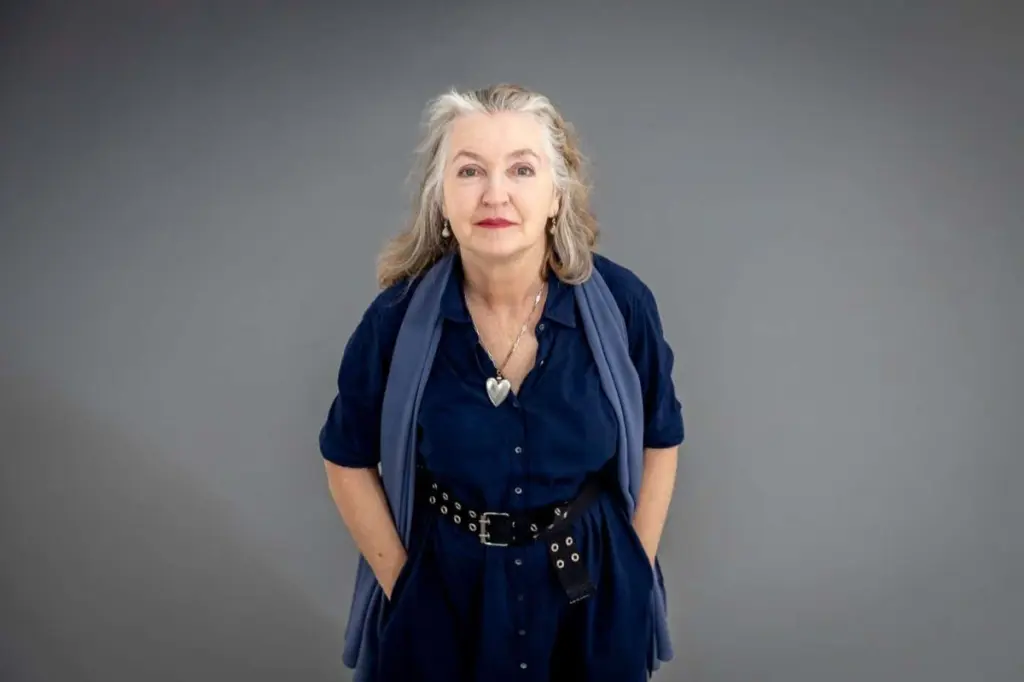
Rebecca Solnit, an activist and author of over twenty-five books, including the notable essay collection “Men Explain Things to Me,” presents a compelling argument in her latest work, “The Beginning Comes After the End.” Solnit posits that the past fifty years have witnessed a significant revolution in rights and ideas. This transformation, she contends, stems from a burgeoning understanding of the intricate, interdependent relationships that bind both nature and humanity.
In a recent conversation with Rowan Hooper for New Scientist’s “The World, The Universe and Us” podcast, Solnit discussed the genesis of her book and offered perspectives on the path forward. Her insights were prompted by a quote from scholar Thomas Berry, delivered in 1978, which highlighted Earth’s predicament due to a deficiency in its dominant narratives. This resonated with the ideas of ecologist David Abram, who suggested that restoring the planet necessitates a fundamental re-storying of our connection to it. Solnit explored why such new narratives are crucial.
Reclaiming Narratives and Redefining Progress
Solnit suggests that many of these “new” stories are, in fact, old narratives resurfacing, particularly for Indigenous peoples, after being overshadowed by white and industrial capitalist perspectives. Berry’s observation arrived at a time when the influence of white-settler colonialist culture felt virtually all-encompassing. However, the world has since undergone a profound shift. A notable and deeply moving development for Solnit has been witnessing Native Americans actively reclaim their land rights, languages, and heritage. Their growing prominence in public discourse, especially concerning the history of the Americas and humanity’s relationship with the natural world, positions them as vital leaders, particularly within the climate movement. Their contributions, Solnit notes, have fundamentally reshaped how many others perceive the world.
This evolution allows for the consideration that the era of colonialism and industrialism may have been a misguided detour, a significant error whose severe consequences are now manifest in the form of climate chaos and broader environmental instability. Solnit believes these older narratives are now integrating with scientific insights that emphasize interconnectedness, process, and symbiosis, painting a picture where “everything is connected.”
Nature and Culture: A Dissolving Divide
A central theme in Solnit’s book is the inextricable link between humanity and nature, a concept increasingly validated by scientific discovery. She wrote the book, in part, because she observes many people living as if in an eternal present, seemingly unaware of how dramatically the world, including prevailing narratives, values, and assumptions, has transformed. The dismantling of some long-held beliefs is also a significant factor.
“When I was young,” Solnit recalled, “people spoke of nature and culture as distinct entities. Animals were often perceived as lacking language, intelligence, or emotion, and as incapable of using tools. All of that has been wonderfully dismantled by figures like Jane Goodall and her successors.”
The emergence of new scientific understandings from various disciplines now portrays humanity as fundamentally inseparable from the natural world. A pivotal figure in this paradigm shift is microbiologist Lynn Margulis. Her groundbreaking paper in the 1960s, initially rejected by approximately twelve publishers, proposed that eukaryotic cells originated from the fusion of two distinct cell types. Margulis further explored various forms of symbiosis, identifying it as foundational to complex life. She advocated for a view of life emerging through collaboration and coming together, rather than perpetual competition – a stark contrast to the prevalent social Darwinist narrative of the time, although Solnit is careful not to attribute this misinterpretation to Darwin himself.
This understanding underscores that every component of a system plays a role in its overall integrity. Removing even a single part can compromise the entire system. This perspective sharply contrasts with mechanistic approaches to environmental management, which often involve pesticides and the eradication of wildlife deemed competitive with livestock or crops, failing to recognize the ecological roles of creatures like coyotes or hawks.
The Slow Pace of Change Amidst Urgent Challenges
Despite these evolving understandings, accelerating the pace of change to counteract the planet-devouring trajectory of ever-expanding capitalism presents a considerable challenge. Solnit, as a climate activist, consistently emphasizes that vast majorities globally desire climate action and environmental protection, a sentiment supported by numerous surveys and studies. She points to a minority, either directly or indirectly benefiting from the fossil fuel industry, as the primary obstacle to necessary transitions.
Simultaneously, progress is being made through advancements in farming techniques and the expansion of renewable energy. Yet, Solnit concedes that these efforts are neither rapid enough nor sufficient to meet the escalating crisis. The urgency of climate change, she stresses, is unlike that of other human rights struggles. Historically, achievements like securing voting rights for women in the U.S. took eighty years from the inception of the campaign. With climate change, however, “we don’t have time,” Solnit stated.
From “Hope in the Dark” to Enduring Change
Solnit’s earlier book, “Hope in the Dark,” written during George W. Bush’s presidency amidst the Iraq War, focused on the activist achievements that could catalyze needed change. The current political climate, marked by President Trump’s rollback of progress, prompts questions about whether her new book serves as a continuation of those themes. Solnit explained that “Hope in the Dark” aimed to offer a different perspective on the nature of change.
“I see many activists thinking, if we have a protest on Tuesday and we don’t get what we want on Wednesday, then we achieve nothing,” she said. “Whereas so often change is slow, unpredictable, and indirect. Perhaps we underestimate the power of stories, culture, and grassroots activism to radically remake the world.”
Her current book, Solnit argues, demonstrates how, when aggregated, these efforts have profoundly transformed the world. She asserts that we inhabit a radically different reality than the one into which she was born. Like “Hope in the Dark,” the new book seeks to provide readers with a deeper, longer-term perspective, encouraging them to break free from stagnation. Solnit aimed to equip readers with narratives that highlight their own power, acknowledging that embracing this power also entails accepting responsibility.
Technological Shifts and Shifting Landscapes
Generations often reflect that “it wasn’t like this in my day,” but recent years have brought exceptionally rapid change. Solnit, residing in San Francisco, observes how the city, once synonymous with the counterculture of the 1960s, has become a hub for technology and Silicon Valley. This technological transformation, she notes, has come at a cost.
Living in a region where the Sierra Club, one of the earliest significant environmental organizations, was founded, Solnit once felt a deep pride in her home’s contributions to the world. However, the ascendance of Silicon Valley into a global power, particularly with the advent of artificial intelligence, has been “heartbreaking.” She now views the global destruction often linked to these powerful tech entities with horror.
Many technological developments, Solnit contends, could have taken a different course. Search engines and social media, she believes, should have been managed as public commons for the collective good. Instead, they are driven by profit, often through the harvesting of user data, a model now replicated by AI.
The Long View and Persistent Hope
Solnit’s book resonates with climate scientist Tim Lenton’s concept of “Positive Tipping Points,” which explores how small, cumulative actions can precipitate significant change. This aligns with Solnit’s focus on the numerous victories that may go unnoticed. She has frequently heard pronouncements of feminism’s failure, implying that if millennia of patriarchy haven’t been dismantled within a single generation, the effort is in vain. Solnit counters this by suggesting that these are not failures, but rather promising beginnings where the work continues.
She recalls growing up in an era where rivers catching fire was not uncommon, and many environmental issues lacked even the vocabulary for discussion. Her aim is to help people grasp the profound extent of the changes that have occurred.
Speaking from California, where solar energy frequently supplies more than 100% of the state’s daily electricity needs due to substantial investments in renewables, Solnit observes that the astonishing scale of the renewables revolution often goes unappreciated. This longer perspective, akin to the “tortoise at a mayfly party,” perceives time differently. Mayflies, living in a perpetually short-term present, tend to overlook these developments. Solnit suggests that genuine hope often emerges not from anticipating the future, but from acknowledging the past.
“I’m trying to give people back their own history in our lifetimes,” she stated. “I want to invite them to recognize the many positive changes around rights for everybody, around a kind of great equalization.”
Solnit concludes that humanity is not at the end of the story but in its midst. The subsequent direction remains uncertain. While hopeful, she avoids prophecy, grounding her optimism in the future’s inherent uncertainty and humanity’s ongoing role in shaping it. Even amidst profound and disheartening setbacks, Solnit wants people to recognize the significant changes already achieved, the considerable power they possess, and the numerous victories already won.
This is an edited version of an interview with New Scientist’s podcast.