
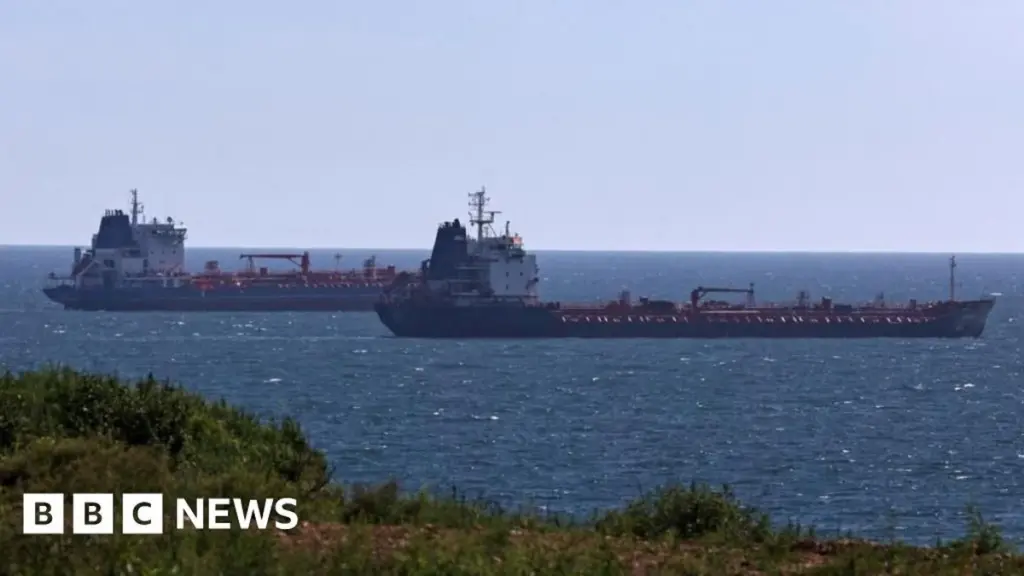
The United States has initiated a temporary easing of sanctions related to Russian oil purchases. This measure specifically applies to oil and petroleum products that were already loaded onto vessels at sea. The move aims to mitigate the economic repercussions stemming from the ongoing conflict involving the US and Israel against Iran.
U.S. Treasury Secretary Scott Bessent articulated that this temporary waiver is intended to foster “stability in global energy markets.” He further cautioned that this “short-term measure” would not confer “significant financial benefit to the Russian government.” Russia has indicated that approximately 100 million barrels of oil are currently in transit.
Impact of Regional Instability on Global Markets
Heightened security concerns in the Gulf region, marked by attacks on maritime vessels and energy infrastructure, have significantly disrupted global energy markets. The effective closure of the Strait of Hormuz, a critical chokepoint for oil transport, has compounded these issues.
On Thursday, oil prices surged past the $100 per barrel mark once again. This price escalation occurred concurrently with a decline in stock markets, following reports of three additional cargo vessels being struck in the Gulf. Iran’s newly appointed supreme leader had previously pledged to maintain the blockade of this vital shipping lane.
Approximately one-fifth of the world’s oil supply typically transits through the Strait of Hormuz. The current situation, with oil tankers stranded and unable to navigate the narrow channel between Iran and Oman, has contributed to a growing supply deficit.
Details of the US Waiver
Secretary Bessent clarified that the temporary waiver is set to remain in effect until April 11th. Its application is restricted to “permit countries” that are observing sanctions.
“The temporary increase in oil prices is a short-term and temporary disruption that will result in a massive benefit to our nation and economy in the long-term,” Bessent stated, suggesting a belief that the broader economic advantages would outweigh immediate price fluctuations.
This policy adjustment was announced shortly after Washington indicated its intention to release 172 million barrels of oil from its strategic petroleum reserve, a decision made on Wednesday.
International Reactions and Perspectives
Kirill Dmitriev, an economic envoy for Russian President Vladimir Putin, commented that the U.S. stance effectively “acknowledges the obvious: without Russian oil, the global energy market cannot remain stable.” He further posited that “Amid the growing energy crisis, further easing of restrictions on Russian energy sources appears increasingly inevitable.”
Conversely, Bill Browder, a former financier with extensive experience in Moscow, who spearheaded efforts to impose sanctions on Russian officials accused of corruption, characterized the U.S. decision as “a terrible decision that will enrich Putin and prolong the war in Ukraine.”
Ukrainian President Volodymyr Zelensky had not yet issued a formal statement regarding the latest announcement. However, he had previously expressed on Tuesday that any relaxation of sanctions would constitute a “serious blow” to Ukraine and a “concession” to Russia, thereby enabling Moscow to procure additional weaponry.
French President Emmanuel Macron expressed that the closure of the Strait of Hormuz “in no way” justifies the lifting of sanctions against Russia. Macron is scheduled to meet with Zelensky in Paris to deliberate on strategies for increasing pressure on Moscow. The Elysée Palace indicated that the discussion would center on bolstering Kyiv’s defensive capabilities and addressing Russia’s covert tanker fleet employed for transporting sanctioned oil.
The United Kingdom will not be following the United States’ lead in easing sanctions on Russian oil, according to energy minister Michael Shanks, who spoke on Friday. He conveyed to BBC Radio 4’s Today programme the concern that “What we absolutely can’t have is Putin sitting in the Kremlin seeing this as a chance to invest in the war machine.”
Foreign Secretary Yvette Cooper accused Russia and Iran of attempting to “hijack the global economy,” highlighting the observable connections between the two nations. Cooper elaborated on this during a visit to Saudi Arabia, stating, “We’re seeing it in terms of technology, we see it in terms of the approach, we see it in terms of these kinds of tactics, and we see it in terms of the way these two states try to support each other and try to benefit together.” Despite these strong remarks, she refrained from directly criticizing the U.S. decision to relax sanctions on Russian oil, describing it as a “specific, targeted issue.”
Broader Global Responses to Energy Price Shocks
The significant surge in energy prices experienced this week has prompted action from several other governmental bodies. On Wednesday, the International Energy Agency (IEA) announced its intention to release a record 400 million barrels of oil from strategic reserves.
Colin Walker, transport lead at the Energy and Climate Intelligence Unit (ECIU) think tank, suggested that the easing of sanctions was unlikely to exert a substantial impact on oil prices, and consequently, on petrol prices. He informed the BBC, “Even the release of 400 million barrels of reserves announced recently didn’t really put a dent in the oil price which is still up around $100 a barrel.” Walker added, “Clearly Putin will benefit, but it’s less clear that this is going to put any real downward pressure on UK pump prices.”
Governments across Asia, which are major importers of oil from the Gulf, have introduced a variety of measures in response to the escalating energy costs. For instance, the Philippines, which sources approximately 95% of its crude oil from the Middle East, saw its president recommend that public sector workers switch to a four-day work week to conserve fuel. In parallel, Japan, South Korea, and Thailand have implemented price caps on petrol.
Geopolitical Context and Strategic Concerns
Russia initiated its full-scale invasion of Ukraine in 2022. Concerns have been voiced that the ongoing conflict in the Middle East might divert international focus away from efforts to resolve the war in Ukraine or potentially benefit Moscow’s strategic objectives.
Earlier in the week, Secretary Bessent had stated that the U.S. government would commence escorting vessels through the Strait of Hormuz “as soon as it is militarily possible.” He informed Sky News that the potential necessity of a military escort “was always in our planning.” When pressed about the timing, Bessent indicated that such escorts would begin “as soon as it is possible to ensure safe passage we will do it.”