
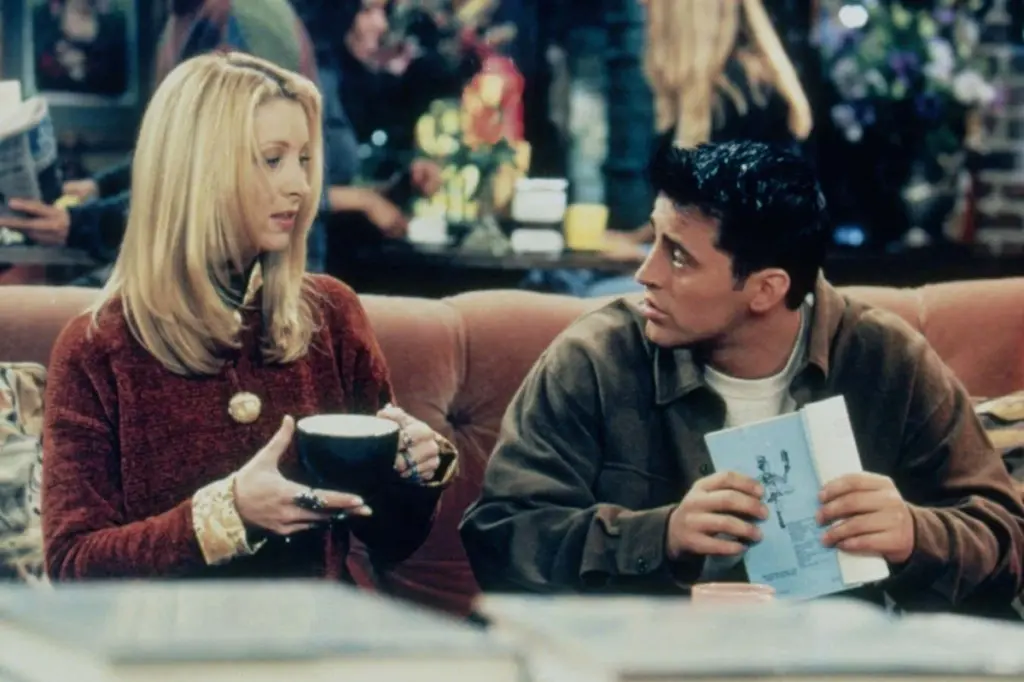
Many may recall a notable episode from the sitcom “Friends” where aspiring actor Joey Tribbiani, portrayed by Matt LeBlanc, found himself hosting a charity telethon for PBS. His enthusiastic declaration, “A little good deed for PBS plus some TV exposure, now that’s the kind of math Joey likes to do!” highlights a pragmatic, if self-serving, perspective.
Fellow character Phoebe Buffay, played by Lisa Kudrow, voiced her skepticism, retorting, “This isn’t a good deed, you just want to get on TV! This is totally selfish.” Their ensuing debate centered on Joey’s assertion that all altruistic actions are fundamentally selfish, while Phoebe endeavored to uncover an instance of pure altruism to disprove his point.
This familiar exchange resurfaced upon reading a recent study exploring “do-gooder derogation,” a phenomenon that describes our instinctive aversion to the selfless acts of others. Much like Phoebe, we often seek ulterior motives behind such behavior. Once identified, we might then treat these individuals more critically than those who openly acted out of self-interest.
The Public Goods Game and Social Resentment
Consider the well-known “public goods game” experiment. Participants each receive a small sum of money and can opt to contribute to a common pool. This collective fund grows by the game’s end, after which it is divided equally among all players.
Ideally, each person maximizing their income would contribute as much as possible to the shared pool. However, this strategy carries inherent risks. Selfish participants might contribute minimally, retain most of their personal funds, and still benefit from the larger contributions of others.
One might anticipate that “free riders” – those who contribute little – would face widespread disapproval. Paradoxically, it is often the most generous contributors who face significant criticism from other players. This resentment stems from their overt displays of trust, making others appear inadequate by comparison.
Psychologist Nichola Raihani of University College London, in her book “The Social Instinct,” notes that when asked to explain this resentment, participants often stated, “No one else is doing what [the big contributor] does. He makes us all look bad.”
Punishing Virtue: The Status Game Hypothesis
Raihani further observed that in certain experimental settings, participants are given the option to expend their own money to penalize the “do-gooder.” Many readily seize this opportunity. Some even advocate for the complete removal of such individuals from the game.
Raihani posits that we are all engaged in a “status game,” making us inherently suspicious of anyone who might appear to be feigning virtue to enhance their standing within a group.
The Tainted Altruism Effect: When Motives Matter
There are, of course, instances where suspicions about ulterior motives are indeed justified. Imagine a friend, Andy, volunteering at a homeless shelter. While he appears motivated by compassion for the vulnerable, you later discover his true objective is to pursue a relationship with the organization’s manager, Kim. His volunteer work is merely a means to spend time with her, a tactic that ultimately proves successful.
If Andy’s behavior elicits a negative reaction, you are not alone. Curiously, we tend not to apply the same level of scrutiny to ulterior motives in non-charitable contexts. Studies suggest we view someone like Andy more unfavorably than, for example, an individual who takes a job at a coffee shop with the sole intention of getting closer to the manager.
This distinction lacks logical coherence. In both scenarios, individuals are concealing their primary motivations. Their “transgression” is essentially identical. Yet, we are demonstrably more judgmental of the person who aids the needy through conventionally charitable means—a phenomenon referred to as the tainted altruism effect.
Unpacking the Calculation: Hafenbrädl’s Research
This concept forms the core of a recent study by Sebastian Hafenbrädl at the University of Navarra in Spain. Hafenbrädl hypothesized that this effect arises from an unconscious assessment weighing the social rewards individuals receive for their seemingly good deeds against the magnitude of the act and its personal cost.
“What taints prosocial actors is not the mere presence of self-interest, but the perception that actors try to reap social rewards without deserving them (i.e., without paying the price), which makes them seem deceptive,” Hafenbrädl theorized. He then devised a series of experiments to test this hypothesis.
Experiment 1: Volunteering or Barista?
In his initial experiment, hundreds of online participants were presented with scenarios involving an individual, Andy, volunteering either at a homeless shelter or a coffee shop. Participants then rated how moral and deceptive Andy had been. As anticipated, Andy’s actions were judged far more critically when he was volunteering to assist the needy compared to his role as a barista.
This disparity dissolved in two subsequent conditions. When Andy confessed his ulterior motive directly to Kim, participants no longer judged him as harshly. His admission had effectively neutralized the unearned social reward of appearing altruistic.
Experiment 2: Environmentalism and Advertising
To confirm his findings, Hafenbrädl explored the concept in various other contexts. He presented a scenario with Tom, who owned a resort in the Maldives and spent $100,000 to clean local beaches. Ostensibly an act of environmental responsibility, Tom’s primary motivation was the benefit to his business.
In one variation, participants learned that Tom used this ostensibly charitable act for resort advertising. In another, he kept the deed private, mentioning it only to a small circle of friends.
Similar to the first experiment, individuals perceived Tom as less moral when he leveraged the good deed for public relations and business enhancement, rather than maintaining it discreetly.
The Role of Self-Satisfaction
Some individuals may indeed be driven by the simple desire to feel good about themselves. While this mood enhancement is inherently selfish, Hafenbrädl’s research indicates it is not judged as harshly as intentionally seeking social validation through kindness.
He found that individuals who donated blood or gave to charity for personal satisfaction were deemed more moral than those who sought to improve their public image. However, they still fared less favorably than individuals who professed no ulterior motives at all.
These findings would likely have resonated with Phoebe. By the end of the “Friends” episode, she contributes to Joey’s telethon, despite her personal reservations about PBS. This action, inadvertently, helps Joey gain more television exposure. She believes she has proven her point, until she recognizes the personal pleasure she derives from his happiness.
Perhaps Joey’s initial assertion holds true: pure altruism may be an elusive concept. Personally, the “warm glow” derived from helping others is a welcome consequence, especially if it leads to increased kindness in the world. There are certainly far less beneficial ways to feel good.
David Robson’s latest book is “The Laws of Connection: 13 social strategies that will transform your life.”