
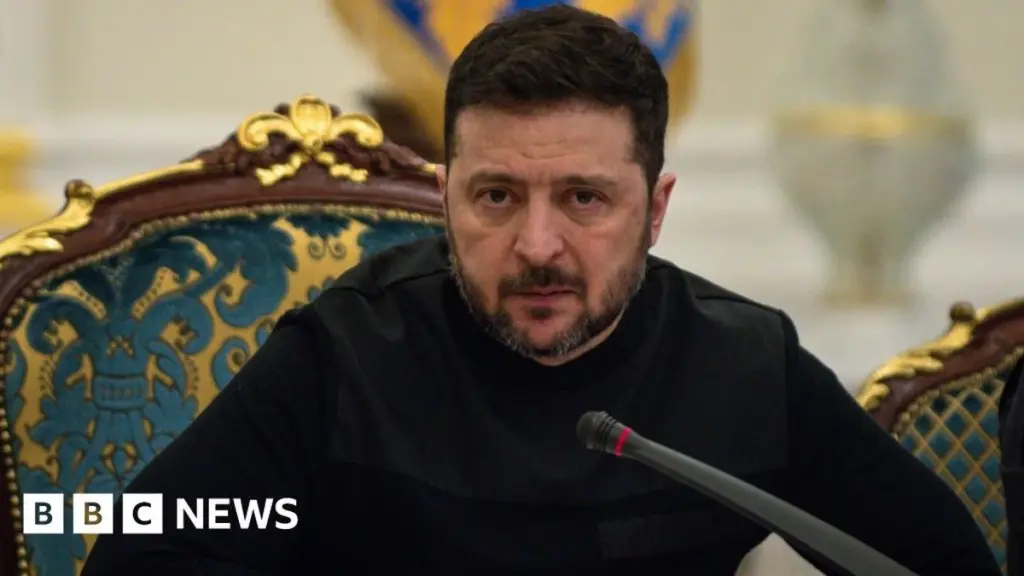
President Volodymyr Zelensky has stated that the United States has approached Ukraine for assistance in defending Gulf allies against Iranian-made drones. He indicated that Ukraine’s international partners have been making requests, specifically mentioning solicitations from the American side. The Pentagon has refrained from commenting on these assertions.
Zelensky made it clear that any Ukrainian support would be contingent on two primary conditions: safeguarding Ukraine’s own defensive capabilities and securing diplomatic advantages for Kyiv. He specifically suggested a potential exchange, where Ukraine might offer its interceptor drones in return for more US-provided Patriot air defense systems to counter Russian ballistic missiles.
Regional Conflicts and Strategic Concerns
The ongoing conflict in the Middle East has intensified concerns that Ukraine might face diminished support from its allies, who could become preoccupied with the new crisis. Additionally, there are apprehensions regarding a potential scarcity of interceptor missiles, alongside the possibility of Russia benefiting from rising oil prices, a significant funding source for its military operations.
While acknowledging these risks, Zelensky also appears intent on leveraging the current geopolitical situation to advance Ukraine’s national interests. He has engaged in discussions with leaders across several Gulf nations, including the United Arab Emirates, Qatar, Bahrain, Jordan, and Kuwait. To these counterparts, he has pledged to take what he describes as “concrete steps” to aid them in protecting their military installations and civilian infrastructure from purported Iranian threats.
“The primary request from them to Ukraine is clear,” Zelensky shared via social media. “Anyone who has experienced Iranian attacks is facing a significant challenge – Shahed drones, which are particularly difficult to intercept without the necessary expertise and adequate weaponry.” He further elaborated, “It is in our mutual interest to assist these nations in defending themselves and to re-establish stability along crucial supply routes. Partners are reaching out to Ukraine for help defending against Shaheds, seeking both our expertise and practical support. Requests have also come from the American side.”
A Shift in Global Dynamics
Ukraine has historically been subjected to strikes from Russian-made Shahed drones, which are single-use unmanned aerial vehicles based on an Iranian design. The situation has generated a degree of irony for Ukrainians, who have previously experienced what they perceived as unpredictable US policy under President Donald Trump concerning their defense against Russia’s full-scale invasion. Although direct military aid from the US has reportedly ceased under his administration, the US continues to furnish critical intelligence supporting Ukraine’s defense against drones and missiles, as well as its capacity to strike targets deep within Russian territory.
After years of Ukraine soliciting assistance, the current circumstances suggest a reversal of roles, with Zelensky appearing poised to capitalize on this moment for diplomatic, military, and financial gains. Ukraine might anticipate goodwill from the US should it successfully aid American allies in the Gulf, notably Saudi Arabia. Furthermore, Kyiv could aim to improve its standing among Arab nations, some of which maintain long-standing ties with Russia and have sought to remain neutral in the Ukraine conflict.
Diplomatic Engagements and Resource Management
Delegations from Gulf countries have already arrived in Kyiv for negotiations. Reports indicate that some delegates have been advised to remain in Ukraine’s capital until an agreement is finalized. The United Kingdom is also reportedly exploring avenues to assist Qatar. President Zelensky may also hope that by providing Gulf partners with adequate air defense capabilities, he can dissuade them from expending costly and limited Patriot missiles on intercepting less expensive drones.
Ukraine itself faces a deficit in Patriot air defense systems, and Kyiv is keen to prevent these valuable assets from being diverted and depleted in the Middle East. Zelensky informed journalists on a Thursday that approximately 800 Patriot PAC-3 missiles had been deployed in recent days, a figure that exceeds the total number Ukraine has received throughout the entire duration of the war. He proposed an arrangement: “We would like to work discreetly with countries – both those we can name and those we cannot – to acquire some of the deficit missiles for Patriot systems for ourselves and then transfer an appropriate number of [drone] interceptors.”
However, any assistance Ukraine offers will be subject to specific conditions. Zelensky emphasized in his social media communication: “Naturally, any help we provide will only be granted on the premise that it does not compromise our own defense within Ukraine and that it serves as an investment in our diplomatic capacity.”
Ihor Fedirko, the head of the Ukrainian Council of Defense Industry, informed the BBC that Ukraine possesses the capability to augment its production of interceptor drones to as many as 10,000 units per month. Nevertheless, he cautioned that any consideration of delivering these to international partners would necessitate political authorization at the highest levels in Ukraine. Fedirko further warned that even with political approval for future transfers, equipping allied forces with the necessary training and expertise to effectively operate air defense systems would present a significant hurdle. “Weapons are merely plastic and metal without instruction and training,” he stated. “We can supply you with these items. But what will you do with them? How will you employ the weaponry? Who will provide the instruction? At present, our training facilities in Ukraine are fully occupied by our armed forces, as well as our civilian population.”