
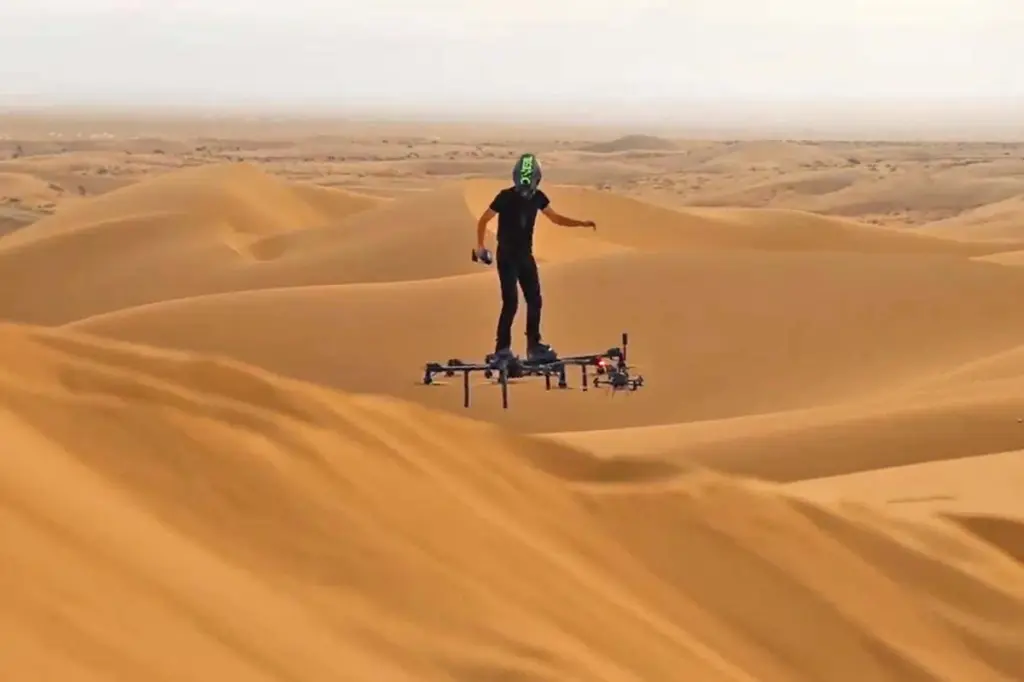
The first instances of passenger-carrying drones might already be in operation. These are not the advanced urban air taxis envisioned for the future, but rather heavily modified cargo drones being deployed to transport either combat casualties or individuals engaged in illicit activities.
Heavy-lift drones represent a significant upscaling of the familiar quadcopter design. While the fundamental technology is accessible, as demonstrated by hobbyists in widely shared videos showcasing home-built drones capable of carrying people, achieving aircraft safety certifications for passenger transport remains a lengthy process. Companies such as Volocopter, EHang, and Eve Air Mobility are all projecting vehicle certifications within the current or next year.
Concurrently, the commercial sector is witnessing a rapid evolution in heavy-lift cargo drones. These aircraft, intended for agricultural and industrial applications, are growing in size and decreasing in cost. For example, the DJI FlyCart 100, introduced last year, has a payload capacity of 85 kilograms and a price point just exceeding £10,000. Although these drones are not certified for carrying passengers, this limitation may not deter some operators from transgressing regulations and transporting people as if they were cargo.
Drones in Military and Humanitarian Efforts
In the context of Ukraine, the medical evacuation of wounded soldiers presents a formidable challenge due to the pervasive threat of drone attacks. Uncrewed ground vehicles, essentially robots remotely controlled by human operators, are the preferred method for casualty transport. However, by August 2025, the commander-in-chief of Ukraine’s armed forces, Oleksandr Syrskyi, indicated that aerial drones were undergoing testing for this specific purpose.
Roy Gardiner of the non-profit organization Defense Tech for Ukraine emphasizes the critical need for such technology. He states, “Such drones will inevitably appear, as getting a badly wounded soldier to advanced medical care within the ‘golden hour’ dramatically increases the survival rate.” Gardiner further notes that the development of heavy multicopter drones capable of rapidly air-evacuating wounded soldiers is an “urgent priority” and has been reported to be in development by both sides of the conflict.
While evacuation by cargo drone is a less than ideal scenario compared to dedicated helicopter air ambulances with onboard medical personnel, any method that facilitates transport away from the combat zone and towards medical facilities holds life-saving potential. Aerial drones, in this regard, offer a faster and potentially smoother transit than ground-based robotic systems.
Criminal Applications and Emerging Concerns
Beyond humanitarian and military applications, criminal organizations may also be utilizing drones for human transport. A recent report from DroneSec, an Australian intelligence firm, has identified an escalating interest in drones designed to carry people. The company specifically highlighted a video originating from Lashkar-e-Taiba, a militant group based in Pakistan, which depicted a heavy-lift drone transporting a passenger within a training camp. This group is already recognized for its involvement in smuggling arms and drugs across the border between India and Pakistan.
Robert Bunker, associated with the US consultancy firm C/O Futures, comments on the potential for misuse. He suggests, “These systems can be used for human smuggling… over a secure border wall or obstacle.” Bunker further points out that criminals operate as early adopters, lacking concern for drone safety standards or regulatory compliance.
The use of small drones for smuggling contraband into correctional facilities is already a widespread practice. Enlarged drone models could potentially be employed for the extraction of prisoners. Furthermore, there is a risk of these aircraft being used to transport armed terrorists into secure locations.
“It’s a growing concern, something we need to plan for, especially regarding facility and national borders where high walls and other terrain obstacles like rivers and canyons or ditches are viewed as secure physical barriers,” Bunker elaborates.
The Future of Passenger Drones
Commercial passenger drones that adhere to stringent safety protocols will undergo extensive testing across various conditions before entering public service. However, for individuals facing dire circumstances and seeking transport irrespective of the inherent risks, drone-based flights are likely to become a reality in the immediate future.