
The fabric of space-time is stretching. With each passing second, the universe’s expansion accelerates at an increasing rate. The driving force behind this dramatic acceleration remains a profound enigma, a puzzle scientists have grappled with for decades, yet we stand no closer to a definitive understanding. This mysterious force is termed “dark energy,” but its fundamental nature and origin are largely unknown. Despite this lack of comprehension, dark energy constitutes approximately 68 percent of the universe’s total content.
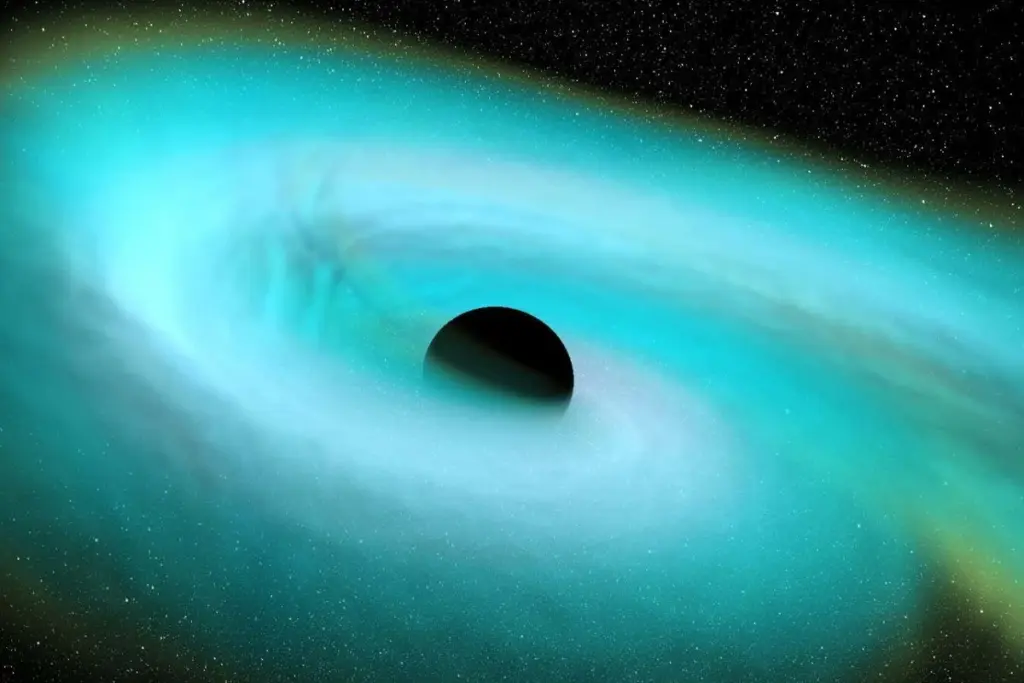
It might seem counterintuitive, yet a small assembly of astrophysicists is now proposing that this cosmic enigma is, in fact, intimately linked to black holes. These are not phenomena that one would readily associate with expansion; black holes are gravitational behemoths, so powerful that once matter crosses a certain threshold, escape is impossible. Their nature is to pull matter inwards, making their role in driving cosmic expansion seem paradoxical.
The proposed mechanism suggests a fascinating process. All matter that falls into a black hole undergoes a transformation into a specific form of radiation. This radiation, in turn, exerts a pressure on the surrounding space. While such an effect would be negligible in the immediate vicinity of a single black hole, when aggregated across the countless black holes in the universe, the cumulative impact could become significant enough to push everything away from everything else, driving the observed cosmic acceleration.
This unconventional idea, which has undergone numerous reformulations over the years, originated on the fringes of scientific thought. However, in recent times, a growing number of cosmologists have begun to lend it serious consideration. The appeal of this concept lies in its potential to explain not one, or even two, but three distinct cosmic mysteries. Kevin Croker, a cosmologist at Arizona State University, notes that the idea, while still controversial, has moved beyond mere speculation. “It’s not fringe anymore,” he states.
The Perplexity of Black Holes as Dark Energy Candidates
Black holes present themselves as compelling candidates for the source of dark energy precisely because of their enigmatic nature. Niayesh Afshordi, a cosmologist at the University of Waterloo, points out that while most cosmic structures like galaxies and galaxy clusters exert minimal influence on dark energy, black holes have always stood out as a potential exception. “Black holes [after all] are much more mysterious than everything else,” he observes.
The Singularity and the Transformation of Matter
At the heart of this theory lies the concept of the singularity, the central point within a black hole where gravity becomes infinitely strong, compressing matter to an unimaginable density. This phenomenon, known as an astrophysical singularity, has long been considered a placeholder for physics that remains beyond our current understanding. Gregory Tarlé, a cosmologist and astrophysicist at the University of Michigan, expresses skepticism about the literal existence of a singularity. “Nobody believes in a singularity,” he says. He proposes that something must prevent its formation, suggesting that the collapsing matter itself might transform into dark energy. This is the essence of the “cosmologically coupled black holes” concept, their name deriving from their proposed link to the universe’s large-scale dynamics.
The exact mechanism by which this transformation occurs is unknown. Tarlé draws a parallel to the early universe, a period characterized by a dense soup of radiation. Following the Big Bang, the universe cooled, and this radiation coalesced into matter. The theory posits that within these cosmologically coupled black holes, a reverse process might take place. Crucially, this transformation would not affect the black hole’s gravitational pull, which is determined by energy density rather than the specific form of matter.
Massimiliano Rinaldi, a physicist and cosmologist at the University of Trento, acknowledges the unknown aspect of how a single particle transforms into radiation but emphasizes the theoretical possibility. “But we assume that it can happen – this conversion is not as crazy as it sounds,” he comments.
Historically, the prevailing understanding was that black holes primarily influenced their immediate surroundings. Croker, a key proponent of the cosmologically coupled black hole idea, challenges this notion. While some might question how events in one location could influence distant ones, he highlights that the sheer number and ubiquitous distribution of black holes create a significant aggregate effect. He uses the analogy of numerous small balloons inflating within a larger balloon: inflating the inner ones inevitably forces the outer one to expand.
Observational Evidence for Cosmologically Coupled Black Holes
The evidence supporting the existence of cosmologically coupled black holes is not purely theoretical. A significant development occurred in 2023 when Croker, Tarlé, and their colleagues presented findings suggesting that black holes across the universe are growing at unexpectedly rapid rates. Even supermassive black holes, which were presumed to grow minimally, are exhibiting growth patterns that align with the universe’s expansion. This observation, according to Tarlé, provided the first tangible indication that black holes, once formed, generate dark energy, and this energy subsequently increases as the universe expands.
A primary challenge to this hypothesis is the lack of a precise theoretical description of how these cosmologically coupled black holes would behave or appear. Rinaldi explains, “The problem is that we don’t have a mathematically precise solution that describes these objects – we have an average.” This deficiency hinders the ability to predict, for instance, whether the merging behavior of these black holes would align with existing observational data. “The task is very, very difficult because the equations are horrible, but there might be a breakthrough at some point – it just needs time,” he adds.
In the short span of a few years, this concept has evolved from being largely disregarded by many serious cosmologists to being considered a plausible explanation. A major factor contributing to this shift is the apparent alignment of the theory with perplexing recent results from the Dark Energy Spectroscopic Instrument (DESI) in Arizona.
The DESI Results and Their Implications
DESI is meticulously mapping the positions of millions of galaxies, constructing a detailed representation of how the distances between them have evolved throughout cosmic history. These distance measurements allow scientists to calculate the universe’s expansion rate at different cosmic epochs. Initial results released over the past two years have suggested a surprising finding: dark energy might be weakening over time. This contradicted the standard cosmological model, which posits that dark energy should remain constant. “Seeing the data for the first time, our mouths kind of dropped open,” Tarlé recalls. “It was very clear that dark energy was changing in time.”
The hypothesis of cosmologically coupled black holes provides a coherent explanation for these DESI findings. The rate of black hole formation mirrors that of star formation, which peaked approximately 10 billion years ago and has been gradually slowing since then. This trend would naturally lead to a diminishing supply of newly formed dark energy, aligning with the DESI observations and potentially addressing another significant cosmic puzzle.
The Hubble Tension and Neutrino Mass
The “Hubble tension” refers to a persistent discrepancy between two primary methods of measuring the universe’s expansion rate. One method relies on observations of nearby objects, while the other uses the standard cosmological model to extrapolate from measurements of the cosmic microwave background radiation. Incorporating cosmologically coupled black holes into cosmological models may not fully resolve this tension but significantly mitigates it by offering a reason for the differing results: the epochs probed by each method would have experienced different expansion rates. Unlike many competing explanations for the Hubble tension and the apparent weakening of dark energy, which often invoke exotic and unproven physical phenomena, the cosmologically coupled black hole idea relies solely on general relativity. Rinaldi notes this as a significant advantage, making it a comparatively conservative proposition given the complexities of these issues.
Adding to this framework, Tarlé, Croker, and their colleagues have identified a third observational pillar supporting their theory: a puzzle within particle physics. Cosmological mass budgets, derived from observations of the universe’s components, are used to estimate the mass of different particle types. This process encounters an anomaly with neutrinos, subatomic particles that interact very weakly. When the latest DESI data is considered, these calculations suggest that neutrinos would require a negative mass for the cosmic mass budget to balance. Since negative mass is physically impossible, it implies a zero mass. However, the theory of cosmologically coupled black holes offers a resolution. By converting regular matter into dark energy, these black holes alter the cosmic mass balance. This conversion creates sufficient “leeway” in the mass budget, allowing neutrinos to possess a positive mass that aligns with experimental measurements.
The researchers emphasize the collective weight of these three lines of evidence. “Right now, the stool of evidence that we’ve offered has the three legs. We think we can sit on it,” states Croker. He acknowledges that the broader scientific community might view the evidence as precarious, but he expresses hope for wider adoption. “Other people in the community may think it’s dangerously janky, but my hope is that, at some point, some other people will jump on this as well.”
This growing interest is evident in the increasing number of collaborators on theoretical papers. While earlier research on cosmologically coupled black holes involved small teams, the recent paper addressing neutrino masses boasts 50 co-authors. As with any controversial proposal, further advancements hinge on the development of more sophisticated theoretical models, particularly solutions to the formidable equations involved, and on the acquisition of more observational data. Fortunately, new data is forthcoming from ongoing DESI observations and several other large-scale cosmic surveys. Afshordi likens the situation to a detective story: “There is an obvious suspect that is acting very suspiciously and there is an obvious crime.” With three compelling clues suggesting black holes might be responsible for the universe’s accelerating expansion, more “detectives” are joining the investigation. The critical challenge, he concludes, remains in firmly establishing the connection.