
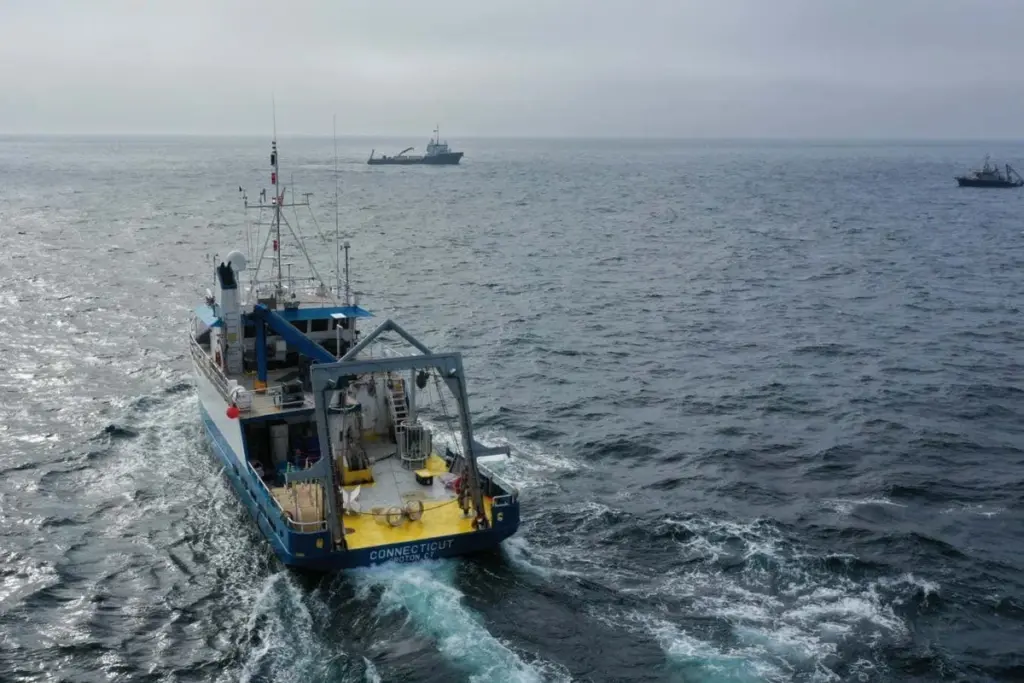
Can the atmosphere be safely cleared of carbon dioxide by addressing ocean acidification? A recent trial suggests this might be possible. In August 2025, ships released 65,000 liters of alkaline sodium hydroxide into the Gulf of Maine, situated off the US East Coast. This experiment aimed to counteract the increasing acidity of the oceans.
Adam Subhas, affiliated with the Woods Hole Oceanographic Institution in Massachusetts, stated that his team conducted the first ship-based alkalinity enhancement experiment. He reported initial findings at the Ocean Sciences Meeting held in Glasgow, UK, on February 25th. “We can definitely say that there was additional CO2 uptake as a result of this experiment,” Subhas commented.
During the four days following the experiment, between 2 and 10 tonnes of atmospheric CO2 were removed. Subhas’s team estimates a potential total removal of up to 50 tonnes. Importantly, the trial reportedly showed no significant adverse effects on marine life.
However, when questioned by New Scientist, Subhas acknowledged that the team had not yet quantified the emissions associated with both the manufacturing of the sodium hydroxide and its transportation to the experimental site. This leaves the net impact of the trial on CO2 levels uncertain.
“It’s a really good question,” Subhas admitted. “That’s going to be a really critical area of research moving forward.”
Oceans play a crucial role in carbon storage, holding approximately 40 times the amount of carbon present in the atmosphere. They have absorbed over a quarter of the excess carbon dioxide released by human activities. This absorbed CO2 reacts with seawater, forming carbonic acid, a process that leads to increased ocean acidity.
Ocean acidification poses a significant threat to many marine organisms, potentially dissolving their carbonate shells. It also diminishes the oceans’ capacity to absorb further atmospheric CO2.
Researchers are investigating various strategies to mitigate ocean acidification. These include introducing magnesium hydroxide into wastewater before it enters the ocean, distributing ground-up olivine along coastlines, and processing seawater through land-based facilities. Several companies are already marketing carbon credits based on alkalinity enhancement initiatives.
Subhas noted the private sector’s active engagement in this area, emphasizing the necessity for independent, non-commercial trials such as the one his team conducted. “This is something that the private sector is moving forward with right now,” he stated.
Given the sensitive nature of such experimental trials, the research team prioritized early engagement with local communities, particularly the fishing industry. Kristin Kleisner from the Environmental Defense Fund, a New York-based non-profit, highlighted the importance of this approach. “Two-way dialogue is really critical,” she stated.
The trial involved three ships and employed multiple monitoring methods, utilizing data from satellites, floating sensors, and ocean gliders. The sodium hydroxide was combined with trace amounts of rhodamine dye to facilitate precise tracking of its dispersal.
Rachel Davitt, from Rutgers University in New Jersey, reported that their measurements included microbial populations, plankton, and fish and lobster larvae, alongside assessments of photosynthetic activity. “There was no significant impact of our field trial on the biological community,” Davitt confirmed.
According to Subhas, the additional carbon absorbed by the ocean due to increased alkalinity is converted into bicarbonate ions, essentially dissolved baking soda. “We expect that this carbon is locked away for tens of thousands of years,” he explained. “It’s one of the most durable forms of carbon removal.”
Subhas also pointed out that this method removes and stores CO2 in a single, integrated step. This represents an advantage over alternative approaches that require separate processes for CO2 capture and subsequent long-term storage.