
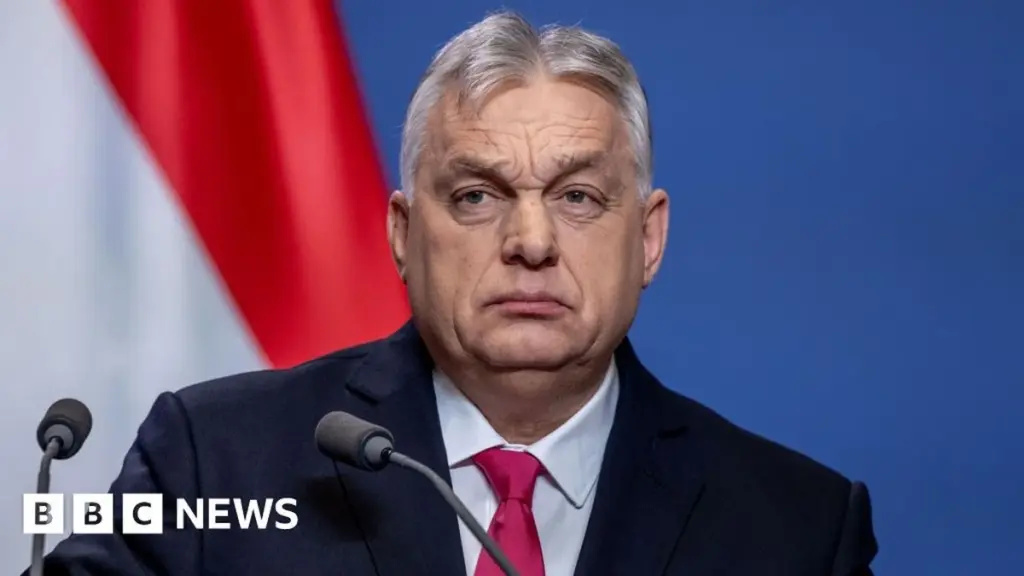
Hungarian Prime Minister Viktor Orbán announced that soldiers have been deployed to key energy facilities across the country. This action follows his accusation that Ukraine is deliberately disrupting energy supplies to Hungary.
Orbán has specifically accused Kyiv of imposing an “oil blockade” on Hungary. He claims this is being achieved by delaying the reopening of the Druzhba pipeline, which serves as the primary conduit for Russian oil to Hungary and Slovakia.
Pipeline Disruption and Political Blame
Shipments of Russian oil via the Druzhba pipeline to Hungary and Slovakia have been suspended since January 27. Ukraine has stated the closure was a consequence of Russian strikes. Orbán, however, characterized the interruption of this vital oil flow as a politically motivated act. He suggested Ukraine was “preparing further actions” beyond the pipeline shutdown.
Ukraine had not issued an immediate response to Orbán’s statements at the time of reporting. This development occurs amidst a backdrop of repeated Ukrainian attacks on Russian oil facilities, including sections of the Druzhba pipeline located within Russian territory. A Ukrainian drone strike targeted an oil pumping station earlier in the week.
These attacks have reportedly compelled Russia’s oil operator to reduce the volume of crude oil processed daily by approximately 250,000 barrels, according to Reuters. Ukraine itself has been experiencing severe power shortages, a direct result of intensified Russian assaults on its energy and gas networks. Consequently, Ukraine has increased its imports of electricity from Europe.
European Union Reassurances and Alternative Routes
Some of these European imports originate from Hungary and Slovakia. Both countries had previously threatened to cease emergency electricity supplies to Ukraine until the oil pipeline was reactivated. However, an EU spokesperson conveyed on Wednesday that neither Hungary nor Slovakia is currently at immediate risk of oil shortages. This is due to the availability of alternative supply sources.
Speaking to AFP, European Commission spokesperson Anna-Kaisa Itkonen confirmed that Croatia has indicated non-Russian crude oil is being transported to Hungary and Slovakia through the Adria pipeline. She stated, “It remains the main alternative pipeline for Hungary and Slovakia to cover their needs, and the pipeline has sufficient capacity to increase volumes to fully cover the Hungarian Slovakian requirements.” This assurance followed a meeting of experts to assess the situation.
Domestic Security Measures and Political Context
Following a meeting of the Hungarian Defence Council on Wednesday, Orbán posted a video on social media detailing security measures. He described these actions as necessary for the protection of the country’s critical energy infrastructure. These measures include the deployment of soldiers to energy stations, police patrols at power stations, and a ban on drones in the northeastern border region with Ukraine.
“The Ukrainian government is exerting pressure on the Hungarian and Slovak governments through an oil blockade,” Orbán stated. He reiterated his belief that “they are preparing further actions to disrupt Hungary’s energy system.”
Though Volodymyr Zelensky had not responded directly to the accusation, there was no indication that Ukraine was planning such actions. Orbán’s critics have suggested that his escalating rhetoric against Ukraine serves a domestic political purpose. They argue he is seeking to portray Hungary as under external threat in the lead-up to the April elections. His ruling Fidesz party has been trailing in opinion polls, indicating a potential loss of power after 16 years.
Earlier in the week, Hungary had also vetoed a €90 billion European Union loan to Ukraine, citing the ongoing Druzhba pipeline dispute as the reason for its disapproval.