
The specter of being ostracized hangs over France’s far-left political movement, potentially displacing the far-right from its long-held position as the nation’s political pariah.
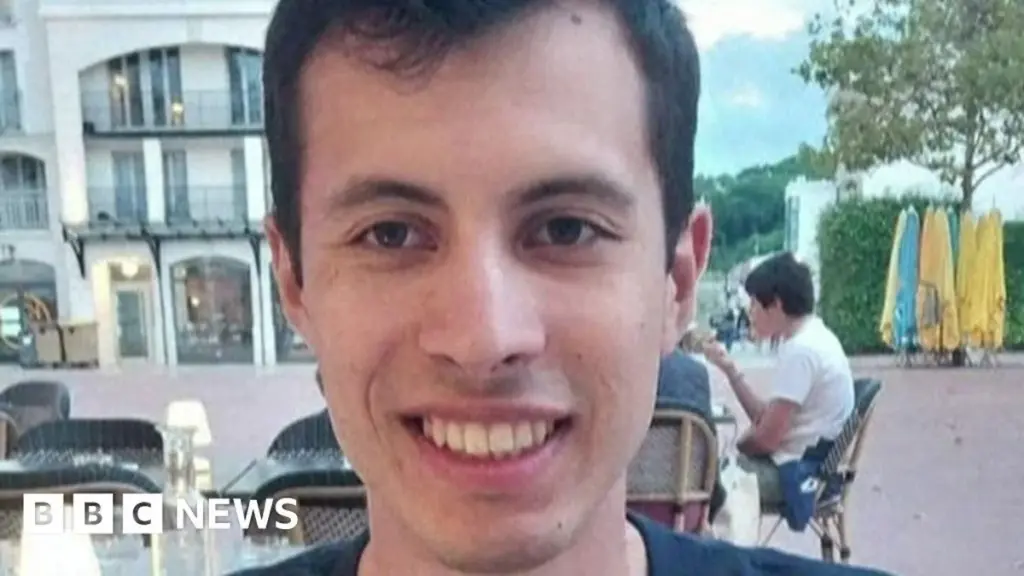
This profound shift in perception followed the death of Quentin Deranque, a nationalist student in Lyon, allegedly at the hands of suspected far-left extremists. Deranque was killed on February 12th after intervening to protect a small university protest organized by far-right feminists. Mobile phone footage captured the brutal scene: masked and hooded young men repeatedly kicking and punching him while he lay on the ground. He succumbed to his injuries from head trauma.
Since the incident, a wave of condemnation has been directed at La France Insoumise (LFI), the leading radical left party, and its prominent leader, Jean-Luc Mélenchon. LFI, also known as France Unbowed, currently holds a significant bloc of approximately 70 Members of Parliament within the 577-seat National Assembly.
The seven individuals now charged in connection with Deranque’s death are reportedly members of, or closely affiliated with, an organization named La Jeune Garde (The Young Guard). This group previously provided security services for LFI before its proscription last year. One of the accused, Jacques-Elie Favrot, served as the paid parliamentary assistant to LFI deputy Raphaël Arnault, who founded The Young Guard in 2018.
Favrot faces charges of “complicity in murder by instigation,” though he is not accused of delivering the fatal blows. However, Adrian Besseyre, whose lawyer indicated he also worked with Arnault’s team at the National Assembly, is among those charged with murder. According to the investigating magistrate, all suspects deny any intent to kill. Some admitted to being present at the scene, and a few acknowledged inflicting injuries, while two individuals reportedly declined to speak.
A Historic Realignment in French Politics
For the past half-century, the French political establishment largely accepted that the National Front, and later its successor the National Rally (RN), represented the pariah faction due to their associations with extremism. However, recent events, precipitated by Deranque’s killing, may be fundamentally altering this long-standing consensus.
This potential reorientation could advance the “de-demonisation” of the RN, a strategy diligently pursued by its leader Marine Le Pen, while simultaneously casting the radical left in a new, negative light. The ramifications for future elections in France, and consequently, the nation’s leadership, could be profound.
Conflicting Ideologies and Shifting Alliances
From opposing ideological standpoints, both the RN and LFI challenge the political consensus that has guided France for the last fifty years. The RN, with its nationalist orientation, prioritizes the interests of French citizens over immigrants and advocates for a stringent approach to crime, which it frequently links to certain immigrant communities. LFI, rooted in its Marxist history, champions the working class, which it now perceives as largely comprised of individuals of immigrant origin.
Economically, the two parties occupy relatively proximate positions. However, on contentious “identity” issues, mutual animosity prevails. The conflict over Gaza exemplifies this divergence: LFI declined to condemn the deadly Hamas-led attacks on Israel on October 7th, while the RN, despite its historical antisemitic leanings, has increasingly aligned itself with Israel.
Should the stigma of being politically untouchable shift from the far-right to the far-left, the consequences for France’s political future could be far-reaching.
The Crumbling “Republican Arc”
Historically, the far-right has been contained by a “cordon sanitaire,” an alliance of other parties that prevents its electoral success. Despite potentially being the most popular party nationwide, the RN faces significant hurdles in winning elections due to opponents coordinating to consolidate the anti-RN vote.
A notable instance of this occurred during the 2024 legislative elections, called following President Emmanuel Macron’s unexpected dissolution of the National Assembly. The RN was anticipated to achieve a sweeping victory and performed strongly in the initial round. However, in the decisive second round, Macronist and left-wing candidates withdrew their candidacies to unify the anti-RN vote. This tactic resulted in a resurgence of the left and center, with the RN securing only around 120 seats and no party achieving an outright majority.
This strategic maneuver was feasible only because other parties were willing to engage with Mélenchon’s LFI. Unlike the RN, LFI was considered a component of the “Republican arc,” implying its broader acceptability within the political mainstream.
The Potential Collapse of the Anti-Far-Right Bloc
The question now arises: what if this dynamic changes due to Quentin Deranque’s death and the implication of young individuals linked to LFI? If parties like the Socialists, with their approximately 70 MPs, and the centrists, commanding around 160 MPs, refuse to form any alliances with LFI, the existing blocking majority against the far-right could rapidly disintegrate.
The implications extend further. What if the tarnished reputation shifts so decisively to the far-left that the far-right appears comparatively acceptable? In such a scenario, the conservative Republicans, holding about 50 parliamentary seats, might begin to openly collaborate with the RN, potentially ushering the far-right into the mainstream political fold.
These developments could have immediate repercussions in the municipal elections scheduled for next month across France. Their significance will undoubtedly be amplified during the presidential and parliamentary elections of 2027, when voters determine the nation’s leadership.
A Shifting Political Landscape
Guillaume Tabard, a commentator writing for the conservative Le Figaro newspaper, aptly summarized the situation: “Since Quentin Deranque’s death, the political landscape has shifted. Mélenchon’s party has become the most condemned political formation in politics and the media. For [the RN] it is a godsend, after half a century in which the distinction belonged to it.”
Circumstances have undeniably benefited the far-right. Marine Le Pen and RN party president Jordan Bardella are accustomed to facing accusations regarding their party’s associations with disreputable “security” organizations or candidates with problematic pasts. Now, they face less need to vocalize these criticisms; the broader political class is effectively undertaking this task for them, with centrists, conservatives, and moderate left-wingers joining the anti-LFI campaign.
This process of ostracism appears increasingly unavoidable, partly because LFI itself seems to have opted against displaying remorse. While condemning the killing, Mélenchon has refused to denounce The Young Guard or suspend its founder, Raphaël Arnault, from his parliamentary seat. For France’s mainstream left, this presents a deeply unsettling dilemma. They are caught between the necessity of distancing themselves from LFI and the ingrained reluctance to aid the far-right.
This predicament leaves them with limited recourse, primarily relying on constant reminders to voters of the RN’s own history of ambivalence towards violent extremism. Dominique de Villepin, a former prime minister and potential 2027 presidential candidate, who has shifted from a conservative stance to the left, lamented that “By focusing all our attacks on the LFI, we are creating a corridor of respectability for the RN.” He added, “We are offering the RN what it has always dreamed of: the appearance of normality.”