
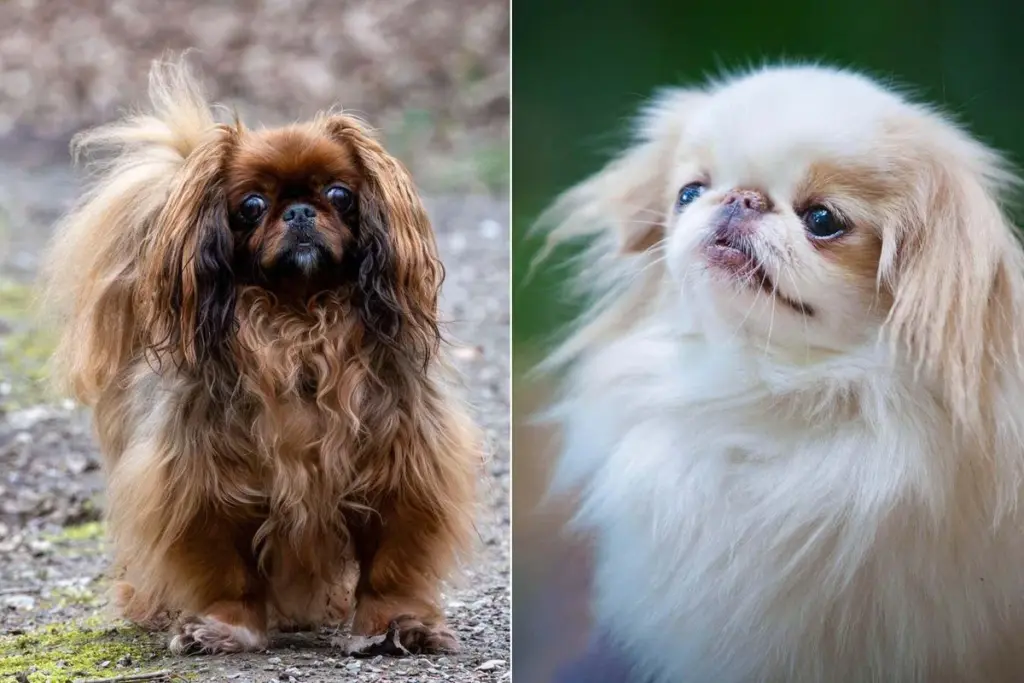
Prospective dog owners are being advised to extend their caution to a wider array of breeds when choosing a new puppy. Recent research indicates that serious respiratory issues are more prevalent in certain dog types than was previously understood.
Dogs characterized by their notably short snouts and flattened faces are known as brachycephalic breeds. These breeds have seen a significant surge in popularity over recent years, according to Francesca Tomlinson from the University of Cambridge.
However, this soaring popularity has been paralleled by an increase in associated health concerns. A primary issue is brachycephalic obstructive airway syndrome (BOAS), often evident as noisy breathing. This condition can severely impact a dog’s ability to engage in exercise, rest properly, and cope with environmental stressors like heat or emotional distress.
Expanding the Scope of BOAS Risk
Historically, discussions surrounding BOAS have largely centered on English and French bulldogs, as well as pugs. To comprehensively identify other breeds at risk, Tomlinson and her research team conducted a study involving 898 dogs. These dogs represented 14 different breeds, including the affenpinscher, Boston terrier, boxer, Cavalier King Charles spaniel, Chihuahua, Dogue de Bordeaux, Griffon Bruxellois, Japanese chin, Maltese, Pekingese, King Charles spaniel, Pomeranian, Shih Tzu, and Staffordshire bull terrier.
Each participating dog underwent thorough respiratory examinations and a series of detailed physical and facial measurements.
Identifying the Most and Least Affected Breeds
The study revealed that Pekingese and Japanese chin breeds exhibited the highest prevalence of BOAS, with over 80 percent of the dogs in these groups affected. A moderate risk was identified in five breeds: the Cavalier King Charles spaniel, Shih Tzu, Griffon Bruxellois, Boston terrier, and Dogue de Bordeaux. In these breeds, BOAS was observed in between half and three-quarters of the dogs analyzed. Notably, the researchers found no dogs with clinically significant BOAS within the Maltese and Pomeranian breeds studied.
Key Factors Contributing to Breathing Disorders
The research pinpointed three principal factors contributing to disordered breathing in these dogs. These include being overweight, a narrowing of the nostrils, and extreme facial flatness. The analysis further suggests that other physical traits, such as very short or screw tails, might also be linked to anatomical changes associated with BOAS.
“This indicates that it is not solely the degree of flatness that dictates the risk, but rather a combination of numerous contributing factors,” Tomlinson explained.
Guidance for Prospective Owners and Breeders
Tomlinson advises that potential owners should actively seek puppies from parents who have undergone relevant health screenings. Additionally, they should thoroughly inform themselves about the potential health consequences stemming from extreme physical characteristics, particularly those affecting the face. “The goal is not necessarily to eliminate the defining features of a breed, but to steer clear of extremes and to encourage breeding practices that prioritize, alongside appearance, a dog’s functional well-being,” she commented.
For breeders, the understanding should be that negative health outcomes are not solely determined by breed classification. Instead, the degree to which certain physical traits are exaggerated plays a crucial role. “This insight offers a practical avenue for improvement, suggesting that a conscious effort to avoid exaggerated traits could indeed reduce disease incidence,” Tomlinson added.
Understanding the Broader Implications
Anna Quain, also from the University of Sydney, Australia, noted that the public often underestimates how a “cute” flattened facial appearance predisposes these dogs to chronic oxygen deprivation and heat-related stress. Quain likened breeding dogs for flat faces to “designing a car without a radiator.” She emphasized that when intentionally bringing dogs into existence, the primary consideration should always be their welfare, overriding human aesthetic preferences.
Paul McGreevy, also affiliated with the University of Sydney, stated that the study corroborates the common knowledge among most veterinarians. “Airway compromise is widespread among flat-faced dogs, and its severity can differ significantly both between and within breeds,” he observed. McGreevy pointed out that for dogs struggling to expel carbon dioxide due to compromised airways, breed labels become secondary concerns; their classification as a bulldog cross or a Pekingese is ultimately a human construct.
Methodological Considerations
McGreevy did express some reservations regarding certain aspects of the study’s methodology. He raised concerns that the assessment relied on subjective auditory grading of breathing sounds as mild, moderate, or severe, questioning the consistency of this application across 14 distinct breeds. Furthermore, he noted the authors’ own acknowledgment that the exercise test’s interpretation could be influenced by an individual dog’s speed capabilities and temperament.
In response, Tomlinson clarified that the assessment protocol incorporates objective criteria. This includes identifying abnormal respiratory noises audible with or without a stethoscope, with the grading following a standardized procedure. She explained that the exercise test’s purpose was not to measure peak athletic performance but rather to observe how the airway functions under mild physical exertion.