
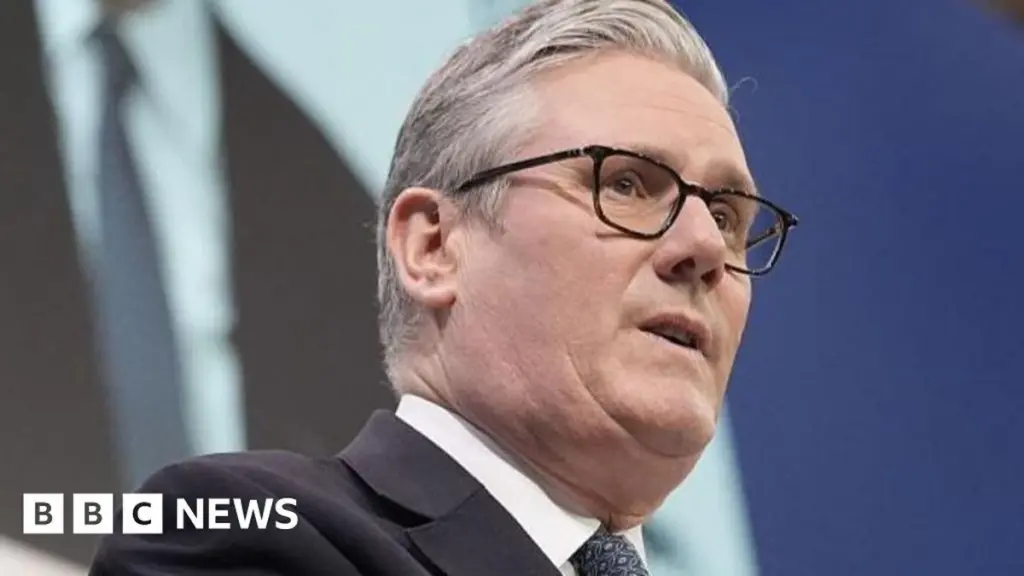
Prime Minister Sir Keir Starmer declared on Saturday that Europe must be ready to engage in conflict to safeguard its citizens, core values, and established way of life. Addressing global leaders at the Munich Security Conference, Starmer also advocated for strengthened cooperation and integration, encompassing economic ties, between the United Kingdom and the European Union.
The Prime Minister emphasized that the continent needs to achieve greater self-reliance concerning its defense commitments. He highlighted this necessity during his address, stating the imperative for Europe to “stand on its own two feet.”
Bolstering Security in the Arctic and High North
Starmer announced that the UK would deploy its carrier strike group to the Arctic and High North regions. This deployment is part of a broader strategy to enhance security against potential threats emanating from Russia. The High North encompasses the Arctic Circle and its surrounding territories, representing a critical strategic area.
He further indicated that the United States, Canada, and other NATO allies would participate in this initiative, aiming to collectively counter Russian activities in the region. Starmer expressed his conviction that Russian rearmament, even after a hypothetical peace agreement in Ukraine, would continue and “only accelerate.” Consequently, he stressed Europe’s need to be prepared to “deter aggression” and to be equipped for conflict if such circumstances arise.
“We must build our hard power, because that is the currency of the age,” he told the assembled delegates, underscoring the current geopolitical climate.
Reaffirming NATO Commitments Amidst Doubts
Starmer’s remarks came against a backdrop where United States President Donald Trump had previously voiced skepticism about European partners’ commitment to mutual defense under Article 5. This pivotal NATO article, established in 1949 primarily to counter Soviet expansion, stipulates that an armed attack against one member is considered an attack against all. The alliance currently comprises 32 member states.
Seeking to allay such concerns, Starmer assured the conference attendees that the UK’s dedication to Article 5 remains as steadfast as ever. “Be in no doubt,” he affirmed, “if called on, the UK would come to your aid today.”
EU Commission President’s Support and Call for European Responsibility
Prior to Starmer’s address, European Commission President Ursula von der Leyen commended him as an “unflinching ally and friend.” She shared the view that both the EU and the UK face external actors attempting to destabilize their union from within. Von der Leyen also suggested that Europe has experienced a form of “shock therapy” impacting its relationship with the US and must therefore assume greater responsibility for its own defense. “Europe needs to step up and has to take on its responsibility,” she stated.
Shifting UK-EU Economic Relations
Although Starmer’s Labour government has sought to “re-set” relations with Brussels following the UK’s departure from the EU in January 2020, it had previously committed to not rejoining the single market. However, signaling a policy adjustment, Starmer asserted that the current EU-UK status quo is “not fit for purpose.” He acknowledged that such a shift would involve inherent “trade-offs.”
Discussing the prospect of “closer economic alignment” with the EU, he elaborated, “We must look at where we could move closer to the single market in other sectors as well, where that would work for both sides.” He outlined the potential benefits: “The prize here is greater security, stronger growth for the United Kingdom and the EU, which will fuel increased defence spending, and the chance to place the UK at the centre of a wave of European industrial renewal.”
Addressing Domestic Political Challenges
Starmer’s participation in the Munich Security Conference, recognized as a premier international forum for discussing global security challenges, occurred after a politically turbulent week. He had faced a significant threat to his leadership stemming from his acceptance of appointing Peter Mandelson, despite Mandelson’s known associations with Jeffrey Epstein. This decision had prompted internal questioning within the Labour party regarding Starmer’s leadership.
Early in the week, many in Westminster anticipated Starmer’s resignation. However, his cabinet offered strong support, enabling him to weather the political storm. When questioned about whether these domestic challenges had left him vulnerable, Starmer responded, “No, I reject that. I ended the week much stronger than I started it. And that’s a very good place to be.”