
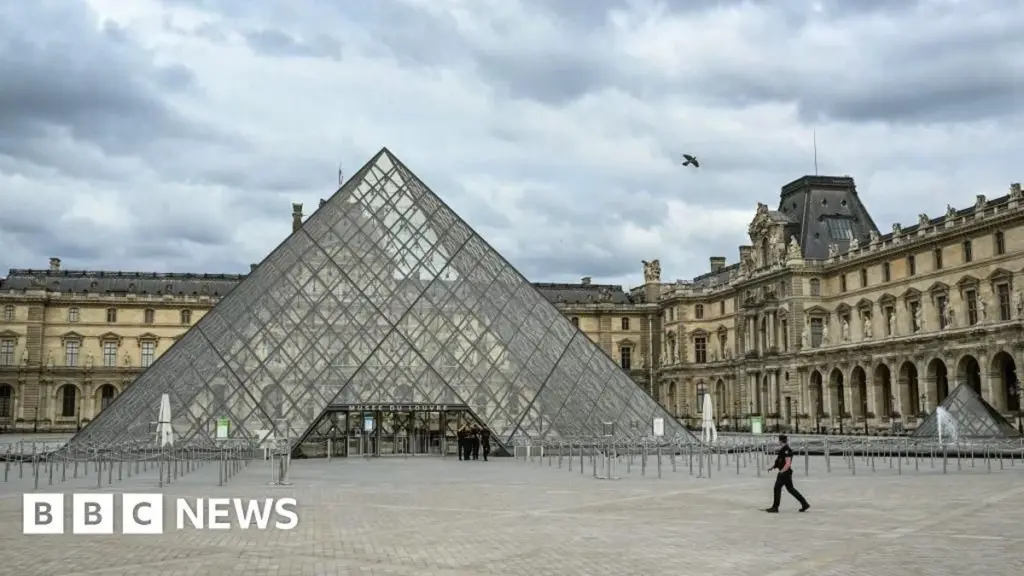
A recent water leak within the Louvre museum has resulted in damage to a 19th-century ceiling painting, marking the latest significant issue for the renowned Parisian institution.
The incident occurred late on Thursday night in room 707, identified as the “Duchâtel” room. This area, which houses numerous artworks dating from the 15th and 16th centuries, sustained water damage. The museum confirmed that the leak originated from a heating pipe and was successfully contained shortly after midnight.
The sole artwork affected was Charles Meynier’s ceiling painting, “The Apotheosis of Poussin, Le Sueur and Le Brun.” This event follows closely on the heels of separate incidents that have placed the museum under increased scrutiny.
Just the day prior, French authorities reportedly detained nine individuals, including two museum employees, in connection with an alleged ticket fraud scheme. Earlier in the year, the museum also experienced a theft of invaluable French crown jewels, which occurred in broad daylight, and another leak that caused extensive damage to hundreds of books.
According to the Louvre’s statement, the leak on Thursday night occurred at the entryway to the paintings department, situated in the Denon wing. Firefighters were dispatched promptly, and the leak was reportedly stopped within 40 minutes of its commencement.
On Friday morning, a painting restorer examined Meynier’s ceiling work. The assessment revealed “two tears in the same area, caused by the water, and the paint layer on the ceiling and its arches has lifted,” indicating visible damage.
The ceiling painting itself, bearing Meynier’s signature from 1822, portrays celebrated French painters Nicolas Poussin, Eustache Le Sueur, and Charles Le Brun. These figures are depicted amongst angelic beings, seemingly within clouds.
Rooms 706, 707, and 708, all located in the Denon wing on the building’s first floor, were closed to the public on Friday morning. However, these areas were anticipated to reopen later the same day. The chief architect of historic monuments also visited the site to evaluate the ceiling’s condition. The Louvre reported that the architect found no evidence of structural problems within the building itself.
A union representative informed the news agency Reuters that scaffolding had been erected in the vicinity of the leak. The precise cost associated with the damage to both the painting and the affected building sections remains undetermined.
This latest leak represents another in a series of challenges the Louvre, the world’s most frequently visited museum, has encountered recently. In December, a separate leak in the museum’s Egyptian department resulted in damage to an estimated 300 to 400 items, predominantly books. At that time, Francis Steinbock, the museum’s deputy administrator, acknowledged that the source of that leak had been known for several years.
The preceding month saw structural concerns leading to the partial closure of a gallery housing Greek vases, as well as nearby offices. This occurred shortly after a significant heist on October 19th. In that incident, four individuals absconded with historic jewelry valued at €88 million (£76 million; $102 million), exposing notable vulnerabilities in the museum’s security measures.
The daring theft involved a mechanical lift, reportedly mounted on a stolen vehicle. This equipment was employed to gain access to the Galerie d’Apollon (Gallery of Apollo) via a balcony adjacent to the River Seine.
While several individuals have been apprehended in connection with this specific heist, French police are continuing their investigation. The majority of the stolen jewelry has not yet been recovered. In response to the security breaches, the museum has since relocated some of its most valuable pieces to the Bank of France.
A report released in October by France’s public audit body offered criticism of the museum’s substantial expenditure on artwork. The report indicated that these spending priorities came “to the detriment of the maintenance and renovation of buildings.”