
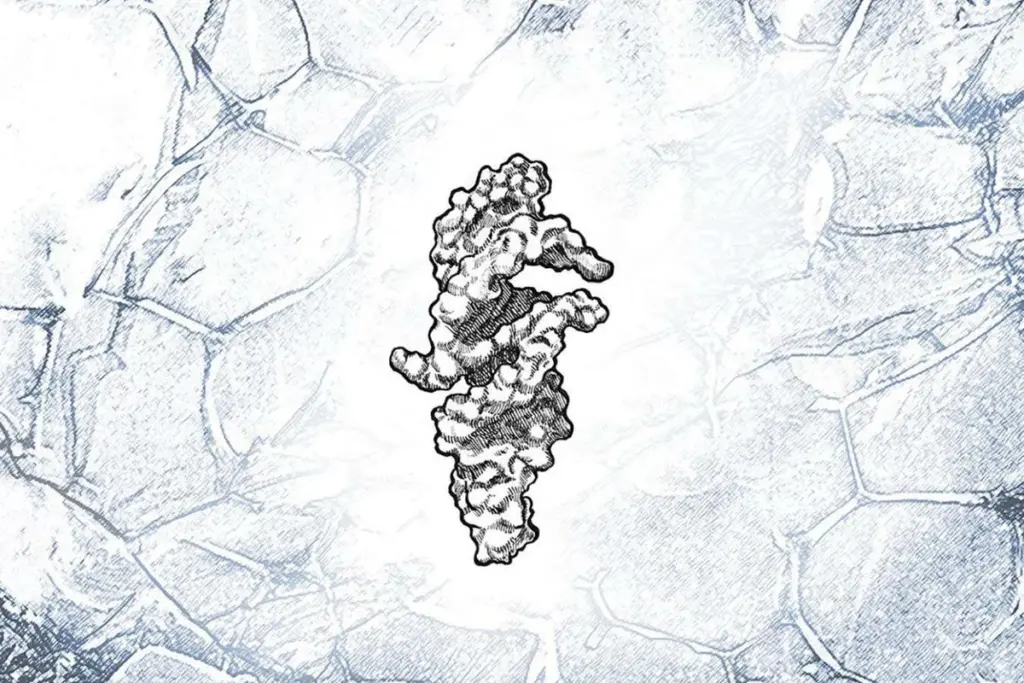
The prevailing RNA world hypothesis posits that life originated when RNA molecules gained the capacity to self-replicate. Recent discoveries have unveiled an RNA molecule that approaches this capability, executing crucial steps involved in the process, though not entirely in a single operation.
Philipp Holliger of the MRC Laboratory of Molecular Biology in Cambridge, UK, stated, “It’s been a long quest to get to the point where you can convince yourself that RNA has the capacity to make itself under the right conditions. I think this shows that it is possible.”
In contemporary living cells, proteins are essential for tasks like catalyzing chemical reactions, with their assembly instructions encoded within double-stranded DNA molecules. RNA, a chemical relative of DNA, typically exists as single strands. While less stable than DNA for information storage, RNA possesses a unique ability: it can fold into structures that act as protein-like enzymes, capable of catalyzing reactions.
The dual nature of RNA—storing information and acting as a catalyst—led to a hypothesis in the 1960s suggesting that early life might have been based on RNA molecules capable of initiating their own formation. However, identifying such molecules proved to be a significant challenge.
The Search for Self-Replication: Challenges and Breakthroughs
Researchers initially assumed that self-replicating RNA molecules would necessarily be large and complex. This assumption presented a hurdle, as unfolding large RNA structures for replication proved exceedingly difficult. Furthermore, while short RNA molecules have been shown to form spontaneously under specific conditions, the likelihood of large molecules arising in such a manner seemed improbable.
This perception prompted a re-evaluation. “This led us to think, well, maybe we’re wrong. Maybe something simple, something small, could carry out this process,” explained Holliger. “And so we went looking, and we found one.”
Constructing QT45: From Random Sequences to a Functional Molecule
RNAs are constructed from building blocks known as nucleotides. Holliger’s team embarked on a campaign, generating a trillion random nucleotide sequences, each spanning 20, 30, or 40 nucleotides in length. From this vast library, they identified three that exhibited the ability to perform reactions such as linking nucleotides together. These three sequences were then combined and subjected to multiple rounds of an evolutionary process. This involved randomly altering, or mutating, segments of the sequence and subsequently selecting for variants that demonstrated improved performance.
The outcome of this rigorous selection was a molecule named QT45, measuring a mere 45 nucleotides in length. Within an alkaline water solution, maintained just above freezing, QT45 can utilize single-stranded RNA as a template to synthesize complementary strands. It achieves this by joining short strands of two or three nucleotides, including the creation of a sequence complementary to its own structure.
“It’s currently quite slow and low-yielding, but that’s not a surprise,” Holliger noted. QT45 also demonstrates the capacity to generate additional copies of itself from these newly formed complementary strands.
QT45’s Capabilities: A Step Closer to True Self-Replication
Holliger further elaborated, “This is, for the first time, a piece of RNA that can make itself and its encoding strand, and those are the two constituent reactions of self-replication.” Despite this significant progress, the team has not yet managed to facilitate both of these crucial reactions within the same experimental environment.
The current objective involves further evolving the molecule and exploring various conditions, such as freeze-thaw cycles. The aim is to determine if these two essential reactions can be synchronized to occur simultaneously.
“The most exciting thing is, once the system begins to self-replicate, it should become self-optimising,” Holliger remarked. This self-optimization is anticipated due to the inherent error-prone nature of the replication process, which generates numerous variations. A subset of these variations may prove more efficient, leading to their increased production and a gradual refinement of the system.
Expert Reactions and Early Earth Parallels
Sabine Müller from the University of Greifswald in Germany described the new findings from Holliger’s lab as “exceptional and a significant advance, pushing things even closer to a fully self-replicating RNA.”
Zachary Adam at the University of Wisconsin-Madison highlighted the significance of discovering “a moderately sized RNA oligomer sequence with these self-synthesising capabilities.” He also pointed out the immense number of possible 45-nucleotide-long RNA sequences, noting that the team’s success in identifying QT45 from an initial pool of one trillion random sequences was a considerable achievement.
Holliger suggested that on the early Earth, molecules akin to QT45 might have achieved self-replication in environments resembling modern-day Iceland. Such locations would offer a combination of ice, hydrothermal activity to drive freeze-thaw cycles, and the creation of pH gradients. He posited that a form of compartmentalization would likely have been necessary to isolate key components, with possibilities ranging from meltwater pockets within ice to spontaneously forming cell-like vesicles from fatty acids.