
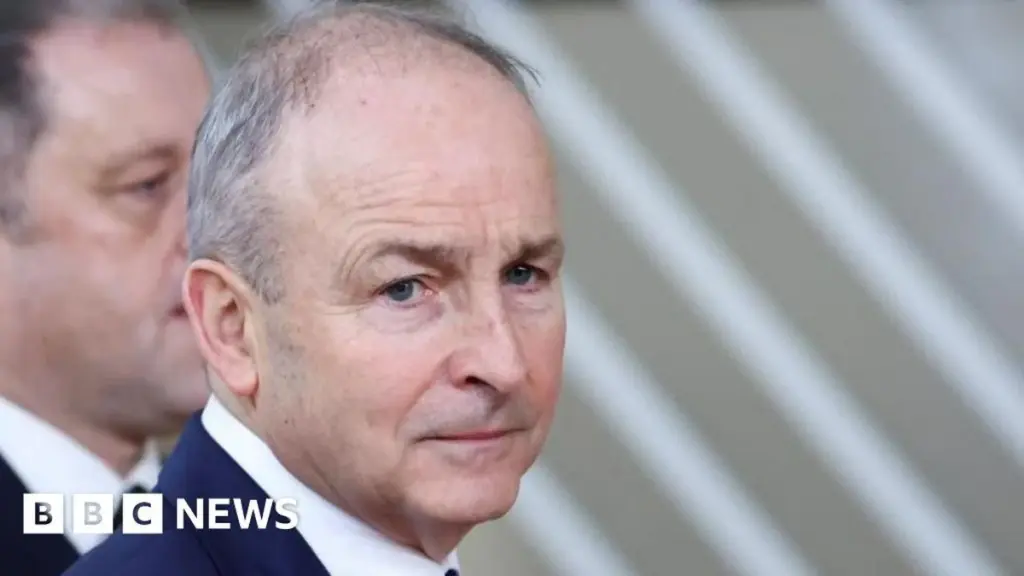
In a significant parliamentary moment, Irish Prime Minister Micheál Martin formally named Freddie Scappaticci, the former British Army agent known by the codename Stakeknife, during a debate in the Dáil, the Irish parliament.
Scappaticci, a man from west Belfast who passed away in 2023, was identified as the subject of the extensive Operation Kenova investigation. The final report from this inquiry into his alleged crimes, which incurred costs exceeding £40 million, was released the previous year. However, the report’s authors had been unable to secure government approval to formally name Stakeknife.
Scappaticci was widely alleged to have held the position of the highest-ranking British agent operating within the ranks of the Provisional IRA. The army had assigned him the codename Stakeknife.
Addressing the Dáil, Martin stated that Scappaticci’s identity was “clear to everybody here.” He reiterated his prior position that the agent “should be officially named by the UK government.”
Martin pointed out Stakeknife’s “close relationship with those who like to refer to themselves as the republican movement,” adding that it was “widely known that Stakeknife was Freddie Scappaticci.” He further detailed that the agent had been recruited by the British Army and had collaborated with them from the late 1970s through the 1990s.
The Prime Minister described Scappaticci as a “prized informant.” During his time as an asset, the British Army reportedly maintained a dedicated 24-hour phone line within its Intelligence Section specifically for his communications. Martin detailed that the agent became implicated in 14 murders and the abductions of 15 individuals, with these crimes committed “for and with” the Provisional IRA.
Martin asserted that “No amount of aggressive revisionist history from its supporters will ever erase their crimes against their own community.”
‘Stark and Deeply Disturbing’ Findings Emerge
Martin emphasized that it is “widely accepted” that the Provisional IRA was “responsible for over 1,700 deaths in Northern Ireland.” He characterized them as “a scourge on all communities, including those communities they falsely claimed to protect.”
The Taoiseach also formally called on Sinn Féin to issue an apology for “the activities of the Provisional IRA as documented in this report.” He concluded this point by stating, “It’s long past time for that apology and renunciation of what happened, to occur.”
In her response, Sinn Féin leader Mary Lou McDonald began her remarks with an apology. “To all those who have suffered such grievous loss, I am sorry for all the lives lost during the conflict and for the hurt and loss endured, without exception.” She described these words as reflecting “a genuine sense of sorrow and regret for everyone who was hurt and harmed during those years of violence. By that I mean civilians, combatants and families whose lives were forever changed.”
McDonald acknowledged that “no debate, no report and no political process” would ever fully address that profound “human cost.” She characterized the findings from the Kenova report as “stark and deeply disturbing.”
Calls for Public Inquiry and Scrutiny of UK Legacy Act
McDonald critically stated that collusion was “not an aberration but a defining feature of British state policy during the conflict.” She asserted that “all families” are entitled to truth and justice.
Furthermore, she urged the Irish government to consider a “full public inquiry” into “British State activity in this jurisdiction.” This call extended to examining the Dublin Monaghan bombings and “other killings of Irish citizens.”
The Sinn Féin leader criticized the UK’s Legacy Act, describing it as “designed to close down truth” rather than deliver it. She concluded that “The message is unmistakable – British state actors will not be pursued regardless of the dead. That is not the rule of law. That is impunity.”
McDonald raised the pertinent question of what the Irish government will accept as the UK government finalizes its controversial Legacy Act.
A spokesperson for the UK Government stated that the Government is “not yet in a position to formally respond to the request by Operation Kenova to name Stakeknife.” This is due to “ongoing litigation, and consideration of the recent judgement in the Thompson Supreme Court case.” They added that “The Secretary of State has committed to updating Parliament on the matter as soon as he is able to.”