
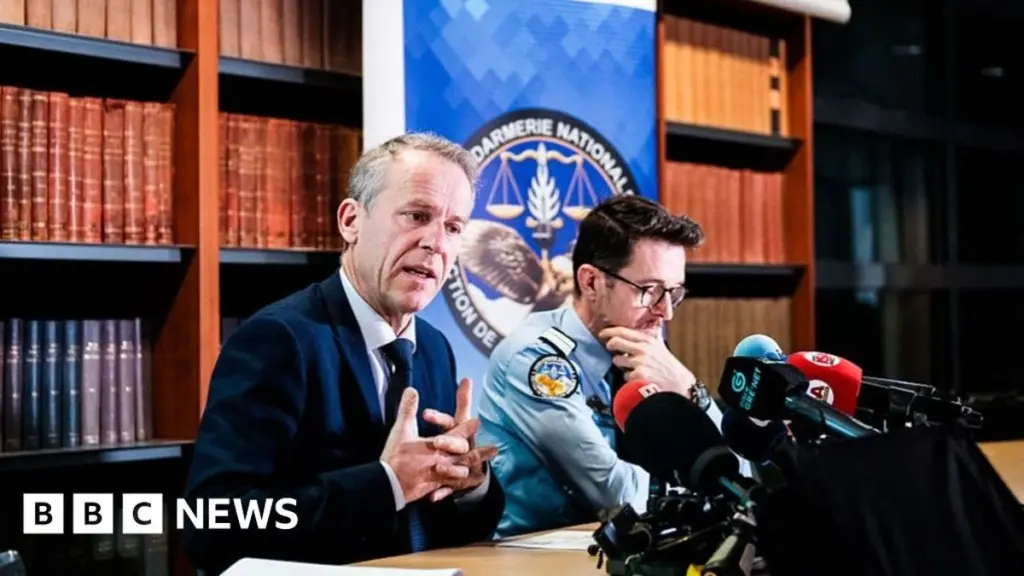
An elderly French national, Jacques Leveugle, aged 79, is facing charges related to the alleged rape and sexual assault of 89 minors. Authorities stated that the scope of these allegations spans multiple countries and dates back as far as the 1960s.
Leveugle, currently in custody in southeastern France, was apprehended following the discovery of a USB drive by his nephew. According to Grenoble prosecutor Etienne Manteaux, this drive contained details of the suspect’s alleged “sexual relations” with individuals aged 13 to 17.
In an uncommon move, authorities have publicly named the suspect. This decision was made because, out of the 89 alleged assaults, Manteaux indicated that only approximately 40 victims have so far been identified. “If victims wish to come forward, now is the time,” he stated during a press conference.
Police allege the offenses occurred intermittently between 1967 and 2022. During a significant portion of his adult life, Leveugle worked in informal capacities, such as a teacher or assistant, at holiday camps, the prosecutor’s office reported.
Alleged International Reach and Modus Operandi
A timeline of Leveugle’s movements, tracing back to the 1960s, has been released, illustrating his presence across various decades. Law enforcement officials contend that the alleged assaults may not have been confined to France. Investigators indicated potential instances in Germany, Switzerland, Morocco, Niger, Algeria, the Philippines, India, Colombia, and French overseas territory of New Caledonia.
“He travelled to these different countries, and in each location where he settled to provide tutoring and teach, he would encounter young people and engage in sexual relations with them,” Manteaux explained at the press conference held on Tuesday.
Discovery and Initial Arrest
Leveugle was detained in 2024 during a visit to his brother in the Isère department, near Grenoble. At the time of his arrest, Leveugle resided in Morocco. His brother’s son, who harbored suspicions about his uncle, seized an opportunity in October 2023 while Leveugle was away to examine a USB drive belonging to him. The drive purportedly contained “15 volumes of very dense material,” including photographs and written accounts of his alleged “sexual relations” with minors, as reported by Manteaux.
Prosecutors noted that victims interviewed described Leveugle as someone who dedicated considerable time to assisting them with learning foreign languages and fostering their cultural awareness. “He has a complex personality,” the prosecutor commented.
Extensive efforts have been undertaken to identify all potential victims. However, Manteaux revealed that some entries in his journal only contained first names, presenting a significant challenge. “That’s why we decided to launch this appeal—and also in case there are other victims not listed in his journal,” he added.
Involvement in Familial Deaths
During questioning, Leveugle also allegedly confessed to the killings of his mother and aunt, stating he suffocated them with cushions. He is accused of causing his mother’s death in 1974, when she was reportedly in the advanced stages of cancer. The prosecutor stated he purportedly committed a similar act against his 92-year-old aunt in 1992.
“He explained to us that he told (his aunt) he had to leave for the Cévennes. She was pleading with him not to go, so he took the decision to kill her too,” the prosecutor recounted. “He justifies the killings by saying he hoped someone would do the same to him if he was in the same situation at the end of his life.”
A separate judicial inquiry has been initiated into these alleged homicides.
Legal Context and Precedents
Under French law, offenses alleged to have occurred before 1993 are subject to the country’s statute of limitations, which would preclude prosecution for those specific acts. Nevertheless, Manteaux emphasized the importance of establishing a complete understanding of Leveugle’s alleged criminal history.
In two other prominent sexual assault cases recently processed in France, evidence of offenders’ activities, documented in records, proved instrumental in their convictions. In the Pélicot rape case, Dominique Pélicot maintained video recordings of men assaulting his wife, Gisèle, while she was unconscious after being drugged. He received a 20-year prison sentence.
Similarly, in Brittany, former physician Joêl Le Scouarnec systematically compiled detailed computer records of hundreds of children he allegedly molested within a hospital setting. The absence of this evidence might have prevented his conviction. He was also sentenced to 20 years in prison.