
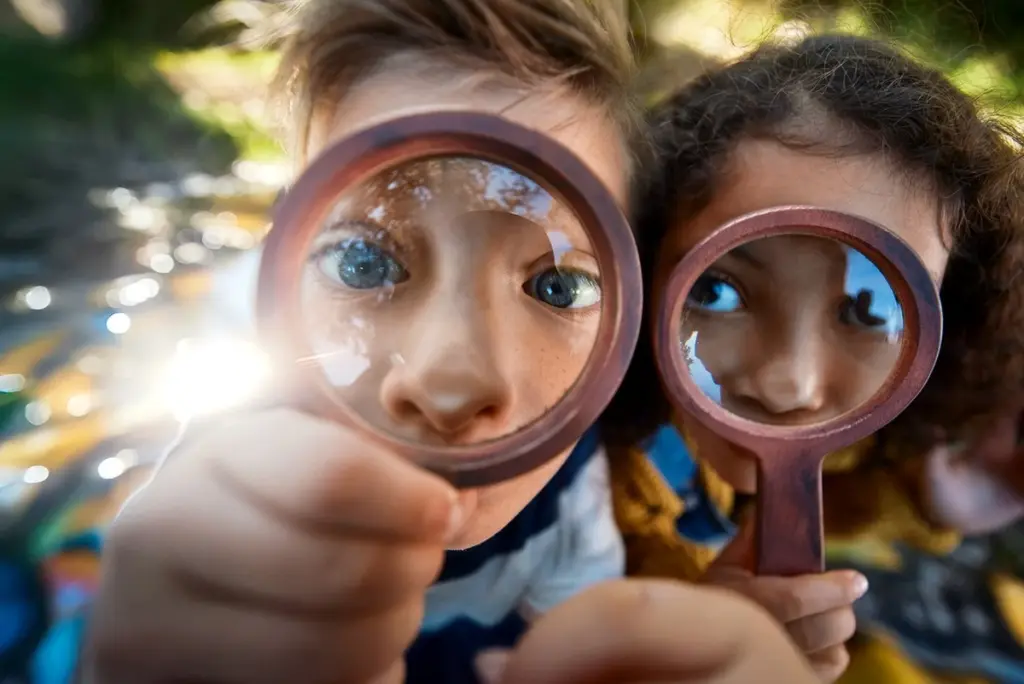
James Watson and Francis Crick’s quest to unravel the structure of DNA offers a compelling illustration of scientific progress born from a process akin to play. Inspired by Linus Pauling’s success in dissecting protein structures with physical models, Watson and Crick spent countless hours manipulating wire and cardboard representations of DNA’s fundamental components. Through this empirical exploration, their persistent curiosity, and the systematic evaluation of various configurations, they ultimately deduced the iconic double helix structure.
An Unexpected Breakthrough
This instance highlights how significant scientific advancements can emerge from activities that superficially resemble play—a term often associated with the trivial or the effortless. Paul Ramchandani, the LEGO Professor of Play in Education, Development and Learning at the University of Cambridge, notes that play “has a definite overtone of frivolous or unserious or not important.” However, this perception sharply contrasts with a growing body of evidence underscoring play’s crucial role. It is increasingly linked to the cultivation of a wide array of cognitive and emotional competencies. These include critical thinking, effective problem-solving, and resilience, alongside the vital capacity to forge robust interpersonal relationships and navigate complex social interactions.
Despite its profound importance, defining “play” precisely remains a challenge. Researchers frequently tailor their definitions to the specific research contexts, such as investigating adventurous or risky play, according to Ramchandani. Yet, a unifying characteristic persists: “It’s an activity that is joyful and enjoyable to children,” he states. Young children dedicate substantial portions of their time and energy to play, often describing it as “the majority of their world, particularly when they’re very young.”
The inclination for play is not exclusive to humans; various young animals, including rats, engage in extensive playful behaviors. The evolutionary rationale behind this distraction from essential activities like foraging remains a subject of debate. One prevailing theory suggests it serves as a training ground for crucial physical skills, while another proposes it fosters the development of social bonds, as explained by Ramchandani. Human play, in contrast, is considerably more multifaceted and evolves alongside a child’s development. Bo Stjerne Thomsen, Head of Educational Impact at LEGO Education, observes that “Children are thrown into a world of uncertainty and the unknown when they’re born. And the main mechanism to deal with that uncertainty is to play, to sense, and try and experiment with things around you. This is how children learn through play.”
This developmental trajectory begins with infant-parent interactions, nurturing relationships and foundational learning. It subsequently incorporates social engagement with peers and siblings, expanding to encompass imaginative, physical, and risk-taking play. Furthermore, young humans appear to possess a unique form of play involving the deliberate creation of self-imposed challenges. A leading hypothesis posits that this mechanism allows humans to cultivate curiosity-driven thinking by devising problems that necessitate inventive solutions.
Testing and Refining Ideas
Ramchandani acknowledges the ethical constraints that prevent deliberately depriving children of play for experimental purposes. However, opportunities exist to examine the effects of expanding play experiences. “Increasing play of various kinds is correlated with positive outcomes across almost every aspect of development,” he asserts. Emerging evidence from experimental studies also indicates that certain types of play can facilitate learning as effectively as, or in some cases more so than, formal instruction.
In 2022, Ramchandani and his research team at the Play in Education, Development and Learning (PEDAL) Centre at the University of Cambridge conducted an analysis of 39 studies focused on “guided” play among children aged three to eight. In contrast to “free” play, where children direct their own activities, guided play involves intentionally designed, playful educational tasks. While children retain a degree of choice, an adult gently steers them towards a specific learning objective.
The research revealed that guided play demonstrated comparable effectiveness to conventional teaching methods in developing core skills such as literacy, numeracy, social competencies, and critical thinking. Notably, for certain mathematical skills, specifically the comprehension of shapes, guided play proved superior. This advantage may stem from guided play’s capacity to allow children to explore geometric concepts through diverse approaches. The inherent enjoyment associated with play is also identified as a critical factor. “If children are enjoying themselves, they’re going to engage for longer,” Ramchandani notes.
Hands-on engagement with objects like blocks and puzzles can also contribute to the development of scientific reasoning abilities. A 2023 analysis by Ramchandani, Thomsen, and their colleagues reviewed 102 studies on the use of objects in learning, primarily involving early primary-aged children. The findings indicated benefits for children’s spatial, literacy, and science skills, with the most substantial evidence supporting improvements in mathematical skills.
Creative Connections
Significant links also exist between play and creativity, a fundamental element of scientific inquiry. “You’re creating, you are experimenting, you are buzzing ideas together,” Ramchandani remarks. “There is an obvious parallel with playing imaginatively or playing with friends.” The initial perception of Watson and Crick’s playful tinkering with wire and cardboard, therefore, belies its profound significance; it ultimately led to a Nobel Prize and unlocked one of biology’s most profound mysteries.
Build, Solve, Invent
LEGO Education has introduced new at-home STEM sets designed around a “build-solve-invent” play loop, grounded in research concerning children’s scientific skill development. These new sets integrate both free play with LEGO bricks and guided play, which involves following specific building instructions. Initially, children are presented with instructions for a guided build, demonstrating a particular creation.
However, LEGO designers have incorporated challenges requiring children to find solutions. An example is a toy spaceship that experiences a crash landing due to an imbalance. Andrew Snape, a learning designer at LEGO Education, explains that experiencing such frustration and repeatedly attempting to overcome failures are crucial for building resilience, confidence, and problem-solving capabilities.
Upon successfully resolving the initial problem, children are encouraged to engage in creative thinking and invent something new using a separate set of bricks. This might involve constructing a capsule designed to transport food to Mars. Snape elaborates on the pedagogical intent: “We wanted something on the end, saying, ‘All right, now you’ve solved the problem. Be a bit creative now and think about what a future problem could be or how you could take this a step further’.”
Nurturing Problem Solvers
These sets also facilitate a shift in parental roles, moving them away from being primary problem-solvers. Snape shares an observation from product testing: “I just didn’t realise that they were this good. I didn’t realise they could do this.” This sentiment reflects a common parental surprise at their children’s capabilities when given the opportunity to engage with challenging, play-based learning experiences.