
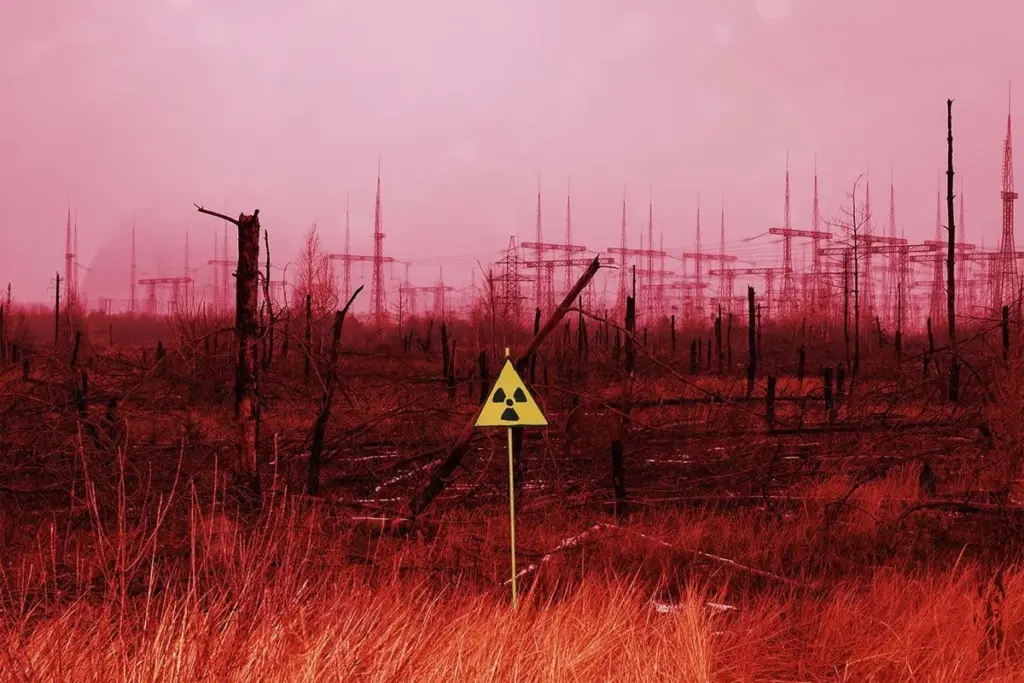
The catastrophic explosion occurred at 1:23 AM, a consequence of a routine safety test gone terribly wrong. A combination of flawed design and insufficient safety protocols resulted in the wide dispersion of radioactive material across the globe. Within a mere 48 hours, Chernobyl had earned its grim distinction as the site of the world’s most severe nuclear disaster. Four decades on, I find myself in Ukraine, seeking to understand the lasting impact of this event.
My initial guide is Kateryna Shavanova. An academic specializing in radiation-consuming bacteria, she was actively studying in Chernobyl when Russia’s invasion began in 2022. She now serves with the Ukrainian army’s chemical, biological, radiological, and nuclear risk team. Her uniform bears a patch, humorously translated as “It’s not time to drink iodine yet,” a nod to the emergency treatment for radiation poisoning. While we seek refuge from the chill in a former family home in the city of Chernobyl, located 15 kilometers south of the eponymous power plant, Shavanova articulates the complex reality: there is no simple answer to whether the region is truly safe. The assessment, she explains, depends entirely on the perspective of the observer and their intended activities.
The Lingering Presence of Radioactivity
What remains indisputable is the release of over 100 distinct radioactive materials following the 1986 explosion of reactor 4 at the Chernobyl nuclear power plant. Iodine-131, a particularly hazardous element, was readily absorbed by the human body, concentrating in the thyroid gland. With a half-life just exceeding one week, this radionuclide presented a relatively short-term threat. While the risks associated with other dangerous materials like caesium-137 and strontium-90, both possessing half-lives of approximately 30 years, are gradually diminishing, an enduring presence of radioactivity persists.
The most heavily contaminated area remains reactor 4 itself. At the time of the explosion, it contained 1,900 kilograms of uranium-235 and 760 kilograms of plutonium-239. These isotopes possess formidable half-lives of 704 million years and 24,110 years, respectively. Fortunately, the dispersal of these longer-lived contaminants was significantly less extensive than that of the shorter-lived radionuclides. Much of the localized radioactive debris was meticulously collected and interred, a task undertaken at considerable personal risk by the estimated 600,000 “liquidators” who responded to the disaster.
Despite my years of writing on nuclear safety and experiencing controlled proximity to hazardous materials within shielded UK reactors, the atmosphere at Chernobyl feels profoundly different. Radioactive particles lie just beneath the surface of the soil. While adhering to my guides’ instructions ensures safety, with only a statistically negligible increase in the risk of radiation-related illness, the inherent danger creates a subtle unease. The intangible nature of radiation makes its risks more challenging to comprehend and manage. It is an admission I make without shame: a residual radiophobia led me to discard my boots before returning home.
Resettlement and the Shadow of Occupation
Following the disaster, the once-vibrant cities of Chernobyl and the adjacent Pripyat were evacuated. Power station personnel and their families were relocated to the recently established city of Slavutych. Workers continue to reside there, yet their commute to the plant is now a considerable 260-kilometer round trip, necessitating a crossing of the Dnieper River. The former, more direct train route briefly passes through Belarus, a nation with closely aligned ties to Russia.
For many decades, the primary workforce at Chernobyl consisted of scientists engaged in contamination monitoring and research into the environmental consequences of radiation exposure. This changed in 2010 with the commencement of work on the New Safe Confinement (NSC) arch. This immense structure was engineered to enclose both the ruins of reactor 4 and the concrete sarcophagus that had been hastily erected in its aftermath. The completion of the NSC in 2016 brought a collective sigh of relief, paving the way for long-term decommissioning plans for reactor 4 and the secure storage of its hazardous remains – a process projected to span a century.
Individuals I encountered spoke with fondness of that period, describing the site as both beautiful and compelling. “People who work here, they love it. They can’t leave. They have roots,” Shavanova remarked. It is easy to understand this attachment; the environment evokes the serene atmosphere of a picturesque nature reserve. The absence of human activity, coupled with the decaying structures of industrial infrastructure, imparts an otherworldly quality.
This unexpected tranquility was disrupted in 2019 by the broadcast of a highly popular HBO drama that vividly portrayed the disaster’s horrors to a contemporary audience. “After that, it was like Disneyland,” Shavanova recalled. “We couldn’t do our job because there were a lot of tourists.”
However, this surge in tourism was a prelude to the profound upheaval that followed. When Russia launched its full-scale invasion of Ukraine on February 24, 2022, Chernobyl found itself directly between the advancing forces and the capital city, Kyiv. Evidence of that military presence is now readily apparent along the routes leading to Chernobyl: damaged buildings, military cemeteries, and extensive minefields.
During the Russian occupation, soldiers created trenches in contaminated zones, looted valuables, and sabotaged laboratories, experiments, and data archives. Denys Vyshnevskiy, affiliated with the Chornobyl Radiation and Ecological Biosphere Reserve, recounted returning post-occupation to find his office ransacked. Items such as shoes, a microwave, and maps were stolen. Notably, his library remained untouched, with the sole exception of a missing copy of Keith Richards’s autobiography.
Computers were confiscated. Vyshnevskiy initially changed his passwords, assuming the equipment had been seized by intelligence agencies for its valuable data or maps. However, he later discovered components strewn near abandoned Russian trenches, suggesting that bored soldiers had simply removed usable or sellable parts. “It’s typical behaviour for a medieval army,” Vyshnevskiy commented, as a smartphone alert announced an air raid in Kyiv.
The occupation, which concluded in April 2022 with the recapture of the plant by Ukrainian forces, remains an indelible part of Chernobyl’s narrative. Within the Institute for Safety Problems of Nuclear Power Plants (ISPNPP), I observed several ransacked rooms preserved as time capsules. Papers and equipment were scattered, computers obliterated, and furniture damaged, creating the disquieting impression that Russian troops had only just departed. Olena Pareniuk, a researcher at ISPNPP, revealed the irreparable setback to her work on radiation-eating bacteria, caused by this vandalism in her laboratory.
A Complex Scientific and Geopolitical Challenge
New Scientist has agreed to withhold specific details regarding the military installations and fortifications observed within the 2,600 square kilometer exclusion zone surrounding the damaged reactor. However, it is evident that the area is now heavily fortified against future Russian incursions. Consequently, what lies ahead for Chernobyl and its ongoing cleanup efforts presents a formidable scientific and environmental quandary, now compounded by a formidable geopolitical and logistical challenge.
Sergii Obrizan, a colleague of Vyshnevskiy at the Chornobyl Radiation and Ecological Biosphere Reserve, stated that the scope and depth of their previous research are no longer feasible. “The war and everything around it – troops, occupation, militarisation – influences the zone a lot, and our work,” he explained. A significant aspect of Vyshnevskiy and Obrizan’s responsibilities involves monitoring wildlife within the exclusion zone, where the diversity of species is astonishing. I observed footprints of wolves and moose, though the animals themselves remained elusive. “They’re smart, they avoid humans,” Vyshnevskiy remarked. He has encountered wolves on five or six occasions during his 26 years working in the zone; while he has not personally seen a lynx or a bear, colleagues have.
Tragically, such expeditions are no longer safe in many of Chernobyl’s habitats, which are now extensively littered with landmines planted by both Russian and Ukrainian forces. Vyshnevskiy recounted the fate of a firefighter tackling a forest fire ignited by a downed Russian drone, who subsequently stepped on a mine. His remains were discovered 70 meters away. He is aware of three wild horses killed by similar incidents, though the vastness of the zone implies that most animal casualties go unreported.
During my travels, minefields and military checkpoints became commonplace. Areas once designated as tourist attractions or utilized for public services are now highly classified sites. This pervasive militarization has displaced scientists; where hundreds once worked, during my visit, all gathered around a single table for dinner prepared by Vyshnevskiy.
Prior to the conflict, research institutions and groups occupied a row of houses adjacent to Lenin Street, each claiming a dedicated space. Tonight, we convene at a location that served as a makeshift laboratory for the Ukrainian Institute of Agricultural Radiology. Its spacious garden features several mature apple trees, their fruit occasionally consumed. Suspended from the ceiling of an outbuilding are cotton bags containing experiments on insect life. Bookshelves are lined with notebooks filled with penciled scientific data from earlier research.
Art historian Oksana Semenik shared over dinner that her father was deeply saddened to learn his former home in an evacuated village had recently been demolished. The reasons for its destruction, and whether it was the result of Russian or Ukrainian actions, remain unknown. During her childhood, residents were permitted informal, annual visits to the area. She humorously recalled that the Soviets had, in jest, instructed radiation to take a day off.
Some individuals chose to return permanently. Approximately 1,200 evacuees resettled in Chernobyl during the late 1980s and early 1990s, without any official intervention to prevent their return. They exist in a legal gray area that has become increasingly ambiguous since 2022. Obrizan noted that their numbers have diminished due to old age, but there are still 40 civilians residing in the city of Chernobyl and an additional six in a nearby village.
Among them is retired teacher Yevhen Markevich, now 88 years old. He has lived in Chernobyl his entire life, with the exception of one month following the 1986 disaster, during which he was temporarily relocated. Markevich and his wife, Galyna, welcomed me into their wooden home, sharing it with a dog and 15 cats that freely enter and exit through a hatch in the kitchen wall. While exhibiting the natural slowing of age, the couple appears to show no adverse effects from radiation. Their garden is meticulously tended, and they express deep affection for their home.
The notion that Chernobyl has been largely abandoned since the 1986 accident is, in reality, a misconception. Reactor 2 operated until 1991, reactor 1 continued until 1996, and reactor 3 was not shut down until 2000. Workers engaged in relatively routine tasks within standard office environments, situated mere hundreds of meters from one of the planet’s most radioactive sites.
Chernobyl’s Hazardous Inheritance
Jim Smith of the University of Portsmouth, UK, estimates that approximately two-thirds of the exclusion zone is technically suitable for human habitation. “The danger to humans isn’t so great now, and really never has been,” Smith stated. “The Soviets spent a lot of effort: once they’d acknowledged that they’d done this terrible thing, they almost went over the top in evacuating people and in some of the measures they took.”
Smith points out that millions worldwide receive higher natural radiation doses from geological sources or air travel than the Markevichs and other self-settlers experience from residing within the exclusion zone. Nevertheless, this does not negate the fact that Chernobyl did cause illness and fatalities. Two individuals perished directly from the explosion, while approximately 28 firefighters and emergency responders died within three months due to radiation exposure. Attributing individual illnesses occurring years or decades later to the disaster is significantly more complex. The most reliable estimates, derived from extensive population models, indicate a death toll of 15,000, according to Smith. Incomplete data prior to 1986, inflated figures, and a public misunderstanding of radiation have contributed to a perception of the crisis being far more severe than actual data supports.
Chernobyl’s most detrimental legacy may have been its adverse impact on public perception of nuclear power. A recent study suggested that the subsequent increase in fossil fuel consumption, driven by this shift, led to elevated air pollution, contributing to a reduction of 318 million expected life-years globally.
Through their research at Chernobyl, scientists here aim to address public apprehension regarding nuclear energy and leverage their considerable expertise to assist with other nuclear incidents. Several of them visited Fukushima following the 2011 disaster, where their knowledge proved invaluable. While the underlying physics remains consistent, the economic and political contexts diverge significantly. Ukraine possessed sufficient land to effectively cordon off Chernobyl and leave it undisturbed. In Japan, however, land is scarce, and a cultural imperative exists to rectify mistakes. Consequently, the affected land was meticulously decontaminated in a manner that would be economically unfeasible in Ukraine. Despite these efforts, former residents of the Fukushima region have expressed reluctance to return. Radiation continues to be an area of public concern. Its effects can range from minimal to catastrophic, and comprehending these variations necessitates an understanding of physics, biology, and geography.
The New Safe Confinement and its Challenges
To gain a more profound understanding, I felt compelled to enter the core of Chernobyl’s exclusion zone, the site of reactor 4. Approaching the 36,000-tonne NSC shelter, constructed between 2010 and 2016 at a cost of €1.5 billion, I struggled to grasp its sheer magnitude. It appears squat from a distance, but the external staircase on its end reveals its colossal scale. The arch spans 257 meters and rises 100 meters. Approximately 650,000 bolts secure its framework.
Among the region’s many unusual constructions, the shelter stands out as the most uncanny. It is relatively modern and unadorned. However, mere meters away lies the fractured reactor, the hastily erected sarcophagus built by the Soviet Union, the remains of at least one plant worker, and some of the most notorious and deadly environments on Earth, where contact with the wrong element or prolonged exposure to a particular area could prove rapidly fatal. A part of me yearns to explore within, to navigate the debris and witness the fuel fragments, the grotesque lava formations, and the rusting machinery. Yet, another part of me desperately wishes to retreat as far as possible.
Inside, on the ceiling of the NSC, crane gantries are installed, designed to facilitate the slow, meticulous deconstruction of both the sarcophagus and the reactor. However, last year, Russia struck the NSC roof with a drone, creating a hole through its multi-layered construction. Footage from that night depicts fire and smoke emanating from the breach. Fortunately, the impact occurred sufficiently far from the edge of the structure that debris did not fall onto the fragile reactor or sarcophagus below, an event that could have triggered a collapse and released dangerously radioactive material. Today, a temporary patch is visible on the roof, until plainclothes security personnel emerge and escort me away.
The NSC arch consists of two layers, separated by roughly 12 meters of open space. Each layer is a composite of insulation material sandwiched between metal sheeting. Viktor Krasnov, acting director for science at ISPNPP, presented a small cross-section of the roof stored in a bin bag behind his desk. He explained that the metal is non-combustible. Plucking a piece of insulation from the interior of the section, he demonstrated with his cigarette lighter that it too does not ignite. The issue lies with a rubber sheet situated within the insulation layer, designed to maintain the structure’s airtightness.
It was this rubber that ignited, smoldering for three weeks. Anatoly Doroshenko, a young scientist at ISPNPP, spent this period piloting a drone equipped with an infrared camera above the building to identify hot spots and guide firefighters. The drone also carried radiation sensors to ensure the safety of the personnel. By the end of the incident, the initial hole, approximately 60 square meters—the size of a squash court—was the least of the concerns. Firefighters were compelled to create around 200 new perforations in the structure to position their hoses and extinguish the rubber fire, which had consumed vast sections of the massive building.
Krasnov stated that the careful monitoring of conditions within reactor 4 resumed hastily following the Russian occupation. However, they now face the challenge of re-securing the building, a setback they could have done without. “You cannot tell radioactivity to stop being radioactive,” he stated. “The war didn’t stop us. We’re working on how to restore it.”
In April 2025, engineers implemented temporary patches on both the inner and outer shells of the NSC, working to achieve a seal before the onset of winter rain and snow. Krasnov confirmed that the structure is now airtight once more. However, the remnants of the drone impacted a gantry within the NSC, and the tracks for the overhead cranes are also damaged. The absence of these cranes introduces another engineering obstacle to the long-term plans for decommissioning reactor 4. While ordinarily, such repairs would not present insurmountable difficulty, this is Chernobyl. A significant neutron flux continues to emanate directly from the reactor’s shattered core. Consequently, how does one repair the gantry and cranes? “Well, I wouldn’t like to do it,” Pareniuk admitted. “And I wouldn’t like to be responsible for the people who are repairing it.”
“To see this building destroyed, which was very, very difficult to build in the first place, is extremely painful,” remarked Balthasar Lindauer from the European Bank for Reconstruction and Development, which oversaw the funding and construction of the NSC. Funds earmarked for decommissioning work had already been reallocated to ensure site safety following the Russian occupation. Now, additional financial resources are required solely for repairing the NSC. “If Ukraine is left alone with this problem, I see very difficult times ahead,” Lindauer warned. “A hundred years was quite a luxurious kind of timeframe. That luxury may have been reduced.” Currently, there is no explicit plan for the permanent dismantling and secure storage of reactor 4’s radioactive remains.
Ecological Recovery and Shifting Priorities
Elsewhere, however, encouraging signs of change are emerging. Chernobyl’s cooling ponds were vast, artificial lakes maintained continuously at a level 7 meters above the Pripyat River via pumps. Entire villages that predated the plant were submerged during the ponds’ creation. Today, one can observe concrete electricity pylons that once traversed the area long before the power station existed.
One scientist recalled swimming in a cooling pond years ago to wash off after a day of taking radiation measurements in the dusty exclusion zone. Such jarring and seemingly illogical practices are a constant feature of Chernobyl, where risks are systematically assessed by experts who live with them daily. The cooling pond pumps were deactivated in 2014, and it took four years for the water levels to stabilize in equilibrium with the river. The lowest points remain flooded, revealing the contours of ancient, meandering riverbeds that had been hidden for decades. These areas have accumulated heavy radioactive elements, rendering them even more dangerously contaminated today than the larger ponds were immediately after the accident.
I undertook a short hike across a now-dry section of the ponds with Olena Burdo of the Kyiv Institute for Nuclear Research. We navigated a thick bed of shells left from the ponds’ existence, passed wild boar bones, and traversed young birch forests, staying within areas delineated by white tape, where army sappers had conducted mine clearance. We walked past abandoned boats and a fire engine. In less than a century, this territory transformed from land to lake and back to land. “Before 2022, we thought only about radiation,” Burdo stated. “Now we think about radiation and mines.”
Burdo explained that the land created by draining the ponds is relatively safe at the surface, but contaminants like strontium can be found just 20 centimeters below. She is currently conducting studies on rodents to track wildlife migration into the newly drained areas. As we walked, Burdo identified a small burrow, suggesting the presence of a new rodent species yet to be documented on the pond land — a subject for future investigation.
Over the past two years, vegetation has begun to flourish, a development that has led to the dredging up of strontium. Grasses with high contamination levels are consumed by rodents, which are subsequently preyed upon by larger animals. While radiation undoubtedly influences the wildlife in the cooling ponds area, it does not necessarily imply danger. Burdo aims to conduct experiments to distinguish ecological effects from radiation impacts. “It’s new territory. Maybe in the whole world we don’t have the same place. I think it’s really unique.”
There are indications that these cooling ponds may be reverting to their original state: a functioning forest and a healthy ecosystem. “Maybe it can be, but we don’t know,” Burdo stated. “We’ll learn about this maybe in the future, 10 years later, something like this.”
The rapid rate of change, and the unforeseen consequences that can arise from human intervention, underscore the need for thoughtful consideration of any future use of this territory. Vyshnevskiy observed that the initial decade following the disaster was marked by a series of unsuccessful experiments, as politicians appeared eager to exploit the exclusion zone for agricultural purposes. Fish farms, beekeeping, grain cultivation, and dairy operations—none yielded satisfactory results. He argued that these plans failed to acknowledge the region’s pre-existing lack of fertility before the plant’s construction. “It was nonsense,” Vyshnevskiy concluded. “They wasted a lot of money.”
Some maintain that agriculture could potentially succeed, although the zone’s designation as a nature reserve makes this prospect unlikely on a large scale. Smith participated in a project to produce vodka within the exclusion zone. While the grain cultivated near Chernobyl city contained sufficient caesium to exceed the European Union’s radioactivity limit of 1,250 becquerels per kilogram, the resulting vodka had no detectable levels of strontium or caesium. Last year, 2,000 bottles were sold, with proceeds donated to Ukraine.
Chernobyl’s Future Trajectory
If the exclusion zone is unlikely to be repopulated or utilized for agriculture, what alternative uses are feasible? Most individuals I encountered shared a common sentiment: they strongly oppose a resurgence of “dark tourism,” a practice where visitors scour abandoned Pripyat homes for diaries, dolls, or gas masks to capture sensational photographs for Instagram. “It’s not respectful,” stated Pareniuk. “It’s like going to a graveyard just to see ghosts and zombies. But the people who lived here were real people, not ghosts and zombies.”
Many also emphasized Chernobyl’s crucial role in facilitating research into radiological disasters, advocating for a return to its status as a hub for scientists. “The Chernobyl zone is a unique place for researchers, and there’s no other place like this in the world,” said Obrizan. He spoke fondly of Western universities that visited before the war, clearly valuing the collaborative work they undertook.
Vyshnevskiy further characterized it as a “supermarket for researchers.” One can investigate the effects of caesium radiation on ponds or rivers, or the impact of strontium on insects, rodents, birds, or large mammals. Research into methods for restoring nature at former industrial sites or testing new safety and monitoring equipment for other reactors is also possible here.
It is a sobering thought, but such information is likely to prove invaluable. Nuclear disasters have occurred and will likely continue to happen. A recent study suggests an average of one disaster every 25 years, or one for every 3,704 years of reactor operation globally. Therefore, we may be overdue. “It’s not a matter of belief, it’s a matter of the calculations,” Pareniuk asserted.
On a positive note, much like in the aviation industry, lessons learned from each accident contribute to reducing the likelihood of future occurrences. However, the current situation is unprecedented, with warfare occurring in proximity to nuclear power plants, including ongoing fighting at the Zaporizhzhia Nuclear Power Plant in southern Ukraine, which continues to compromise safety. “It’s a pity, but Russia will always be our neighbour, and they have a lot of nuclear weapons and they have a lot of nuclear power plants, and they don’t treat them well,” Shavanova observed. “You should understand our experience and use it. You can practise here. We can use it for something good.”
To describe Chernobyl’s exclusion zone as a dangerous wasteland is both technically accurate and fundamentally misses the point. Hundreds of species are thriving here more than anywhere else. Nature is being afforded the space to recover and flourish. Radiation persists, either dissipating in isolated hotspots or being sequestered by plants and animals. Although forest fires, floods, and the Russian military pose threats that could potentially re-disperse this energy, if left undisturbed, the area remains safe. With diligent stewardship and the restoration of peace, Chernobyl could evolve into a European treasure rather than a lasting disaster.