
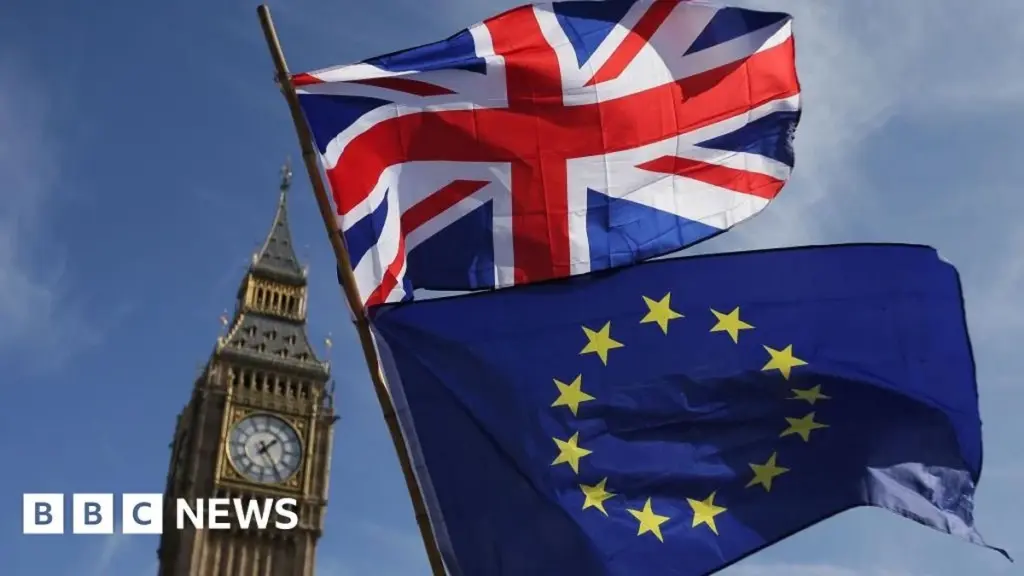
The United Kingdom’s relationship with the European Union remains a central and dividing issue in British politics. Prime Minister Rishi Sunak appears to be leveraging these divisions, seeking to foster closer ties with the continent. This strategic move acknowledges a pre-existing desire, articulated by Sir Keir Starmer, for a more integrated relationship with the EU, though this was previously presented in broad, unspecified terms as part of his 2024 general election platform.
Significant negotiations have been underway for the past eleven months, since the inaugural UK-EU summit. These discussions focus on pivotal areas such as food and drink standards, carbon emissions, and electricity. The UK government’s objective extends beyond merely adopting current EU regulations in these three sectors; it aims to continuously align with evolving European standards over time.
Legislation concerning these agreements is scheduled for a parliamentary vote later this year. However, a nuanced aspect of this alignment process involves secondary legislation. This means that as the UK updates its rules to match EU standards, further parliamentary votes may not always be required. It’s worth noting that Conservative administrations previously employed secondary legislation to facilitate divergence from EU rules.
Political Repercussions and Sovereignty Debates
The government’s acknowledgment that this approach will utilize parliamentary procedures has ignited significant opposition from Conservative ranks and Reform UK. The core of this contention, however, transcends procedural matters. It delves into fundamental questions surrounding Britain’s sovereignty, economic standing, and global position – debates that have deeply influenced political discourse for over a decade.
A notable aspect of the current political landscape is the Prime Minister’s apparent embrace of this complex debate. Andrew Griffith, the Conservatives’ shadow business secretary, articulated strong criticism, suggesting the government’s plans would relegate Parliament to a mere observer while Brussels dictates terms. He argued this scenario directly contradicts the public’s decision in the 2016 referendum. Similarly, Nigel Farage of Reform UK characterized the acceptance of EU rules without parliamentary consent as a profound betrayal of the Brexit mandate.
This opposition highlights a fundamental principle: the UK’s acceptance of EU rules should not occur without its ability to influence them as a member of the bloc. While Sir Keir Starmer frames his position differently, the government’s stance suggests that becoming a “rule-taker” in specific domains is a worthwhile trade-off for tangible economic benefits.
Global Instability and the Economic Imperative
The Prime Minister has consistently pursued alignment with EU regulations in these designated areas, even predating his divergence from President Trump on Iran policy. However, the increasing global instability, partly attributed to the unpredictable nature of the current US presidency, now forms a significant part of his justification for this policy. He has articulated that in a world marked by widespread conflict and profound uncertainty, a stronger, closer relationship with Europe is in the UK’s best interests.
This sentiment was echoed by Sir Keir Starmer at a press conference earlier this month, addressing the economic repercussions of the war in Iran. He concluded his opening remarks by stating that the UK’s long-term national interest necessitates a closer partnership with its European allies. Starmer emphasized that Brexit had inflicted substantial damage on the UK economy and that the nation should pursue more ambitious goals for enhanced economic cooperation. These are positions that the Prime Minister, who rose to prominence within the Labour Party as Jeremy Corbyn’s shadow Brexit secretary, had largely avoided articulating as leader until recently.
The perceived risk of alienating Labour voters who either supported Brexit or opposed its relitigation was a significant consideration for party strategists. This political calculation appears to have shifted, influenced partly by polling that indicates growing public dissatisfaction with Brexit. Furthermore, there is an increasing recognition of the challenges Labour faces from its progressive voter base, particularly following the Green Party’s success in the Gorton and Denton by-election in February.
Navigating the Post-Brexit Landscape
However, there is a potential risk that Sir Keir Starmer might draw attention to UK-EU relations without introducing sufficiently transformative changes to satisfy undecided progressive voters. His commitment remains to the fundamental structure of the UK’s post-Brexit arrangement, established nearly a decade ago: no membership in the single market, which would entail free movement of people, and no membership in the customs union, which would require abandoning existing post-Brexit free trade agreements.
Evidence suggests that Sir Keir Starmer may face internal pressure to pursue a more significant re-engagement with the EU. Sadiq Khan, the Mayor of London, who is reportedly considering a fourth term in 2028, has publicly advocated for the UK to rejoin the single market and customs union before the next general election, and subsequently campaign on a platform of rejoining the EU entirely.
Some within the government who favor closer EU relations acknowledge a potential risk: each time Sir Keir Starmer emphasizes the centrality of this to his agenda, it may embolden the EU to demand a higher price for any agreements. A government source noted that, drawing from past Conservative experiences, the EU often drives a hard bargain, particularly when perceived as selectively seeking advantages from the single market.
Ongoing Negotiations and Future Prospects
The current regulatory discussions are not the most contentious negotiations underway with Brussels. Talks concerning a youth mobility scheme have reached an impasse, primarily due to the UK’s desire to impose a cap on the number of young individuals eligible to come to the EU annually. Additionally, some EU member states are pushing for EU citizens to be charged the same university tuition fees in the UK as British nationals.
These various initiatives are anticipated to materialize during a second UK-EU summit scheduled for the coming months. Ten years after the referendum vote, Brexit has demonstrably returned to the forefront of British political dialogue.