
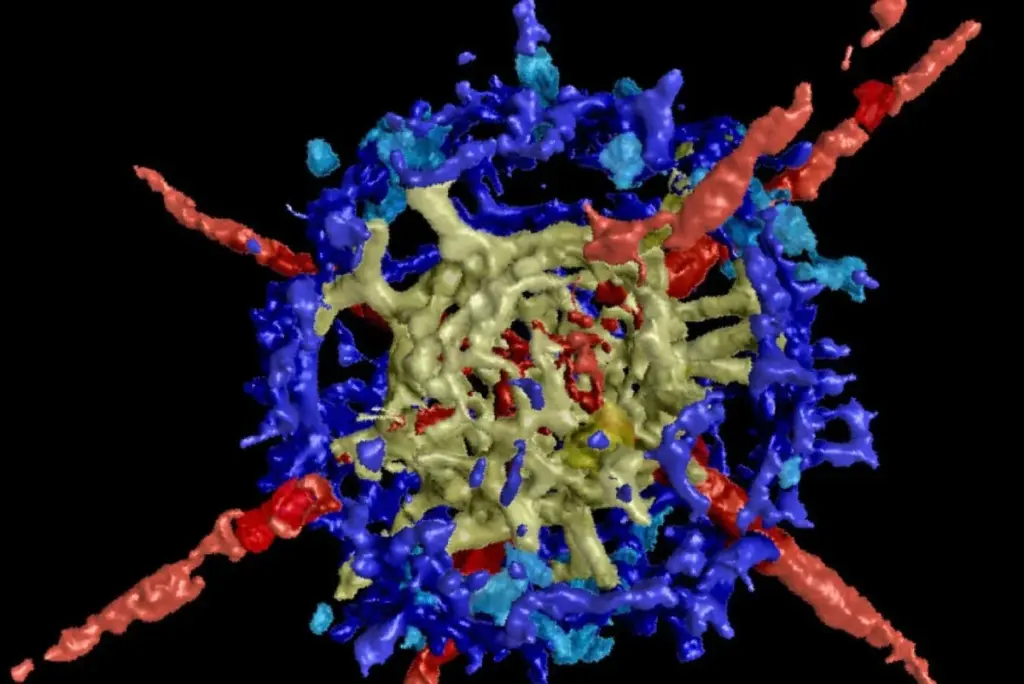
A minuscule fragment of ancient rock, comparable in size to half a grain of rice, has yielded an astonishing discovery. Researchers have identified 20 microscopic fossils belonging to eight distinct species. Among these is a species previously unknown to science, a finding poised to deepen our comprehension of the second-largest known mass extinction event. This discovery also underscores the power of novel analytical techniques in unearthing aspects of the fossil record that have remained hidden until now.
The team, led by Jonathan Aitchison from the University of Queensland in Australia, extracted this minuscule pellet from a rock formation. This rock was originally collected in late 2018 from the Sichuan basin in China, situated approximately 300 kilometers south of the city of Xian. Dated to 445 million years old, the rock predates the Late Ordovician mass extinction, an event recognized as the second most severe in the last half a billion years of Earth’s history.
Unveiling Microscopic Life
Within the confines of this tiny pellet, eight different species of radiolarians were identified. These single-celled organisms, which construct their shells from silica, are still prevalent in Earth’s oceans today. The fossils discovered within the grain-sized sample represent a significant taxonomic diversity: five genera, four families, and three orders. Notably, the collection includes a new species, which the researchers have formally named Haplotaeniatum wufengensis.
The exceptional preservation of these specimens is attributed to their complete encasement and infill by bitumen. This process not only protected their external structures but also meticulously preserved their internal details, leaving behind perfect impressions of the ancient organisms.
Insights into Pre-Extinction Ecosystems
Patrick Smith, a researcher at the Geological Survey of New South Wales in Sydney, Australia, who was not involved in the study, commented on the temporal significance of these fossils. He noted that they originate from a period just before the extinction event had fully taken hold. Smith explained that the high number and variety of fossils found indicate that marine ecosystems, and specifically microscopic plankton communities, were thriving and highly active in the lead-up to the extinction. He further elaborated that the Ordovician oceans were considerably richer biologically than previously understood, especially at the microscopic level. These newly unearthed fossils, he stated, reveal flourishing plankton communities at a time when Earth’s oceans were on the brink of profound environmental upheaval.
Revolutionary Analytical Techniques
Traditionally, the study of such minuscule fossils involved dissolving the surrounding rock using acid. Aitchison described this method as “incredibly destructive.” The research team, however, opted for a groundbreaking approach. They employed a sophisticated X-ray machine at the Australian Nuclear Science and Technology Organisation’s Synchrotron facility in Melbourne. This powerful instrument allowed them to scan the rock pellet and generate detailed three-dimensional reconstructions of the fossils within mere seconds.
Aitchison likened the experience to seeing through solid objects, drawing a parallel to vintage X-ray glasses advertised in comic books. “Well, we could see right through this sample,” he remarked. “We didn’t even have to get them out of the rock. We could look right through the rock and see these radiolarian plankton.” He emphasized that this represented “the biggest technological advance I’ve ever encountered during my whole career.”
The abundance of life discovered in such a small sample leads Aitchison to suggest that the true diversity of marine life in other rocks from the Late Ordovician period may have been “grossly underestimated.” Smith echoed this sentiment, highlighting that a key takeaway from this research is the vast unexplored potential of Earth’s fossil record. He explained that this unexplored potential is not due to a lack of fossils but rather our traditional methods’ limitations in detecting or recovering them.