
After more than 15 years, researchers are gaining renewed confidence in understanding one of the most fundamental properties of a proton: its size. This development marks a significant moment in particle physics after an experiment yielded unexpected results.
Protons are the foundational components of matter all around us. For a considerable period, prior to 2010, the scientific community believed it had a solid grasp on the proton’s dimensions and composition, knowing it consists of three quarks.
However, a measurement derived from an exotic form of hydrogen atom introduced a discrepancy. This measurement suggested that the proton might be approximately 4 percent smaller than previously calculated. Physicists initiated extensive investigations, considering potential sources of experimental error alongside theoretical explanations involving new physical phenomena that could account for this “proton radius puzzle.” By 2019, further experimental data reinforced the indication that the proton’s size had likely been over-estimated for years.
Now, this long-standing issue appears to be resolved. A pair of complementary experiments have provided compelling evidence supporting the smaller proton radius. These investigations indicate the proton’s radius to be approximately 0.84 femtometers. This measurement is equivalent to less than one millionth of a billionth of a meter.
Dylan Yost, a researcher at Colorado State University involved in one of these experiments, commented on the data’s impact. “When you look at that data, how much money are you willing to bet that the proton radius is what it is? For me personally, right now, with these measurements, the betting odds go significantly up,” he stated.
Focusing on Hydrogen for Size Determination
To ascertain the proton’s radius, both experimental teams concentrated on hydrogen atoms. This choice is strategic, as a hydrogen atom comprises a single proton and a single electron. The inherent electromagnetic attraction between these oppositely charged particles influences the energy states available to them within the atom.
This interaction is directly contingent on the proton’s physical size. Consequently, a precise measurement of an electron’s transition between different energy levels within a hydrogen atom offers a method to determine the proton’s dimensions.
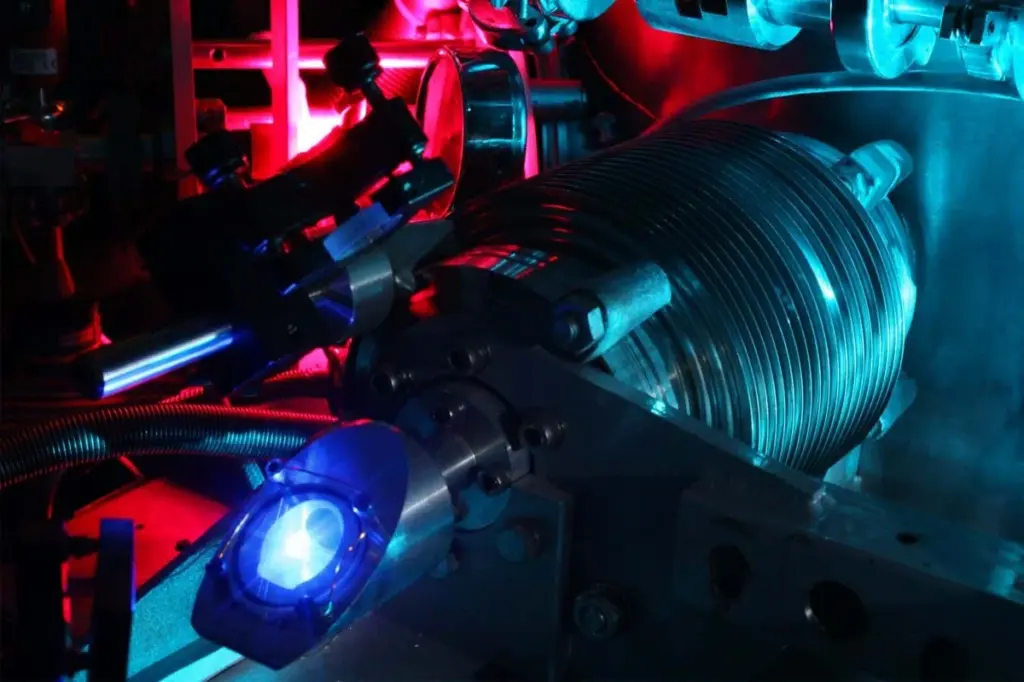
The two research groups employed lasers to meticulously control the electrons within hydrogen atoms. Collectively, they documented three distinct electron energy transitions that had not been previously measured.
Agreement and Challenges in Precision Measurement
Based on these measurements, the proton’s radius was calculated. Notably, the figures obtained by both teams not only aligned with each other but also corroborated the earlier, pivotal 2010 measurement. Lothar Maisenbacher from the University of California, Berkeley, who participated in the second experiment conducted at the Max Planck Institute of Quantum Optics (MPQ) in Germany, expressed his view: “It’s [now] very, very unlikely that there is still this proton radius puzzle.”
Executing experiments of this nature presents considerable difficulty. Maisenbacher highlighted the stringent requirements. Hydrogen atoms must be maintained in an ultra-high vacuum, and the sophisticated lasers employed are often costly and demand extremely precise calibration. Data collection might take several weeks, but the subsequent analysis to identify and account for every potential source of disturbance and error can extend to years.
Furthermore, these experiments are typically highly specialized in their manipulation of hydrogen. This specificity can make pinpointing the exact cause of any divergence in findings a complex undertaking, as noted by Maisenbacher.
Diversity of Approaches Strengthens Findings
Juan Rojo, from Vrije University Amsterdam in the Netherlands, emphasized the value of varied experimental methodologies. He explained that when results from different approaches converge, it significantly strengthens their validity. An effect stemming from a specific instrumental flaw, for instance, would not appear consistently across diverse experimental setups.
“The proton radius should be a universal property; it should give the same result no matter how you look at it. This is why these two papers are quite nice, because they provide different perspectives to the same number,” Rojo remarked.
Implications for Theoretical Physics
The enhanced certainty regarding the proton’s size holds particular importance for refining theories about undiscovered particles. Studying the electron’s behavior in hydrogen atoms can offer insights into these potential discoveries, according to Yost.
The MPQ experiment, for example, demonstrated a precision level sufficient to scrutinize the predictions of quantum electrodynamics, the prevailing mathematical model, with an accuracy of 0.5 parts per million. The research team identified no deviations, suggesting the absence of new forces or particles. However, Rojo anticipates that these experiments will pave the way for similar investigations to become a crucial element in particle physics research.
While large particle colliders are geared towards discovering massive new particles, these more compact experiments utilizing hydrogen atoms and lasers can probe for extremely light particles that might otherwise evade detection. “Now that we have confidence that we really understand what’s going on, we can say, OK, what sort of limits can we put on new physics?” Yost concluded.