
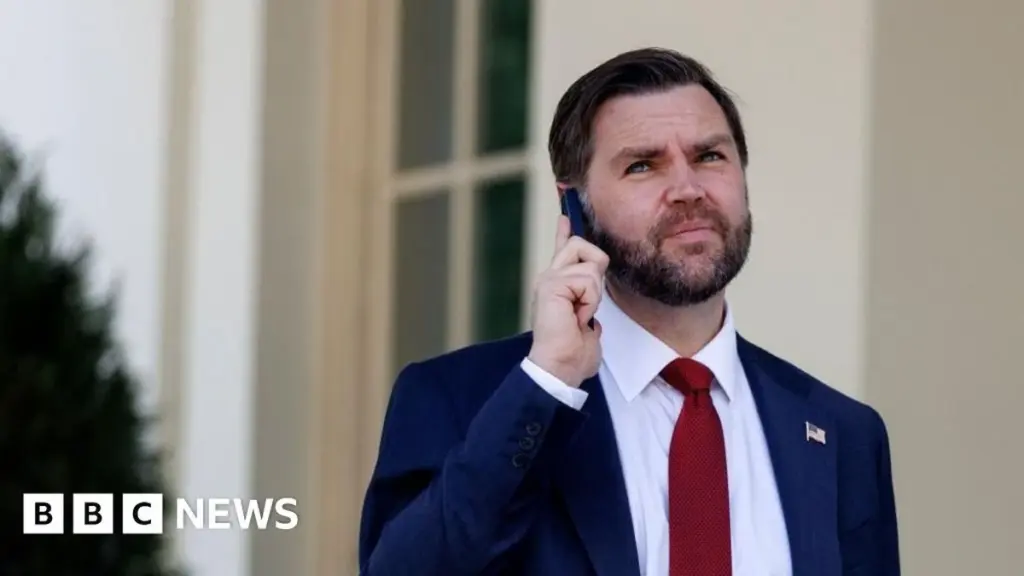
U.S. Vice President JD Vance is scheduled to visit Hungary to lend his support to Prime Minister Viktor Orban. Orban, a prominent European ally of the Trump administration, faces a challenging parliamentary election.
The visit includes a planned appearance by Vance at an election rally alongside Orban. This event is set to take place on Tuesday afternoon at a football stadium in Budapest.
Previously, in March, President Donald Trump expressed his “complete and total support” for Orban. Trump conveyed this message in a video address delivered at the Hungarian Conservative Political Action Conference (CPAC) held in Budapest.
A Challenging Electoral Landscape
The upcoming election on April 12th is anticipated to be the most significant hurdle in Viktor Orban’s nearly 40-year political career.
On Sunday, Orban is set to contend with Peter Magyar. Magyar, a former member of Orban’s Fidesz party, parted ways with the party two years ago. He subsequently established the center-right Tisza party.
Current polling indicates that Tisza holds a lead over Fidesz, ranging from 10% to 20% in most surveys. Only the Nezopont agency, which maintains a strongly pro-government stance, shows Fidesz with a narrow advantage.
Transatlantic Ties and Energy Politics
Orban’s relationship with President Trump dates back to 2016. At that time, Orban was the sole European Union leader to publicly endorse Trump during his U.S. presidential campaign. This alliance has strengthened over time.
Orban actively supported Trump’s re-election bid for 2024. In October of the previous year, he visited Washington D.C. to secure an exemption for Hungary from U.S. sanctions targeting Russian oil companies, specifically Rosneft and Lukoil.
Trump later made it clear that this exemption was a personal arrangement between himself and Orban. This implied that Orban’s successor would need to reapply for such an exemption if Orban were to lose the election.
Hungary has largely stood apart from other EU nations in its refusal to cease reliance on Russian fossil fuels. Despite this stance, Orban committed in Washington to increasing purchases of U.S. liquefied natural gas (LNG), as well as American nuclear technology and fuel.
Hungary’s energy supply relies heavily on Russian oil transported via the Druzhba pipeline from the east and Russian gas delivered through the TurkStream pipeline from the south.
Pipeline Disruptions and Accusations
Both of these energy sources have recently encountered difficulties. Since the end of January, no oil has been transported to Hungary through the Druzhba pipeline, which traverses Ukraine. Orban has attributed this interruption to Ukraine’s failure to repair the pipeline, following a Russian attack on oil infrastructure in western Ukraine on January 27th.
Notably, Official statements show no explicit diplomatic backing from the Trump administration for the Hungarian government regarding the pipeline issue. To avert energy shortages, Hungary has resorted to drawing from its fuel reserves and importing non-Russian oil through an alternative pipeline originating in Croatia.
A new concern surfaced on Sunday when the Serbian government, Hungary’s southern neighbor, reported the discovery and neutralization of explosives near the TurkStream gas pipeline. This location was close to the Hungarian border.
Orban and some pro-government media outlets characterized this incident as a terrorist act targeting Hungary’s energy infrastructure. However, former Hungarian intelligence officials and opposition leader Peter Magyar have accused Orban of orchestrating the event with assistance from Serbian President Aleksandar Vučić. These accusations suggest the incident was staged to bolster Orban’s re-election prospects.
Campaign Stances and Leaked Information
Orban has made opposition to Ukraine and its president, Volodymyr Zelenskyy, a central theme of his election campaign.
Furthermore, recent scandals also appear to have negatively impacted his popularity.
Private telephone conversations between Hungarian Foreign Minister Péter Szijjártó and senior Russian officials from various years have been publicly disclosed. These transcripts suggest that Szijjártó routinely briefed the Russian government on confidential discussions held at European Union summits. He also reportedly advocated for the removal of Russian officials from sanctions lists, acting on directives from Moscow. Szijjártó has defended these calls as standard diplomatic practice.
Orban is reportedly hoping that Vance’s visit will sway undecided Hungarian voters. The aim is to present Orban as a strong and internationally recognized leader, capable of navigating turbulent times, thereby securing their backing once more.