
The origin of your food often seems straightforward: the grocery store, a neighborhood farm, or perhaps your own garden. However, the fundamental answer lies within fossil fuels. This connection is becoming increasingly apparent, particularly with the ongoing geopolitical tensions like the Iran war.
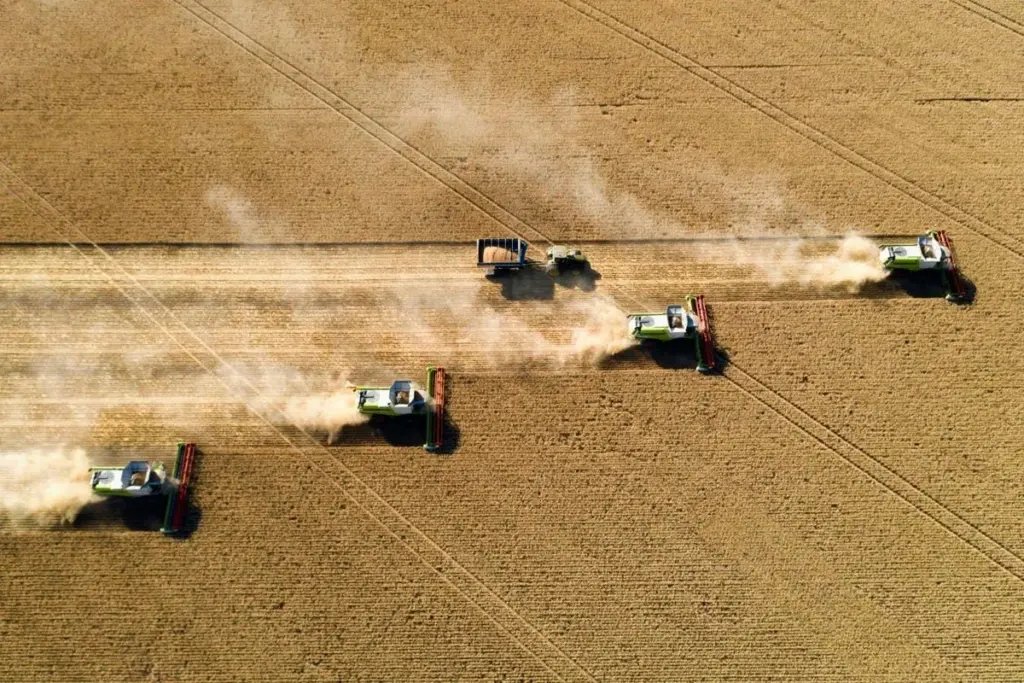
A significant portion of the hydrogen atoms present in your food originates from natural gas, a key component in the production of nitrogen fertilizers. Similarly, many sulfur atoms trace their roots back to fossil fuels, the source material for sulfur fertilizers. The machinery that cultivated your food, whether tractors or other agricultural implements, was almost certainly powered by diesel. Furthermore, the trucks and ships responsible for transporting your food to market relied on diesel fuel.
Pesticides, an integral part of modern farming practices, are synthesized from petrochemicals derived from fossil fuels. Even the plastic packaging encasing your food owes its existence to this same energy source. This interconnectedness extends broadly; it is estimated that approximately 15 percent of all global fossil fuel consumption is dedicated to the production, processing, transport, and storage of food.
In essence, consumers are, quite literally, ingesting fossil fuels. This fundamental reliance means that any abrupt surge in oil prices invariably translates into higher food costs. Should current international conflicts, such as the Iran war, persist and escalate, the world could face one of the most severe food shocks in contemporary history. While everyone will experience increased prices, those with the fewest resources will bear the brunt of this economic strain.
Addressing the Dependence: Potential Solutions and Current Trends
Fortunately, viable solutions exist to mitigate these challenges. Reducing the conversion of food crops into biofuels, for instance, could significantly help in limiting the severity of food price shocks. However, a counterproductive trend is emerging, with governments increasingly prioritizing biofuel production. This shift offers minimal benefit to fuel prices but substantially contributes to making food prohibitively expensive.
Abandoning intensive farming altogether is not a practical solution. The concept of a widespread, “grow-your-own” organic revolution simply cannot meet the global demand for food. Nevertheless, it is crucial to decouple farming from its heavy reliance on fossil fuels. This transition is not merely an option but a necessity, both to prevent future food crises and to address the substantial greenhouse gas emissions generated by agricultural practices.
The technology to produce fertilizers using electricity already exists, mirroring the initial industrial methods of production. What is required is governmental support and a consistent, ample supply of renewable electricity. Currently, however, there is a notable deficit in available electricity, as an overwhelming share is being diverted to power data centers for artificial intelligence development. As the economic impact of this food shock intensifies, a reassessment of national and global priorities may become unavoidable.