
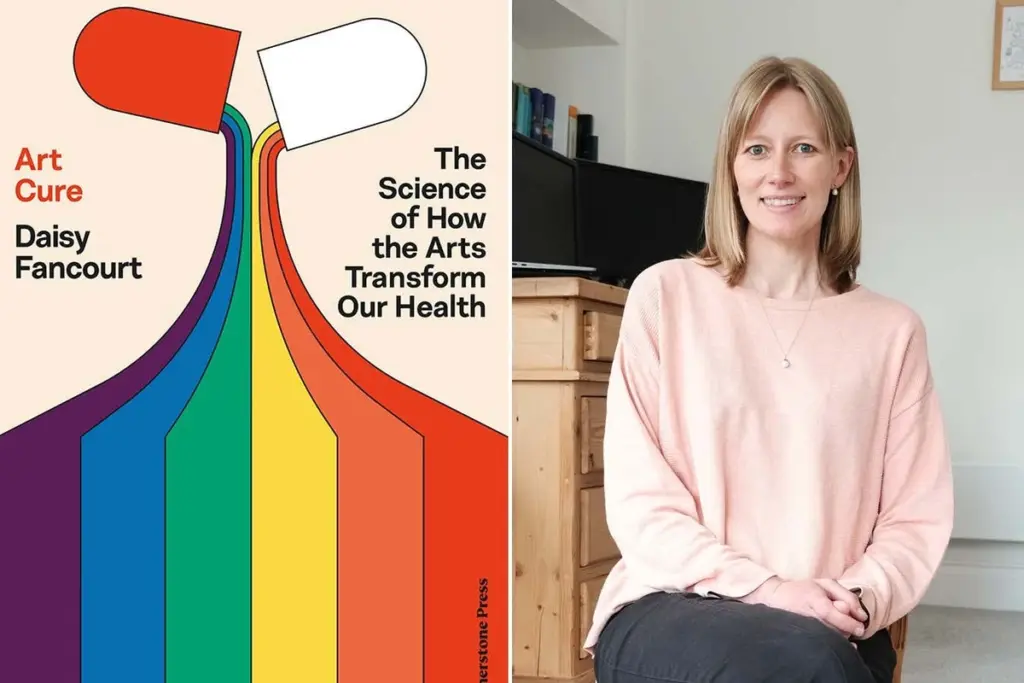
In March, the New Scientist Book Club shifted its focus from distant futures to the tangible impact of the present, exploring Daisy Fancourt’s “Art Cure.” This departure from science fiction offered a refreshing dive into popular science.
The book’s subtitle, “the science of how the arts transform our health,” accurately sets expectations. Fancourt, a professor at University College London specializing in psychobiology and epidemiology, convincingly demonstrates this premise. Her work delves into how engaging with artistic endeavors can elevate mental well-being, addressing issues ranging from low mood and depression to severe mental illness. Additionally, the book highlights findings like music’s ability to “significantly lower postoperative pain” in clinical settings.
Fancourt substantiates her assertions with rigorous evidence and thorough citations. She artfully blends scientific explanation with relatable personal narratives and compelling case studies, drawing the reader into the research. One such example is Russell, who, following a stroke and subsequent depression, found solace and recovery through an eight-week art class. Book club member Jacqueline Farrand noted in their online discussion that the book was “an interesting read and the science is understandable.” She also appreciated “the way each chapter revolves around one person’s experience with art and how it helped them engage with life.”
Professor Daisy Fancourt on the Life-Changing Power of the Arts
Daisy Fancourt, a globally recognized expert and award-winning scientist, illuminates the scientific basis for the arts’ capacity to enhance health, foster happiness, and potentially extend lifespan.
Addressing book club members directly, Fancourt provided an in-depth look at the biological mechanisms activated by artistic experiences and their positive health outcomes. She explained, “If we can maintain regular engagement in the arts over the course of months and years – participating in the arts or attending cultural performances and events – we can see widespread longer-term physiological changes.” Fancourt further emphasized this point, stating, “If a drug had the same catalogue of benefits as the arts, we’d be telling everyone about it.”
“Art Cure” was recently recognized on the longlist for the Women’s Prize for Non-Fiction, and it has garnered positive feedback from book club participants. Emma Weisblatt, a neuropsychiatrist, shared in the online discussion, “I’m enjoying it – the science is accurate but accessible, and I’m learning lots about recent research which I can also direct my students to.” The health benefits of reading, in particular, resonated with readers. Alan Perrett remarked, “It’s a brilliant book and I’m pleased to have read it.” He further observed, “I note that one of the arts engagements that are cited as beneficial are reading and book clubs.”
Perrett’s initial skepticism towards the arts’ impact gradually dissolved, as he recounts, “I’ve moved from being a complete sceptic – ‘arts are nice but don’t really believe that they affect people’s lives in a significant way’ to absolutely believing that a life without some form of arts engagement is not just impoverished but actually harmful.”
A particularly engaging aspect for many was Fancourt’s “daily dose” prescription at the end of each chapter, offering practical ways to integrate the arts’ benefits into daily life. This encompassed a wide spectrum of activities, extending beyond traditional music, theatre, or visual arts to include pursuits like crocheting and circus skills. Terry James found the writing style exemplary: “I find the writing clear and concise. This is exactly the style I like in a non-fiction book. Singing and dancing improves your health. Yippie.”
Barbara Howe is actively incorporating some of Fancourt’s recommendations, planning a visit to a local museum and revisiting her “abandoned needlepoint.” She expressed her intention to “just do the part I most enjoy and call it relaxation therapy; if I never get around to making cushions out of it, who cares?” Howe saw alignment with Fancourt’s advice to engage in diverse activities frequently, rather than undertaking large new projects. While generally finding the book interesting and appreciating the narratives, she noted that toward the end, it felt “a bit repetitive on the ‘rah, rah, arts!’”
Niall Leighton found “Art Cure” persuasive regarding the general advantages of art engagement. However, he noted that Fancourt seemed to suggest that becoming an art consumer or creator was the primary “dose.” Leighton wished the book had more directly addressed the root causes of much mental and physical ill-health. He expressed a hope for a future where art is viewed not solely as a remedy but as a source of intrinsic beauty, echoing William Morris’s vision of “art which is to be made by the people and for the people, as a happiness to the maker and the user.”
During a recent interview for the New Scientist Book Club, Fancourt discussed various topics, including a meeting with Brian Eno and her characterization of screen-based activities as the “ultra-processed foods” of the arts world. This conversation further solidified the interviewer’s conviction in Fancourt’s arguments and inspired a personal desire for greater creative engagement.
Fancourt, as insightful and well-researched in person as in her book, not only advocated for reading and book clubs but also championed the health benefits of more active and varied participation in the arts. Consequently, the interviewer plans to resume regular piano practice, explore joining a local choir, and seek out affordable theatre tickets. The inspiration drawn from “Art Cure” might even lead to joining a dance class, a notion previously unexpected but now embraced as a genuine outcome of the book’s influence.