
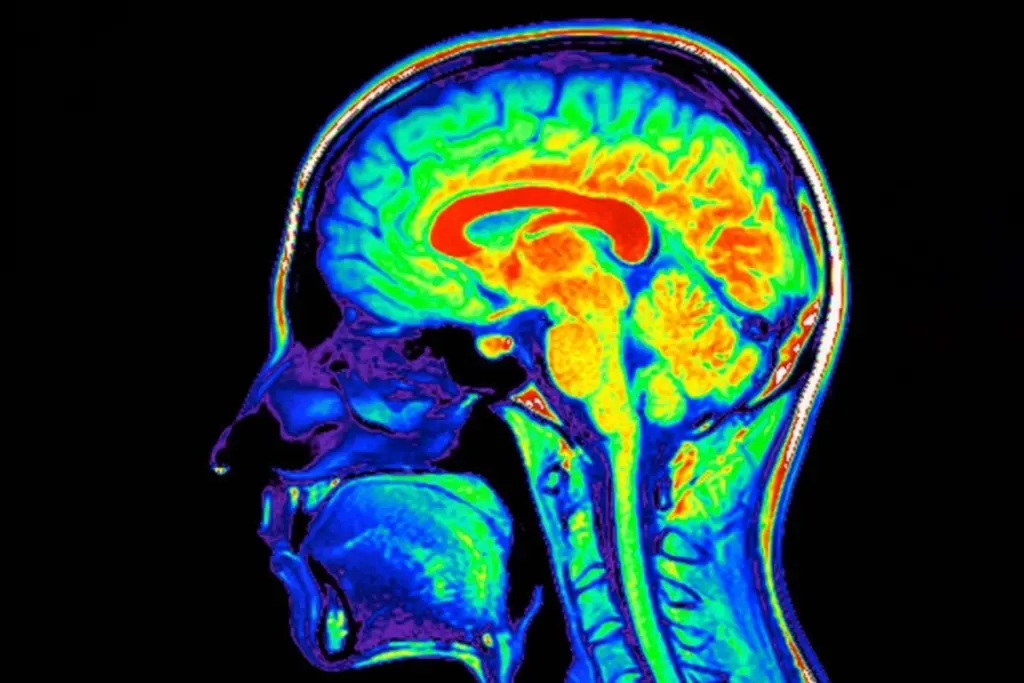
A specialized device designed to massage the face and neck has demonstrated the ability to augment the brain’s natural waste disposal mechanisms. This finding suggests a potential role for such methods in mitigating the severity of conditions like Alzheimer’s disease.
Cerebrospinal fluid (CSF) is a vital fluid that circulates within the brain. It is pumped into the brain before exiting through a network of fine channels known as lymphatic vessels. Research conducted on mice has indicated that this fluid plays a crucial role in flushing out metabolic byproducts generated by brain cells. Among these byproducts is beta-amyloid, a protein that has been implicated in the development of neurodegenerative disorders such as Alzheimer’s and Parkinson’s disease.
This understanding has prompted scientific inquiry into whether improving CSF circulation could contribute to enhanced brain health. However, the lymphatic vessels responsible for draining CSF were previously only identified in deep structures of the neck, making them difficult to access and study, as noted by Gou Young Koh at the Korea Advanced Institute of Science and Technology in South Korea.
In a novel development, Koh and his research team have identified a network of lymphatic vessels located approximately 5 millimeters beneath the skin’s surface on the faces and necks of mice and monkeys. This discovery was made possible by injecting the animals with a fluorescent dye that labels CSF, followed by imaging under anesthetic conditions. Koh explained that their use of a different anesthetic, distinct from those used in prior studies, allowed for the detection of vessels closer to the skin, which had previously been obscured.
To investigate the effects of massaging these vessels on CSF flow, the researchers developed a device incorporating a small rod attached to a 1-centimeter cotton ball. This device was utilized to stroke the faces and upper necks of mice, both older specimens (around 2 years old) and younger ones (a few months old), for a duration of one minute. Koh elaborated that gentle downward strokes on the face and upper neck can facilitate the movement of fluid, thereby improving CSF circulation.
Measurements taken up to half an hour following the massage revealed that CSF flowed approximately three times faster through the brains of the mice compared to their pre-massage state, on average. This intervention also appeared to counteract age-related reductions in CSF flow. Koh observed that after the stimulation, the CSF flow rates in older mice became comparable to those of younger mice that had not undergone the massage.
While this research is still in its early stages, preliminary findings from the team, currently unpublished, indicate similar positive outcomes in monkeys. Furthermore, the researchers have successfully located lymphatic vessels beneath the skin of human cadavers. This anatomical evidence suggests that facial and neck massage could potentially enhance CSF flow in humans, according to Koh.
However, some experts urge caution, noting anatomical differences between humans, mice, and monkeys. Vesa Kiviniemi from the University of Oulu in Finland remarked that “It’s somewhat a different ball game,” emphasizing the need for further investigation to confirm these effects in humans. The precise impact of enhanced CSF flow on slowing brain aging or providing protection against neurodegenerative diseases like Alzheimer’s remains an area requiring additional study, as pointed out by Steven Proulx at the University of Bern in Switzerland. Koh’s team has indicated plans to explore this aspect by studying mice genetically engineered to exhibit characteristics of Alzheimer’s disease.