
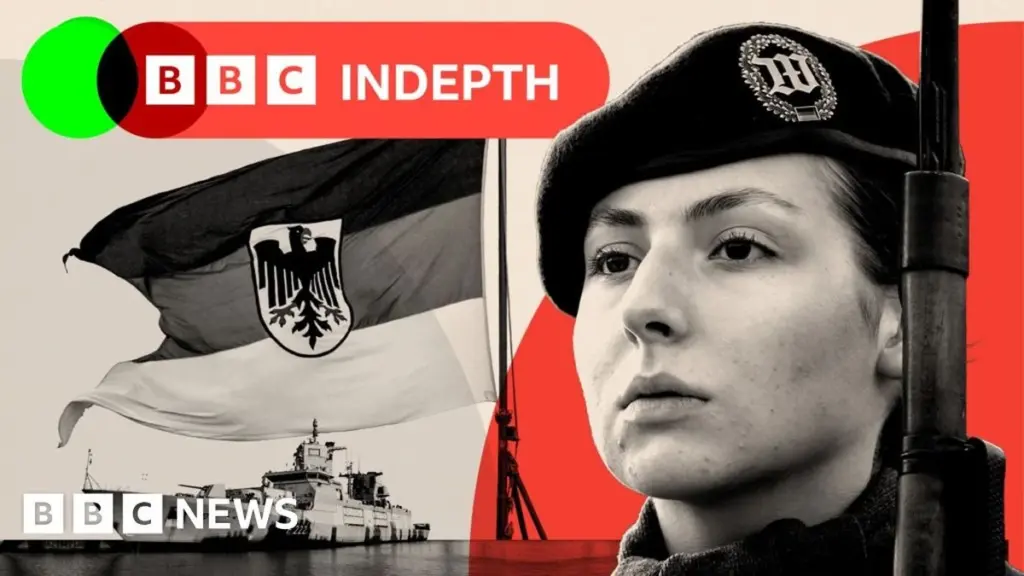
General Carsten Breuer, head of the German armed forces, is currently at the forefront of a significant military expansion. He is tasked with transforming the German army into a dominant fighting force on the European continent. This push is driven by a belief that Russia’s ongoing military build-up, fueled by increased recruitment and strategic investments in weaponry, could position it to launch an offensive against NATO territory by 2029.
Breuer articulated the gravity of the current security landscape, stating, “I’ve never experienced a situation which is as dangerous, as urgent, as it is today.” He observes Russia’s military expansion to a scale nearly double its pre-Ukraine war strength. “In 2029 it will be possible for Russia to conduct a major war against Nato. And as a soldier I have to say ‘okay, we have to be prepared for this’.”
Having joined the West German army in 1984 at the age of 19, Breuer approaches his role with a thoughtful demeanor, devoid of overt military bravado. His mandate involves a fundamental transformation of the German military, aiming to place it at the center of Europe’s evolving power dynamics. Under his leadership, the German armed forces are experiencing a notable increase in both personnel and capabilities. Projections indicate Germany will invest €162 billion (£140.2 billion) in its military by 2029, a substantial rise from €95 billion in 2025. Public opinion polls suggest this increased defense spending enjoys considerable support within Germany.
A New Era of German Defence
Historically, a rearmament program of this magnitude might have triggered unease among Germany’s European neighbors, evoking memories of the continent’s tumultuous past. The 20th century saw Germany’s powerful armies engaged in devastating conflicts that resulted in millions of casualties and widespread destruction. Following a period of military restraint, aimed at atoning for past actions, Germany now faces the challenge of fulfilling its renewed ambition to lead Europe militarily. The central question remains how Germany will navigate this role as a significant military power.
Shifting Presence in Eastern Europe
A tangible illustration of Germany’s altered European position is its establishment of a permanent military presence in Lithuania, marking the first instance since the Nazi occupation. Approximately 1,200 German troops are currently stationed in Lithuania, with plans to increase this number to nearly 5,000 by the end of the following year. The Panzerbrigade 45 (45th Armoured Brigade) recently conducted a live-fire exercise near the border with Belarus, simulating potential threats from the east. This region, part of the Great European Plain, offers few natural defensive barriers, making it historically vulnerable to invasion. The terrain has witnessed numerous military campaigns, from Napoleon’s march to Moscow in 1812 to Hitler’s forces reaching the outskirts of the Soviet capital in 1941.
“I guess we are here to fulfil what our neighbours expect from us,” stated Lieutenant Colonel Sebastian Hagen, commander of Panzerbrigade 45. He added, “Our Chancellor [Friedrich Merz] announced that we are building up the most powerful conventional army in Europe. And I guess this fits with the role of Germany due to our economic strengths and also to our role in Europe. And we are not doing this alone, obviously, we are doing this in Nato and in the European Union.”
This emphasis on multilateralism within Germany’s military strategy appears consistent across discussions. The objective is to underscore that Germany’s current engagement is as a cooperative and valued ally, rather than an aggressor. This democratic Germany seeks collaboration, not dominance.
Post-Cold War Restraint and Reassessment
During the Cold War, Germany maintained a military force exceeding half a million personnel, operating within NATO and under U.S. oversight. However, following the Soviet Union’s collapse, Germany, like many European nations, significantly reduced its armed forces. Reports from that era suggested equipment shortages were so severe that recruits sometimes trained with simulated weaponry.
From 2007 to 2017, Germany, Europe’s most populous country with the strongest economy, typically allocated just 1.2% of its GDP to defense. This reflected a diminished priority for defense and security, mirroring a broader European complacency. Germany’s current defense spending target is set at 5% of its GDP. Other European nations are also re-evaluating their military commitments in light of Russia’s actions. The United Kingdom has pledged to reach a 5% GDP defense spending target by 2035, and France aims for 3.5%. These figures still fall short of Russia’s estimated military expenditure of 7.1% in 2024.
A Cultural Shift Towards Rearmament
Germany’s current rearmament efforts necessitate a significant reorientation of its approach to defense and the role of its armed forces within society. Following its surrender in 1945, Allied leaders at the Potsdam Conference agreed on the future demilitarization of Germany. West Germany embraced this, seeking to atone for its wartime actions and deferring to American leadership in defense matters. This era has concluded. In 2025, the German parliament approved constitutional amendments to lift stringent borrowing limitations, thereby enabling increased defense funding.
This policy shift represents a profound change for Germany, a nation historically sensitive to debt and economic instability due to the hyperinflation of the 1920s, which contributed to the rise of Nazism. The decision to permit defense spending to surpass these established fiscal constraints marks a significant turning point. Sophia Besch, a senior researcher at the Carnegie Endowment for International Peace, described this as a “cultural revolution,” noting, “The Russian invasion of Ukraine has really changed the way that Germany approaches defence.”
This pivotal decision appears to have been influenced by remarks made by U.S. Vice-President JD Vance at the Munich Security Conference, which signaled a potential reduction in U.S. commitment to European security. Concurrently, leaked communications from the Trump administration indicated a dismissive attitude towards European allies. These developments reportedly persuaded German Chancellor Friedrich Merz of the necessity for European powers to achieve “operational independence” from the United States within NATO.
Journalist and author John Kampfner suggests that Germany’s post-war security framework was fundamentally reliant on the transatlantic alliance and the assumption of American support. He posits that the perceived weakening of this alliance, particularly under a second Trump administration, could be more destabilizing for Germany, given its post-war emphasis on a rules-based international order and a fresh start after 1945. “So the mood is dark, as it is everywhere in Europe. And there’s a sense of having to reassess everything,” Kampfner observed.
General Breuer characterized these events as a “wake-up call,” emphasizing that Germany could no longer afford to ignore the evolving threats. He described the recent policy changes as a “huge step for Germany, a huge step for the German population, definitely.” Breuer indicated that Germany currently has 182,000 active-duty personnel and aims to increase this by 20,000 within a year and by 60,000 over the next decade. This professional army would be further augmented by a reserve force of 200,000.
A recruitment drive is underway to attract more individuals, particularly young men, to the army. If insufficient numbers are enlisted, Breuer anticipates advocating for the reintroduction of conscription, a proposal he believes would likely gain public approval given the current sentiment.
The German defense ministry reported 16,100 applications to the armed forces in February, a 20% increase from the previous year, with 5,300 new recruits joining, representing a 14% rise compared to 2025.
Achieving Operational Independence
Germany is also reducing its dependence on the U.S. by boosting its own munitions production. The easing of borrowing restrictions for defense spending has incentivized many German companies to redirect their focus from civilian to military manufacturing. Like much of Europe, Germany has historically relied on U.S. defense contractors for critical military hardware, including aircraft, missile systems, and armored vehicles. To foster greater self-sufficiency in munitions, Germany has implemented a policy of prioritizing domestic procurement whenever feasible.
The capabilities that currently remain exclusively with the U.S. and are deemed essential for Europe’s pursuit of “operational independence” are being identified by Germany. Breuer outlined Germany’s prioritized needs: “What we need is ISR [Intelligence, Surveillance, and Reconnaissance], what we need is drones. What we need is deep precision strike capability. Also space capabilities have to come into this. So these are our most urgent needs here. But like I said, we have put it on a prioritised list, and we are working on it, and we are well on our way.”
When questioned about the possibility of leading a German army into conflict in Europe, a role not seen since 1945, Breuer shifted the focus to deterrence. “What I’m doing is to prepare Germany to be able to defend itself, by building up those defence capabilities. This is deterrence for us. We will deter the threat from the Russian side.” This approach can be summarized as preparing for potential conflict to prevent its occurrence.
However, the concept of “operational independence” for a European defense structure capable of independently engaging in major warfare without U.S. involvement presents significant challenges. The U.S. Department of Defense, the nation’s largest employer, is projected to spend $961.6 billion (£716.9 billion) this year, vastly exceeding Germany’s increased defense commitments and projected rises from allies like the UK and France.
“When you look at the money, there’s no way around it: Germany will shape the future of European defence and security,” noted Sophia Besch. “But I doubt that we will have one country in Europe that can fill the footsteps of the US. It’s very tempting to say ‘could Germany or France fill that role in the future’, but that is not how Europeans co-operate. We are always looking for compromise. There’s also clearly a trust issue. The role that the US has played in European defence has grown over decades and the trust built up there has been built up over decades and that will be difficult to fill those shoes overnight.”
This erosion of trust is evident in public opinion. German confidence in the U.S. has declined significantly. In 2024, prior to Donald Trump’s reelection, 74% of Germans polled by the Pew Center expressed confidence in the U.S.-German relationship. By 2025, this figure had dropped to 27%, with 73% viewing relations as poor.
A Changed Perception Among Neighbors
Germany’s evolving role in Europe is perhaps best illustrated by the attitudes of its neighboring countries. While German militarism cast a long shadow over the 20th century, current opinion polls indicate that Germany’s military presence in Lithuania is viewed favorably. In 2011, Polish Foreign Minister Radoslav Sikorski delivered a speech in Berlin that surprised many diplomats, given Poland’s history with Nazi Germany. He urged Germany to assume a leadership role in Europe, initially within an economic context to address the eurozone crisis. Sikorski famously stated, “I fear German power less than I am beginning to fear German inactivity,” referring to Germany as Europe’s “indispensable nation.”
Retired Polish General Andrzek Falkowski, a former Deputy Chief of the Polish armed forces and a veteran of NATO headquarters, described Germany’s rearmament as “good news for Poland, for Europe and for Nato.” He acknowledged Germany’s historical militarism but highlighted Poland’s geopolitical vulnerability. Falkowski noted that after 1989, Germany became a “freeloader” in defense spending, prioritizing economic and social issues due to a perceived buffer in the East, with Poland acting as that buffer. “But now Germany has become the fourth biggest defence spender in the world. So as the strongest economy in Europe, they should spend more, and for Poland, and for Europe, it can only be good news,” he asserted.
During conversations with General Breuer, his consistent emphasis on cooperation was notable, reflecting Germany’s careful approach to avoid any perception of seeking dominance. His response to the question of whether he felt the burden of being perhaps the most powerful and important soldier in Europe was particularly telling. He stated, “I think I feel the responsibility every day, the responsibility for the forces I’m leading here in Germany. I’m one of 182,000 soldiers in Germany, and I feel the responsibility of leadership. I’m very glad to be part of this leadership team, because together we will face this and we will cope with this challenge. Definitely.”
The founding principle of NATO was famously summarized as keeping the Americans in, the Russians out, and the Germans down. This era has definitively passed. Eight decades later, Germany has re-emerged as a significant military power, once again positioned at the heart of Europe’s evolving geopolitical landscape.