
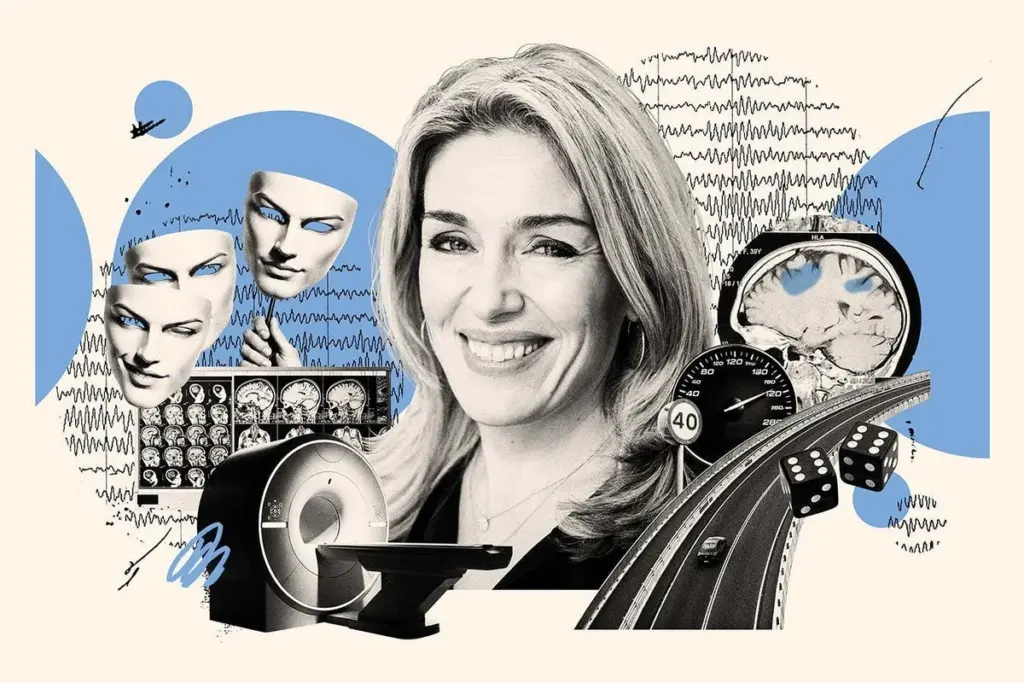
The common image of a psychopath is often one of a dangerous individual, driven by ruthless self-interest to the detriment of others while achieving considerable personal success. While around 1% of the general population exhibits psychopathy, this figure rises significantly among incarcerated men, with approximately 1 in 5 showing signs. Research has also suggested a correlation between leadership roles in corporations and psychopathic traits.
However, the experience of psychopathy is not solely a source of distress for those around the individual; it can also be challenging for the person exhibiting these traits. Abigail Marsh, a professor of psychology and neuroscience at Georgetown University, studies individuals with psychopathic traits who largely lead unremarkable lives within society. Her work has revealed a surprising aspect: many of these individuals do not wish to be psychopathic.
Defining and Identifying Psychopathic Traits
While the precise definition is still being refined, psychopathy is characterized by a lack of empathy, callousness, superficial charm, and impulsivity. Diagnostic tools often assess behaviors such as pathological lying, a sense of grandiosity, manipulative tendencies, and a persistent need for stimulation.
Studies indicate that individuals with psychopathy often exhibit a hyper-focus on their objectives and a diminished capacity to instinctively grasp the perspectives of others, unlike the general population. Furthermore, scientists, including Marsh, have identified physical differences in the brains of people with psychopathy.
Investigating the Roots: Brain Differences and Valuing Welfare
Marsh’s approach to understanding the origins of psychopathy involves selecting participants with exceptionally high scores from the general population, rather than relying solely on individuals within the prison system. A study published by her team provided a quantitative measure, for the first time, of how individuals with psychopathy perceive the welfare of others. Marsh shared her reflections on these findings and the experience of feeling empathy for those with psychopathy in an interview.
Experiencing Life with Psychopathy
“Generally, they report not experiencing intense emotions like fear, guilt, remorse, or love. Some believe that this emotional detachment simplifies their lives. However, in other respects, their lives are more difficult,” Marsh explained. “Many dedicate their lives to ‘masking’ their true selves, sometimes to manipulate others, but often simply to facilitate smoother social interactions.”
She further noted that individuals with psychopathy face significant social stigma. “Psychopathy is often perceived as an indelible moral flaw rather than a psychological disorder. Yet, it shares common roots with other psychological disorders, stemming from a combination of genetic predispositions and life experiences that shape brain development and behavior. These are not mysterious phenomena attributed to supernatural forces; they are biological processes with potential for treatment.”
Neurological Correlates of Psychopathy
It is crucial to understand that psychopathy, like other psychological disorders, cannot be definitively diagnosed through a brain scan. However, group comparisons between individuals with and without psychopathy reveal consistent average differences. A significant finding relates to the amygdala, a brain region consistently found to be smaller, on average, in both children and adults with psychopathy.
Marsh’s research indicates that children with smaller amygdalas tend to exhibit a progression of traits and behaviors associated with psychopathy over time. The amygdala’s reduced activity in response to stimuli indicating fear or danger in others may contribute to the increased likelihood of aggressive and harmful behaviors observed in individuals with psychopathy. Additional studies have identified anatomical or functional variations in other brain areas, such as the striatum (involved in reward processing) and parts of the frontal cortex (responsible for decision-making and behavioral regulation, utilizing emotional input).
Treatment Pathways and Self-Improvement
Research suggests that a three-year course of therapy can help individuals with psychopathy to moderate their emotional responses. However, public health resources allocated to treating personality disorders, particularly those characterized by antisocial behavior, remain limited. “Most people do not readily empathize with the plight of individuals with psychopathy, as they often do not evoke sympathy,” Marsh commented. “Nevertheless, we have a moral obligation to provide care, mirroring our approach to any other disorder an individual did not choose. It is disheartening to consider individuals struggling to find appropriate treatment. Despite these challenges, some have managed to discover methods for self-improvement.”
The Path to Behavior Change
Marsh’s team encountered individuals who successfully engineered long-term behavioral changes. In some instances, these transformations were motivated by the desire to preserve significant relationships. One particularly memorable participant shared his strategy: “He just faked it until he made it. He consciously acted in ways he believed a kind person would. After about a year and a half, this behavior began to feel natural and even enjoyable. I found this incredibly encouraging.” This aligns with clinical psychology recommendations: practicing desired behaviors until they become habitual. Several individuals also developed their own moral frameworks, not driven by remorse or shame, but by a deliberate aspiration to embody a particular kind of person.
Personal Moral Frameworks
“One particularly compelling example involved an individual with aggressive tendencies who decided to channel these urges solely towards causes related to social justice,” Marsh recounted. “At times, he actively sought out individuals exhibiting offensive behavior, such as making sexist remarks, or even provoked such actions. However, for the most part, he effectively regulated his conduct through the self-imposed rules he had established.”
The Desire for Change
Quantifying the desire for change among individuals with psychopathy presents a challenge. In interviews, many express dissatisfaction with their life circumstances and acknowledge engaging in persistent, maladaptive behaviors. They often express a strong desire to change but face difficulties in accessing suitable treatment.
“It is important to note that many of these individuals contacted us after completing a screening test on the website of an organization I co-founded, indicating a degree of self-awareness,” Marsh added. “We currently lack formal data on the proportion of individuals with psychopathy who recognize that something is different about them. Research on other neurological and personality disorders suggests that a significant number lack this insight, a phenomenon known as anosognosia.”
Person-Centered Language in Psychology
Marsh consciously uses the phrase “people with psychopathy” rather than “psychopaths.” She explained, “I used to do the same as everyone else. However, clinical psychology has increasingly adopted a person-centered approach, where we avoid defining individuals by their disorder. We now refer to a person with depression or a person with schizophrenia, rather than depressives and schizophrenics. Unfortunately, this principle is not consistently applied to personality disorders, and labeling people as psychopaths or narcissists remains common.”
Personal Journey into Psychopathy Research
Marsh’s academic interest in psychopathy originated from a broader curiosity about the factors that motivate individuals to care about the welfare of others. Her research initially focused on highly altruistic individuals, and this interest was amplified by a personal experience during her youth. While driving late at night to her hometown of Tacoma, Washington (which, coincidentally, was also the hometown of serial killer Ted Bundy), a dog darted in front of her car. Swerving to avoid it, she lost control, and the car spun into the fast lane, where the engine died.
“I would almost certainly have been struck and killed by another vehicle had a stranger not suddenly appeared,” Marsh recalled. “I later realized he had pulled over on the opposite side of the freeway and run across to where I was. He entered my car, managed to restart the engine, and safely escorted me off the road. It was one of those experiences that profoundly alters one’s perception of humanity.”
From Altruism to the Darker Aspects of Human Nature
This profound experience with human kindness subsequently sparked an interest in studying the positive aspects of human nature. Approximately four years later, during a New Year’s trip to Las Vegas, Marsh experienced a different kind of encounter. After a stranger groped her, her retaliatory slap was met with a punch that broke her nose. This deeply shocking incident significantly reshaped her understanding of human capabilities.
Recruitment for Research Studies
Beyond online screening tests, Marsh’s lab employs other methods to find participants. Her most recent study involved over 700 individuals, with 288 scoring very high on psychopathy assessments. These participants were recruited after taking a screening test through the Society for the Prevention of Disorders of Aggression. This organization offers resources for individuals affected by aggression disorders and their families. Those who achieve a high score receive a prompt inviting them to participate in research.
For studies requiring participants to visit the lab for brain imaging, flyers often use evocative language, such as “Are you adventurous?”. This recruitment strategy, first employed in newspaper advertisements for individuals with psychopathy in the 1970s, has proven effective.
Quantifying the Value of Others’ Welfare
Marsh’s latest study specifically measured how individuals with psychopathic traits value the well-being of others. She explained, “Antisocial behavior involves gaining something at another person’s expense. This encompasses theft, assault, and even risky driving, which was the most prevalent form of antisocial behavior observed among participants with high psychopathy. Individuals engage in such behaviors because it is perceived as enjoyable, they are in a hurry, and they disregard the potential risks and costs to others. However, the extent to which individuals with psychopathy value what happens to others relative to themselves had not been explicitly quantified prior to this study.”
Surprising Findings on Social Discounting
The study’s results were more pronounced than anticipated. A “social discounting task” evaluates how much value individuals place on rewards depending on who receives them. For most people, a reward retains significant value even if awarded to someone close; receiving $50 is nearly as good as a loved one receiving it. In the experiment, participants were presented with choices between keeping the entire reward amount for themselves or splitting a slightly larger sum with another individual.
“Generally, we observe that people value the welfare of loved ones, but when it comes to a complete stranger, most individuals are unwilling to make significant sacrifices. The social discounting curve, illustrating the diminishing value of others’ welfare, shows a steady decline,” Marsh stated. “Observing the individuals with psychopathy, I was quite astonished by the steepness of the drop-off. They assigned the same value to the welfare of close acquaintances as most people would assign to total strangers. Essentially, they appear to place little to no value on the well-being of anyone outside their immediate circle.”
Societal Impact of Psychopathy
“We all know someone with psychopathic traits. If the average person has a social network of 150 individuals and approximately 1 in 100 people exhibits clinically significant psychopathy, the numbers become clear,” Marsh noted. “However, psychopathy is not always readily recognized. People might be aware of a neighbor, colleague, or family member whom they don’t fully trust, who frequently manipulates or exploits others, or whose behavior is unsettling. If someone within your social circle exhibits these characteristics, especially someone in your close relationships, you may have been deceived, threatened, or taken advantage of by them. If this individual is a child, sibling, or partner, you might live in constant fear. While this is not a universal experience, it is a relatively common one.”
Seeking Help for Psychopathy
“It is crucial to understand that psychopathy is a genuine psychological disorder and is treatable. Individuals with psychopathy generally experience poorer health, have less successful relationships, face employment difficulties, earn less income, and even have shorter life expectancies compared to those without psychopathy. These outcomes are largely attributable to the numerous problems their behavior creates in their lives. However, these behavioral patterns can be modified through treatment from a qualified therapist. The Society for Disorders of Aggression website offers information and resources for individuals affected by aggression disorders, including screening tools and guidance on effective therapies and how to locate them.”