
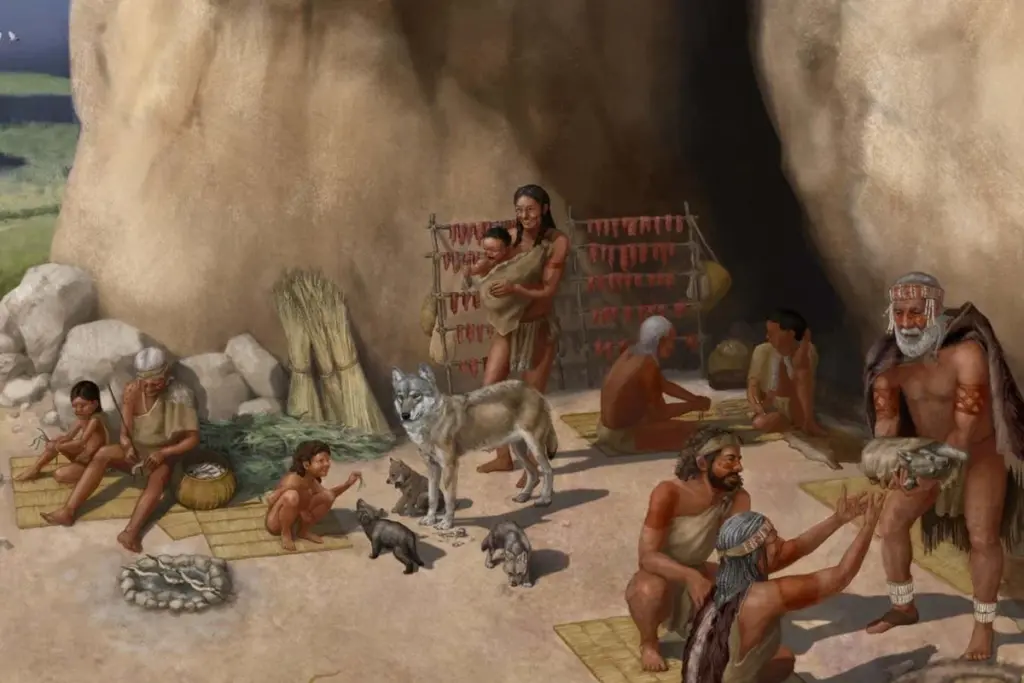
Recent confirmations of ancient remains in Turkey, dating back 15,800 years, have identified them as belonging to the oldest dog ever discovered. Further genetic analysis indicates that canines were already widespread across Europe by 14,300 years ago. This was a period when human societies were still based on hunting and gathering, long before the advent of agriculture.
Determining the precise moment of dog domestication remains a complex issue. This difficulty stems from the significant physical and genetic similarities shared between dogs (Canis lupus familiaris) and grey wolves (Canis lupus). Previously, the oldest scientifically verified dog remains dated to approximately 10,900 years ago. However, older morphologically dog-like bones, dating as far back as 33,000 years, have been found. These animals, referred to as incipient dogs, were not yet genetically identical to modern dogs.
To gain a clearer understanding of canine history, a team led by Lachie Scarsbrook from the University of Oxford meticulously examined genomes extracted from several early, dog-like specimens found at archaeological sites throughout Europe.
New Evidence from Turkey
The most ancient remains definitively identified as belonging to a dog were unearthed at the Pınarbaşı archaeological site. This location sits on the Central Anatolian Plateau in Turkey. These discoveries push back the direct evidence for dogs by approximately 5,000 years, establishing their existence at least 15,800 years ago during the Upper Palaeolithic period.
Scarsbrook observed, “By at least 15,800 years ago, dogs were already dogs, and they already look genetically and morphologically like modern dogs.” This statement underscores how established the canine form was at that early stage.
European Canine Distribution
The research team also utilized genetic analysis to confirm that remains recovered from Gough’s Cave in Somerset, UK, were from a dog dating to around 14,300 years ago. This provided a second crucial point of reference for early dog presence in Europe.
Initially, the genetic similarity between these two dogs was puzzling. Scarsbrook noted that they appeared to share a relatively recent common ancestor despite being associated with human populations separated by thousands of kilometers. Evidence for significant genetic exchange between these groups was limited. The Magdalenian culture inhabited Gough’s Cave, while hunter-gatherers in Anatolia occupied the Pınarbaşı region.
The genomic data revealed that these two Palaeolithic dogs belonged to a population that had expanded across the continent. This expansion occurred within a timeframe of 18,500 to 14,000 years ago, suggesting a broad distribution during this period.
Human Migration and Dog Dispersal
Scarsbrook elaborated on the movement of these dogs, stating, “And yet we don’t think dogs are wandering all across Europe by their own steam.” The research suggests that the Epigravettian culture played a significant role in transporting the dogs. This aligns with previous findings showing that ancient human groups often moved with their domesticated animals.
During the critical timeframe, these Epigravettian people were migrating northward from the Italian peninsula into western Europe. Concurrently, they were expanding southeastward into Turkey. This geographical movement would have facilitated interaction with other groups, likely fostering cultural and technological exchanges.
The Role of Dogs in Hunter-Gatherer Societies
The presence of dogs would have provided hunter-gatherer communities with substantial benefits. Scarsbrook suggested that dogs offered “a new way of hunting and keeping your cave safe, and a living blanket to keep you warm on cold nights.” These advantages highlight the practical value dogs brought to early human life.
Symbolic Treatment of Dogs
The archaeological findings at Gough’s Cave and Pınarbaşı offer intriguing insights into how ancient humans perceived and treated their canine companions. William Marsh, a member of the research team from the Natural History Museum in London, commented, “The nuggets of the modern interaction between humans and dogs seems to have been there.”
Isotope analysis from Pınarbaşı suggests that the inhabitants fed their dogs fish, a food source they also consumed. Furthermore, these dogs were buried, mirroring the burial practices of humans at the same site. Marsh stated, “The humans some 15,000 years ago were treating these animals seemingly symbolically.”
At Gough’s Cave, the archaeological evidence points to a more complex relationship. Dietary analysis indicates that both humans and dogs consumed an omnivorous mix. Intriguingly, evidence of distinct symbolic treatment is present. Marsh explained, “Rather than burying their dead, these individuals would cannibalise their dead as a funerary behaviour.” This practice resulted in postmortem cut and tooth marks, as well as engravings on human bones, all taken as indicators of ritualistic cannibalism.
A dog mandible from Gough’s Cave exhibits similar marks and also appears to have been intentionally perforated by humans. Marsh suggested this could imply that people were extending the same funerary traditions to their dogs, possibly even consuming parts of their bodies. He added, “These people were also humans, who feel and have emotion. So I’m sure they would have had an attachment to those animals. But just how they express that, it’s hard for us to deduce.”
James Cole from the University of Brighton noted the harsh environmental conditions at Gough’s Cave during that period. He speculated, “We know Gough’s cave at that time was a really harsh environment for people to be living in, so they were going to eat whatever they could and there wouldn’t be much wasted.”
Domestication During the Last Glacial Maximum
Scarsbrook posits that the initial domestication of dogs likely occurred during the cold phase known as the Last Glacial Maximum, which spanned roughly 26,000 to 20,000 years ago. He described it as, “It was a horrible time to be alive in northern Eurasia, so everything’s being pushed south, whether you’re a wolf or a human.” This forced proximity in shared refuges may have led to interactions that initiated the human-canine bond.