
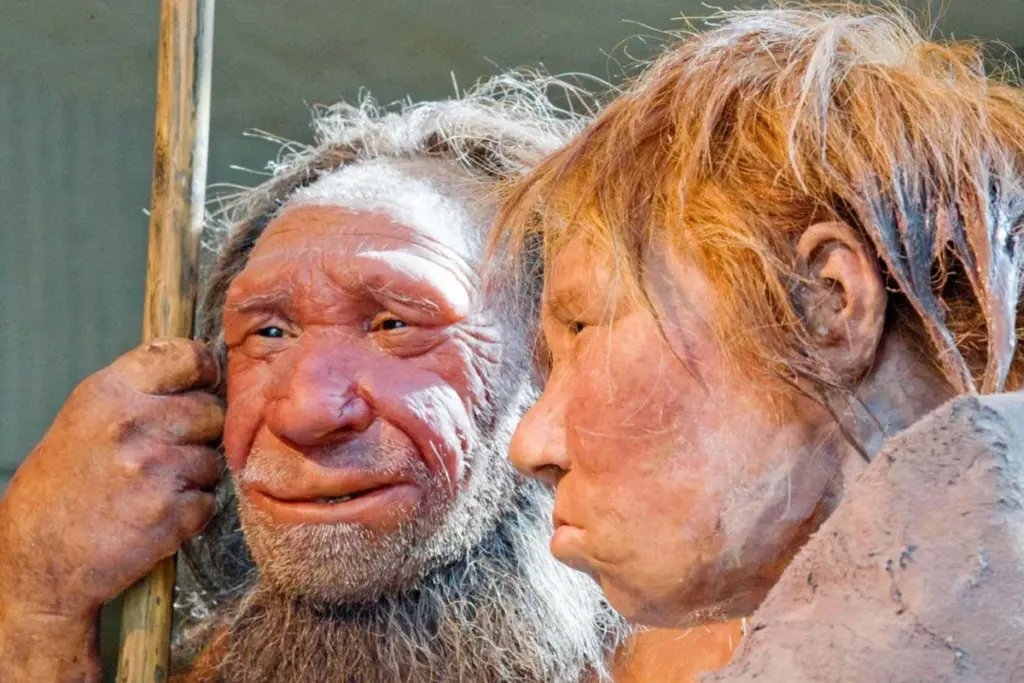
An in-depth examination of Neanderthal DNA has shed light on a prolonged period of adversities spanning many millennia, ultimately contributing to the disappearance of our ancient human relatives.
Facing a progressively cooler climate, their populations dwindled, forcing them into a restricted territory that corresponds to present-day southwestern France. As the climate eventually warmed, Neanderthals began to spread out more widely. However, much of their genetic diversity had already been lost. This meant that even the dispersed groups possessed remarkably similar DNA.
This specific condition—small, isolated populations with limited genetic variation—is considered a potential factor in their eventual demise.
Population Shifts and Genetic Homogenization
Neanderthals inhabited Europe and Asia for hundreds of thousands of years, fading from the archaeological record approximately 40,000 years ago. Earlier analyses of their genetic material had indicated a significant alteration in their genetic makeup toward the end of their existence. Specifically, late Neanderthals, those living after about 60,000 years ago, exhibited genetic similarities to one another and differed from their predecessors. Cosimo Posth from the University of Tübingen in Germany suggests, “There must have been a population turnover towards the end of the Neanderthal history.”
To investigate this phenomenon, Posth and his team analyzed DNA from 10 Neanderthals sourced from six separate locations across Belgium, France, Germany, and Serbia. Their research focused on sequencing mitochondrial DNA, which is exclusively inherited from the mother. These newly acquired mitochondrial genomes were then meticulously compared with 49 previously sequenced genomes.
The findings indicated that Neanderthals who lived between 60,000 and 40,000 years ago largely belonged to a single lineage, which emerged around 65,000 years ago. Other lineages present in earlier periods were conspicuously absent. Posth interprets this observation as “a very strong indication that it’s indeed population turnover.”
Climatic Influence on Geographical Contraction
The research team also consulted a database of Neanderthal archaeological sites. Posth noted, “Between 80,000 and 70,000 years ago, there is a major geographical contraction towards south-western Europe, and particularly the very high density of sites in south-western France.”
These geographical shifts can likely be attributed to climatic changes. Posth explained, “There is a major glaciation starting around 75,000 years ago. We think that this is the event that triggered the contraction of Neanderthals towards south-western Europe.”
The data suggests that the new lineage likely originated in southwestern France. Following the warming of the climate after 60,000 years ago, this lineage expanded outwards. While this newer genetic line became widespread, reaching as far east as the Caucasus, the overall population size does not appear to have increased substantially.
An Unforeseen Anomaly: The Case of Thorin
An isolated exception to this pattern is an individual named Thorin, discovered in Grotte Mandrin in France. Despite being dated to as recently as 50,000 years ago, Thorin’s DNA reveals he belonged to one of the older lineages. Evidence suggests that at least one of these earlier lineages managed to survive the population contraction event. Posth points out that Thorin represents “the only specimen that doesn’t fit into the story.”
Tharsika Vimala from the University of California, Berkeley, who participated in studies involving Thorin, stated that the ability to reconstruct Neanderthal movements in this manner represents a significant advancement. Previous research had also identified periods of contraction and expansion within Neanderthal populations, leading to the loss of certain lineages, Vimala added. A 2021 study, for instance, presented evidence of a population turnover around 100,000 years ago, also linked to climatic factors.
Vulnerability of Small, Isolated Groups
The tendency of Neanderthals to live in small, isolated communities may have increased their vulnerability to extinction. “They migrated around in small groups,” Vimala remarked, with studies estimating typical Neanderthal group sizes ranging from three to 60 individuals. Posth noted that this lifestyle could have facilitated the accumulation of deleterious genetic mutations and rendered each group more susceptible to unforeseen events.