
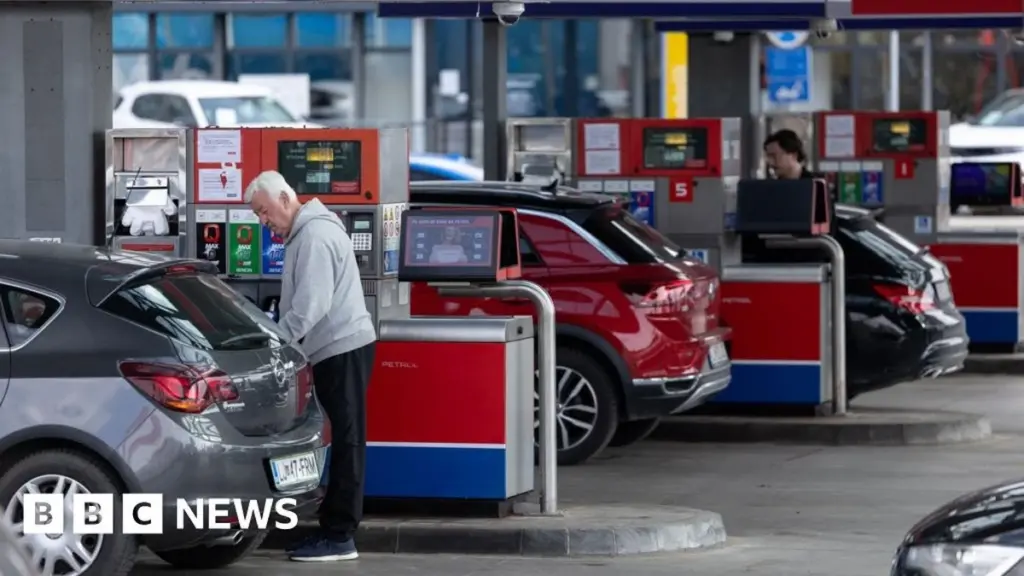
Slovenia has become the first member state of the European Union to introduce fuel rationing. This measure aims to address the disruptions impacting global energy markets, stemming from US-Israeli strikes on Iran and subsequent retaliatory actions against allies in the Gulf region. These events have significantly affected major players in world energy markets.
Many nations worldwide have been experiencing substantial increases in fuel prices. In Slovenia, this trend has led to a phenomenon colloquially termed “fuel tourism.” Drivers from neighboring countries, particularly Austria, have been crossing the border to take advantage of Slovenia’s lower, regulated fuel prices.
Under the new regulations, private vehicle owners in Slovenia are limited to purchasing a maximum of 50 liters of fuel per day. For businesses and farmers, a more substantial allowance of 200 liters is permitted. Prior to the government’s intervention, some fuel retailers had already implemented their own restrictions; Hungary’s MOL, which operates petrol stations throughout the region, had set a 30-liter daily limit.
“I want to assure you that Slovenia has sufficient fuel. Our warehouses are full, and there will be no shortages,” stated Prime Minister Robert Golob over the weekend. He explained that the nationwide rationing will be enforced by the petrol stations themselves. Employees are now tasked with ensuring that customers do not exceed the authorized fuel purchase limits. The government is also encouraging fuel retailers to implement stricter limits specifically for foreign drivers.
The price disparity is considerable. A liter of Euro-super 95 petrol in Austria is approaching €1.80, with diesel nearing €2.00 per liter. In contrast, Slovenian prices are capped at €1.47 for petrol and €1.53 for diesel, although these caps are scheduled to increase on Tuesday.
Reports from border areas highlight the impact of these measures. A lorry driver interviewed by local media near the Slovenian-Austrian border at Sentilj expressed bewilderment, asking if his country was “at war” upon finding a petrol station completely out of fuel. He described the experience as unprecedented, a sentiment echoed by others facing similar situations.
For some Austrian motorists, the cost savings are substantial enough to warrant cross-border trips for refueling. Herbert Kickl, leader of Austria’s far-right Freedom Party, has publicly capitalized on the situation. He shared an image of a queue of Austrian-registered vehicles at a Slovenian petrol station, questioning the necessity for Austrians to travel abroad for cheaper living costs.
Within Slovenia, local sentiment towards these visiting drivers is divided. Some residents perceive them as a nuisance, contributing to queues and exacerbating local shortages. Others, however, adopt a more welcoming stance. They note that a significant portion of these “fuel tourists” often extend their visits, engaging with local restaurants and shops, thereby contributing to the local economy.
The ongoing price differences suggest that cross-border fuel trade will likely persist. As long as these disparities remain, the flow of “fuel tourists” across the border is expected to continue.