
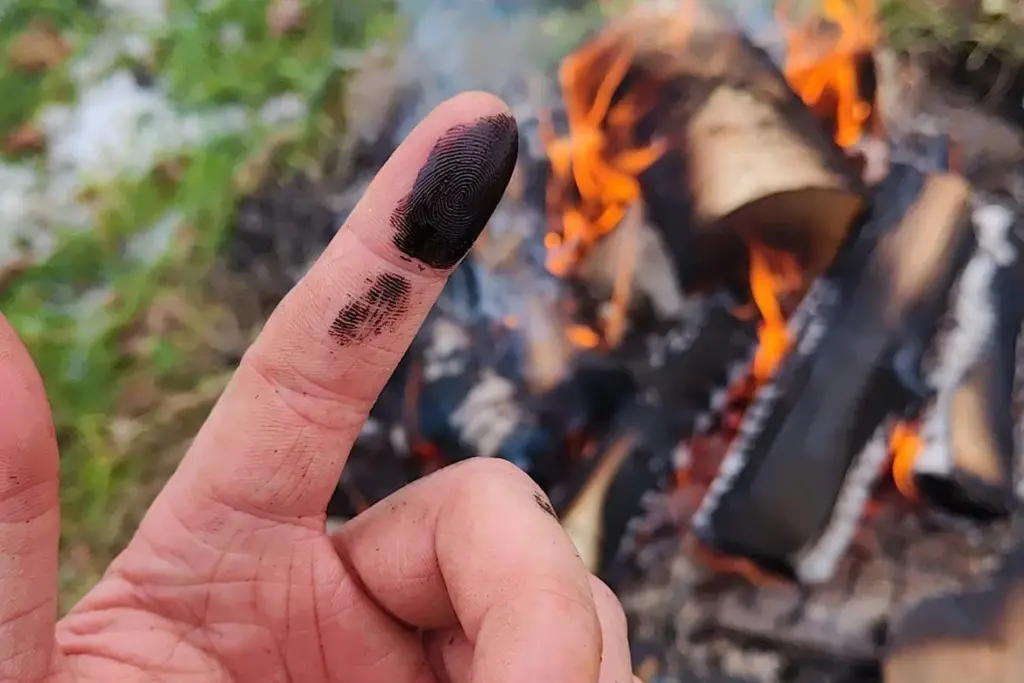
Evidence suggests that Neanderthals might have utilized birch bark tar as an antiseptic agent to treat wounds. Recent experiments conducted with birch tar have revealed its inherent antibiotic qualities, irrespective of the production method. This finding supports the possibility that Neanderthals discovered its medicinal applications.
This discovery contributes to an accumulating body of research indicating that Neanderthals employed medicinal plants to address injuries and illnesses. Tjaark Siemssen of the University of Oxford notes that birch tar has been a known substance from the late Pleistocene, frequently found at Neanderthal sites across Europe.
Siemssen explains that birch tar was clearly used as an adhesive, for instance, to secure sharpened stone points to wooden spears. However, he posits that its utility may have extended beyond this. Historically, in some Indigenous communities, birch tar served as a medicinal ointment. For example, among the Mi’kmaq people of eastern Canada, it is known as maskwio’mi and employed as a broad-acting antibiotic.
Investigating Neanderthal Birch Tar Production
To ascertain whether birch tar produced by Neanderthals shared similar properties, Siemssen and his research team gathered bark from both downy birch (Betula pubescens) and silver birch (Betula pendula) on public land in Germany. They subsequently employed three distinct methods for producing birch tar themselves.
The “Raised Structure” Method
In one approach, termed the “raised structure” method, a small pit was excavated, and a container placed at its base. Birch bark was then piled above this container and sealed with clay. A fire was ignited on top of this arrangement. After approximately two hours, the birch tar that had dripped down into the container was collected.
The “Condensation” Method
A second, considerably simpler method, potentially one of the earliest techniques Neanderthals might have used, involved burning small quantities of birch bark beneath a fireproof stone. This process caused the birch tar to condense onto the stone, though this “condensation” method yielded significantly smaller amounts of the substance.
Modern Mi’kmaq Method
For comparative purposes, the researchers also replicated a modern technique used by Mi’kmaq communities. This involved heating birch bark in a sealed metal tin. Small holes were pierced in the bottom of the tin to allow the tar to drip out.
Antimicrobial Properties Tested
All samples of birch tar produced were subjected to antimicrobial activity testing. The results showed that all but one sample were effective against Staphylococcus aureus, a bacterium commonly associated with skin infections. The most potent antimicrobial effect was observed in the tar derived from silver birch prepared using the raised structure method. The sole sample that failed to inhibit S. aureus growth was produced from downy birch using the condensation method.
Siemssen suggests that this experiment demonstrates birch tar consistently possesses antimicrobial properties, even when manufactured using low-tech methods that would have been accessible to Neanderthals. He argues that limiting the Neanderthal use of birch tar solely to its function as an adhesive overlooks its diverse applications and could be misleading.
Expert Perspectives and Further Evidence
Karen Hardy, from the University of Glasgow in the UK, acknowledges the authors’ identification of medicinal value in birch bark. However, she points out that many plants offer medicinal benefits without requiring complex processing. Hardy emphasizes that creating birch bark pitch is a demanding and time-consuming process. To definitively support their claim that it was intentionally manufactured for its medicinal qualities, she argues, the researchers would need to demonstrate its superior or unique therapeutic value.
Previous research has already provided additional evidence of Neanderthals utilizing medicinal plants. Studies have indicated that at least one Neanderthal individual suffering from a dental abscess likely consumed plants possessing painkilling and anti-inflammatory properties. Hardy and her colleagues have also uncovered findings suggesting Neanderthals consumed yarrow and chamomile, plants known for their medicinal uses but lacking significant nutritional content.