
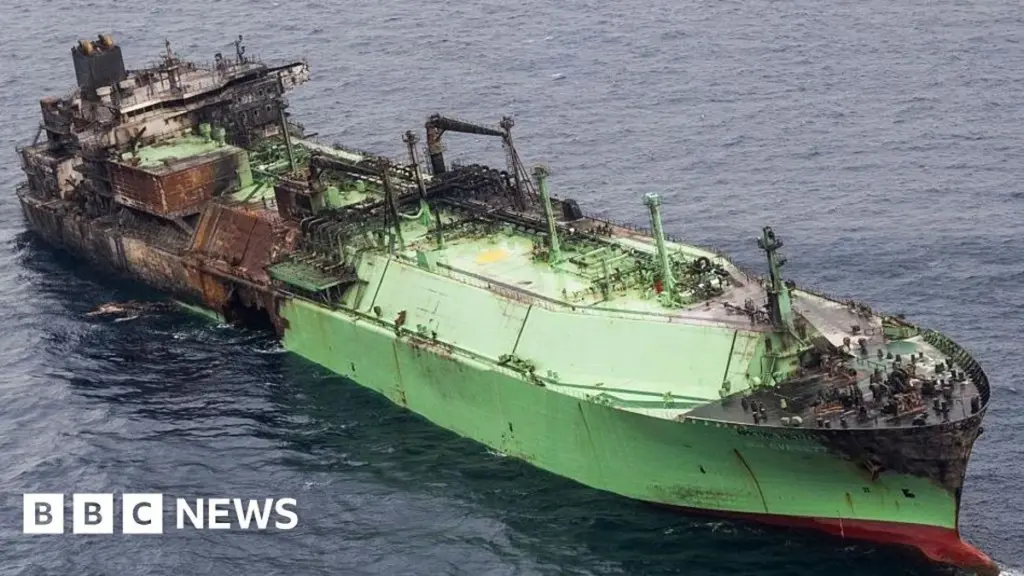
A sanctioned Russian tanker, the Arctic Metagaz, laden with liquid natural gas (LNG), is currently drifting without crew and with a substantial breach in its hull. This uncontrolled drift in the Mediterranean Sea has triggered urgent warnings from Italy regarding the “serious risk of a major ecological disaster.”
The vessel, identified as part of a covert fleet used to transport sanctioned Russian oil and gas products, sustained significant damage earlier this month. This occurred in an incident believed to be a sea drone attack near Maltese territorial waters. While Ukraine has not officially commented on involvement, such attacks align with their view of these “shadow” tankers as legitimate targets.
Italian officials have described the Arctic Metagaz as an “environmental bomb” poised to detonate. The tanker, which originated from the Russian port of Murmansk in February, is now drifting southwards, away from Italian waters and the island of Lampedusa, and is heading towards Libya. Both Italian and Maltese authorities are actively monitoring its trajectory.
Alfredo Mantovano, the secretary of Italy’s Council of Ministers, conveyed the gravity of the situation in a statement to Italy’s Radio 24. He emphasized that the risks presented by the tanker are “enormous” and stated that it “could explode at any moment.”
The Arctic Metagaz reportedly carries “significant” quantities of LNG. Officials in Rome further disclosed to the BBC that the vessel also contains approximately 450 tonnes of fuel oil and 250 tonnes of diesel onboard. As of Tuesday afternoon, the tanker was positioned approximately 45 nautical miles (83 km) from Italian territorial waters and 25 miles from the search-and-rescue region assigned to Libya.
The incident involving the Arctic Metagaz and the subsequent explosions and fire occurred two weeks ago. The vessel’s crew were subsequently located and rescued by the Libyan coastguard. Initial reports from Libyan port officials indicated that the tanker had sunk. However, it has since been observed floating, unmanned and presenting a persistent hazard.
The World Wildlife Fund (WWF) has placed the situation on “maximum alert.” The organization has warned that a potential spill could lead to fires and enduring pollution in a region recognized for its “exceptional ecological value.” This area serves as a habitat for a multitude of protected species.
The use of clandestine tankers by Russia has become a point of contention. These vessels frequently operate with their transponders deactivated to circumvent Western sanctions. The revenue generated from these oil and gas shipments contributes to funding Russia’s ongoing military operations in Ukraine. Russia itself has been targeting Ukraine’s civilian energy infrastructure since the commencement of its full-scale invasion. These attacks have deprived many Ukrainian citizens of essential heating and hot water, particularly during winter months.
Recent months have seen an increase in the frequency and scale of drone strikes targeting Russian tankers. In December, Ukraine’s Security Service (SBU) reported disabling three vessels within a two-week period in the Black Sea. Among them was the Dashan, which the SBU claimed suffered “critical damage.” A little over a week later, the Quendil oil tanker was reportedly struck in the Mediterranean Sea, although it was said to be empty at the time.