
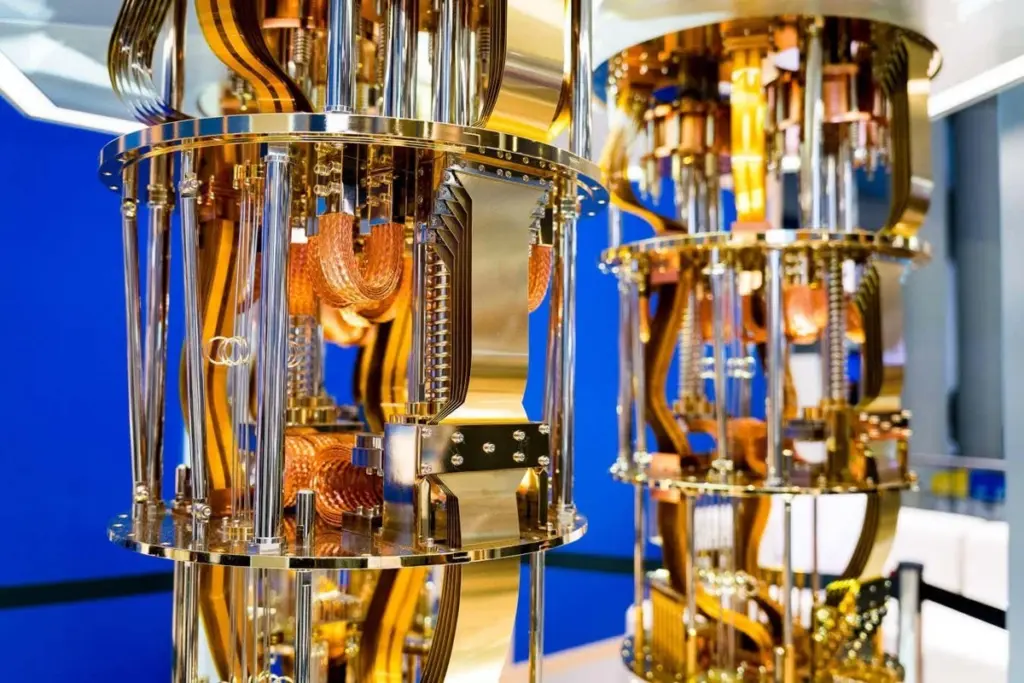
Quantum computers are now a reality, yet a significant hurdle impedes their widespread utility: a high rate of errors. This challenge is perhaps the most substantial obstacle to the technology’s practical application, but recent advancements suggest a potential solution is emerging.
Traditional computers also encounter errors, but established methods exist for their correction. These techniques rely on redundancy, employing additional bits to detect and rectify instances where a 0 mistakenly becomes a 1, or vice versa. The quantum realm, however, presents considerably greater complexity.
The fundamental principles of quantum mechanics prohibit the direct duplication of information within a quantum computer. Consequently, redundancy must be achieved by distributing information across groups of qubits, the foundational elements of quantum computing. This approach necessitates leveraging phenomena unique to quantum mechanics, such as quantum entanglement, where particles become interconnected. These qubit assemblies are termed logical qubits, and developing optimal methods for their construction and utilization is paramount for effectively mitigating errors.
A recent acceleration in progress has fostered optimism among researchers. Robert Schoelkopf of Yale University commented, “It’s a very exciting time in error correction. For the first time, theory and practice are really making contact.”
Reducing the Qubit Footprint for Error Correction
One persistent challenge in quantum error correction has been the considerable number of physical qubits required to form a single logical qubit. This necessity inflates the cost and complexity of constructing entire quantum systems.
However, Xiayu Linpeng and his team at the International Quantum Academy in China have recently demonstrated that this constraint is not immutable. Their work suggests a more efficient path forward.
The researchers discovered that combining just two superconducting qubits with a small resonator could create a larger qubit capable of both reducing errors and automatically signaling their occurrence. They further elaborated on this by showing how three such qubits could be linked through quantum entanglement. This arrangement enables the expansion of computational power without introducing subtle errors.
Concurrently, Schoelkopf’s group has showcased the implementation of several essential quantum computing operations using the same qubit type. Their findings indicate exceptionally low error rates, with some errors occurring as infrequently as once in a million operations.
Layered Protection Against Quantum Errors
While advancements like these can intercept a significant number of errors, fully functional quantum computers will ultimately require thousands of logical qubits. This scale implies that some errors will inevitably persist.
In response, Arian Vezvaee and colleagues at the startup Quantum Elements are exploring methods to enhance error protection for logical qubits, akin to adding an extra layer of defense.
The core principle driving their approach is to minimize idle time for qubits. Prolonged inactivity compromises their unique quantum properties, leading to corruption. The team has shown that applying targeted electromagnetic radiation pulses to idle qubits can foster the most robust entanglement between logical qubits achieved to date.
Precision Calculations Demand Sophisticated Error Correction
The precise configuration and combination of physical qubits to form logical ones significantly impact the accuracy of highly sensitive calculations. This was underscored by research from David Muñoz Ramo and his team at the quantum computing firm Quantinuum.
Investigating an algorithm to determine the lowest possible energy state of a hydrogen molecule, they found that the extreme precision required exceeded the capabilities of standard error-correction methods.
The Ongoing Evolution of Quantum Error Correction
Continuous innovation in error-correction techniques is deemed critical for the success of quantum computing, according to James Wootton at the startup Moth Quantum.
“We’re still in a phase where researchers are learning how all the pieces of error correction fit together,” he stated. While quantum computers cannot yet operate without errors, Wootton observes that the fundamental engineering groundwork for this capability is beginning to materialize.