
France is gearing up for its municipal elections, with outcomes poised to offer crucial insights into emerging political trends ahead of the presidential contests next year. A significant performance by Marine Le Pen’s National Rally (RN) could bolster the nationalist right, even as Le Pen awaits a judicial decision regarding her eligibility for the 2027 presidential race.
These quinquennial municipal elections, unfolding over two consecutive Sundays, will serve as a barometer for the extent to which mainstream political factions are willing to forge alliances with parties on their electoral fringes, both left and right. French politics, mirroring broader European trends, has grown increasingly divided. Traditional parties often find themselves relying on at least tacit backing from more radical elements to secure victories.
However, such alliances can attract accusations of endorsing extremism, potentially alienating centrist voters. The most closely watched contest is undoubtedly for the mayoralty of Paris. This position has been held by the left for the past quarter-century, but there is a possibility of a shift back towards the right.
The Stakes in Paris
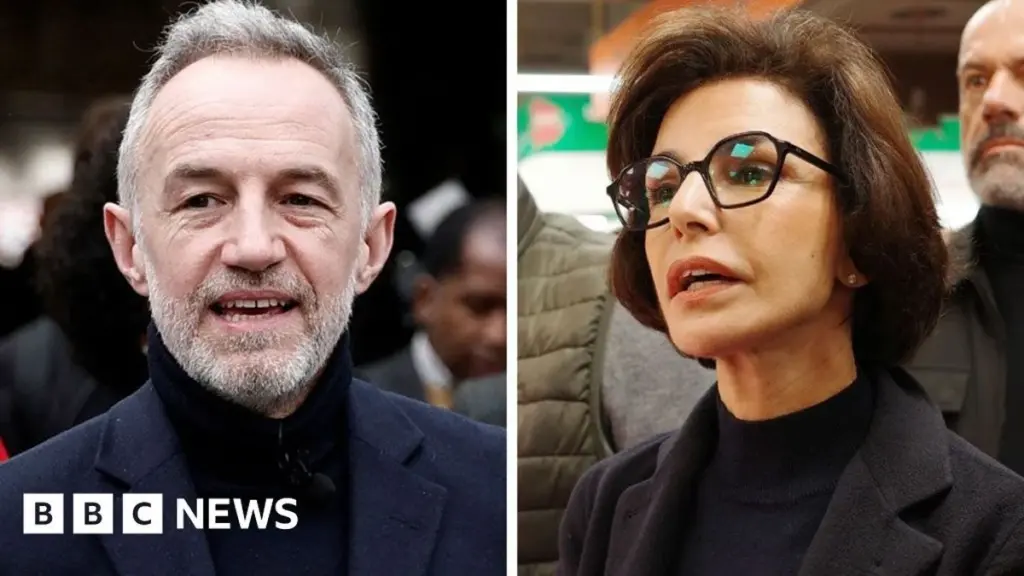
In the capital, as elsewhere, the inter-round period will be critical for forming alliances. The intricate electoral mechanism allows for a substantial number of candidates—potentially up to five in Paris—to advance to the runoff scheduled for March 22nd. The incumbent, Socialist Emmanuel Grégoire, 48, who served as deputy to outgoing mayor Anne Hidalgo, is defending the current administration’s record. The primary challenge from the right comes from Rachida Dati, 60, a former culture minister and once a protegée of ex-president Nicolas Sarkozy.
Other notable candidates in the Paris race include Pierre-Yves Bournazel, representing President Macron’s centrist bloc; Sophia Chikirou of the radical left’s France Unbowed (LFI); Sarah Knafo of the radical right’s Reconquest party; and Thierry Mariani from the National Rally.
Pre-election surveys consistently indicate that all candidates, with the exception of Mariani, are projected to surpass the 10% vote threshold necessary for the second round. Should Mariani achieve more than 5% of the vote, he would also gain the opportunity to negotiate a merger of his electoral list with another. Consequently, between the two voting rounds, there will be significant pressure on Bournazel and Knafo to withdraw their candidacies in favor of Dati, and similarly, on Chikirou to cede the field to Grégoire. The argument presented would be that remaining in contention risks splitting the vote and indirectly aiding their respective opponents.
The inherent difficulty lies in the potential fallout from such alliances. If Dati were to align with Knafo, she could face accusations of associating with “fascists.” Conversely, Grégoire entering into a pact with Chikirou might expose him to similar criticisms, being labeled as consorting with “violent antisemites.”
Tensions in France have been further exacerbated by the February killing of nationalist student Quentin Deranque, allegedly by far-left militants in Lyon. This incident has fueled calls for mainstream parties to boycott the LFI, mirroring the stance taken against the RN. This same political dynamic is expected to play out across numerous towns and cities, as populist forces on both the right and left seek to capitalize on their growing support bases. Mainstream parties find themselves in a dilemma: resist these forces or concede ground.
Campaign Themes in Paris
Rachida Dati, in her Paris campaign, has centered her criticism on the incumbent administration’s record concerning crime and public cleanliness. “Paris is dirty and unsafe,” she asserts, also highlighting financial concerns, with the city accumulating a debt exceeding €10 billion.
“Grégoire represents the same policies as [current Paris Mayor Anne] Hidalgo, only worse,” she stated at a rally. “He acknowledges the Socialists’ missteps, yet he embodies those very mistakes. He was their co-pilot.”
Grégoire does indeed bear the burden of representing continuity. Even if his team emphasizes a strained relationship with Hidalgo, he cannot credibly claim to offer a new direction. However, he possesses two key advantages. The first is the left’s environmental initiatives, which have significantly reshaped Paris. These include the creation of 1,500 kilometers of cycle lanes, the pedestrianization of riverside routes, and a 40% reduction in pollution over the past decade. Official figures from the mayor’s office indicate a 60% decrease in car usage since 2001, a claim readily supported by a comparison of the city’s current state to that of two decades ago.
Both Dati and Knafo downplay these achievements, arguing that improved air quality in cities globally is a result of broader transport policy shifts. They also point out that the average speed for cars in Paris, currently around 10 km/h, is no faster than a jogger’s pace. Nevertheless, the general sentiment among Parisians appears to be one of appreciation for the changes implemented by the current administration.
Grégoire’s second advantage stems from the legal scrutiny surrounding Dati. In September, she is scheduled to go to trial for allegedly receiving nearly €1 million from the Renault car company in exchange for lobbying on its behalf during her tenure as a Member of the European Parliament. While she maintains her innocence, questions linger about whether she would resign if elected mayor and subsequently convicted.
Evolving Electoral System and National Implications
This year’s elections in Paris, along with those in Marseille and Lyon, are the first to be conducted under a revised electoral system. Voters now select not only lists for their individual arrondissements (districts) but also for the central city council, a shift from the previous system where district councillors chose the more influential Paris council members.
Commentators suggest this change personalizes the campaign, potentially benefiting more prominent and charismatic figures like Dati. Beyond the capital, other races will be closely observed. Edouard Philippe, the former prime minister and leader of the centrist Horizons party, is seeking re-election in Le Havre. He has indicated that his presidential aspirations would be difficult to sustain without securing another term as mayor.
In Nice, a contest within the right pits incumbent Christian Estrosi of Horizons against Eric Ciotti, whose small UDR party is allied with the National Rally. Marseille’s Socialist Mayor Benoît Payan faces a formidable challenge from the RN. In Lyon, the Green incumbent Grégory Doucet is predicted to lose to businessman Jean-Michel Aulas, the former president of Olympique Lyonnais football club.
The National Rally, which traditionally performs less strongly in municipal elections compared to national ones, currently governs approximately 15 medium-sized towns. The party hopes to add cities like Marseille, Toulon, Carcassonne, and Lens to its list of municipal holdings.