
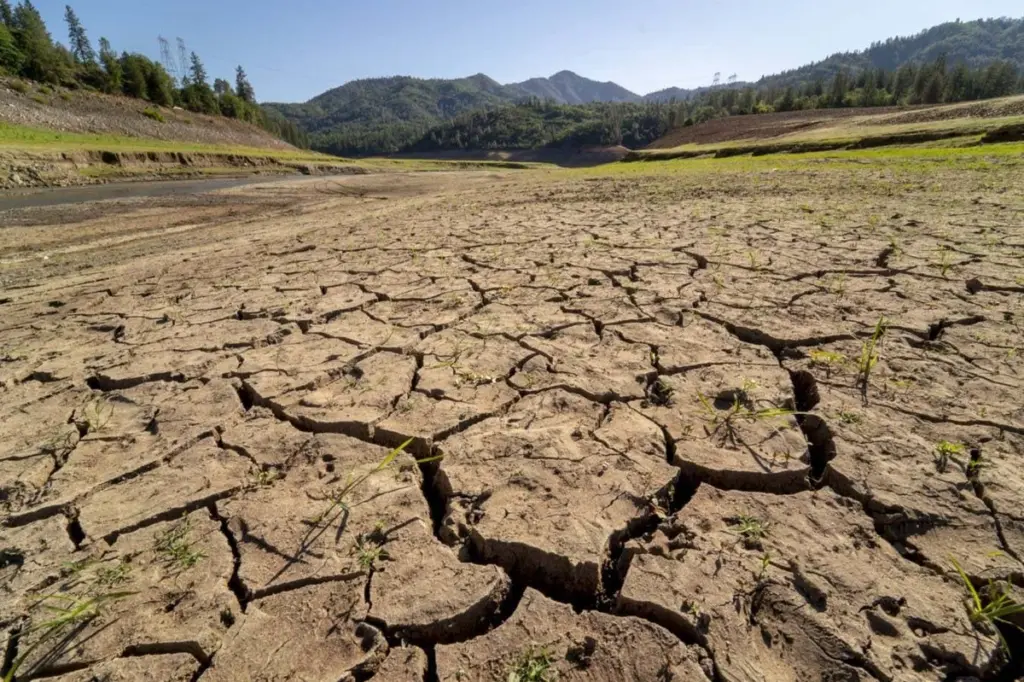
For the first time, scientists have documented a species recovering from a severe decline caused by extreme weather through rapid evolutionary adaptation. This development raises a crucial question: can species facing increasingly harsh conditions due to rising global temperatures adapt to a warming planet?
Throughout Earth’s history, evolution has repeatedly allowed species to survive climate shifts. Over the last half a billion years, the planet’s climate has fluctuated dramatically, from periods significantly warmer than today, evidenced by crocodiles inhabiting the Arctic, to extreme cold. Plants and animals consistently adapted and migrated to survive these changing conditions.
The Challenge of Time Scales
The critical factor distinguishing past climate change events from the current situation is the pace of change. The most rapid climate event previously understood was the Paleocene-Eocene thermal maximum, approximately 56 million years ago. During this period, temperatures escalated by 5°C to 8°C over roughly 20,000 years. In contrast, current projections indicate temperature increases of over 4°C by the century’s end. This accelerated timeline prompts serious questions about whether evolution can provide a meaningful response in such a compressed timeframe.
Evolutionary Rescue in Action
The answer appears to be yes, particularly for organisms with short generation cycles. Recent findings center on the scarlet monkeyflower (*Mimulus cardinalis*), a wild plant that successfully evolved to withstand the severe drought experienced in California between 2012 and 2015. This phenomenon is known as evolutionary rescue, where a species averts extinction through swift genetic adaptation.
Study of the Scarlet Monkeyflower
Daniel Anstett of Cornell University in New York and his research team began monitoring monkeyflowers in 2010. They meticulously assessed the plant populations across their natural range annually, collecting samples for DNA analysis. Monkeyflowers, which typically grow near water sources, were particularly vulnerable to the drought conditions. As Anstett noted, “If you were to put one in a pot and not water it for a few days, it would just die.”
Indeed, three local populations of the monkeyflower succumbed to the drought. However, many surviving populations exhibited signs of evolving drought tolerance in a remarkably short span of just three years. Genetic analysis revealed numerous mutations in regions of their genome associated with climate adaptation. These evolved populations demonstrated the most robust recovery following the drought period.
Establishing Evolutionary Rescue
While evolutionary rescue has been demonstrated in laboratory settings, Anstett emphasizes that this marks the first instance of it being observed in a natural wild setting. Verifying evolutionary rescue in the wild is complex, requiring the fulfillment of three key criteria. Researchers must first demonstrate that a population is declining due to a specific threat. Second, they need to show that the population has undergone genetic adaptation in response to that threat. Finally, and crucially, they must establish a direct link between these genetic changes and the population’s subsequent recovery.
Previous Examples and Challenges
Potential candidates for evolutionary rescue include Galapagos finches adapting to drought, Tasmanian devils evolving resistance to a transmissible cancer, pest populations developing resistance to pesticides, and killifish adapting to severe river pollution in the United States. However, Anstett points out that in these cases, researchers have not been able to definitively meet all three necessary conditions. Andrew Storfer at Washington State University, who studies Tasmanian devils, concurs, stating, “To be clear, we’ve demonstrated rapid evolution in Tasmanian devils. But with the evidence in hand, we cannot link it to demographic recovery.”
Storfer also raises a pertinent point about the distinction between weather and climate. He explains that a three-year drought is an extreme weather event, whereas adaptation to climate change would necessitate a longer observation period. Therefore, the monkeyflower’s ability to adapt to a single severe drought does not automatically guarantee its capacity to evolve in response to centuries of accelerating temperature increases and increasingly extreme weather patterns. Anstett cautions that future extreme events “might dwarf the drought that we saw.”
Limitations and Hope
Furthermore, population declines inherently reduce genetic diversity, which is the raw material for evolution. Repeated severe impacts over a short period can diminish a species’ evolutionary potential with each successive challenge. As global warming intensifies, the threats to biodiversity will likely grow, while the capacity of many species to adapt may shrink. Long-lived species with extended generation times, in particular, possess limited ability for rapid evolutionary responses.
Despite these considerable challenges, Anstett views his findings as a positive development. He notes that many current predictions of species decline do not adequately factor in the potential for evolutionary adaptation. “This is a story of hope,” he concludes.