
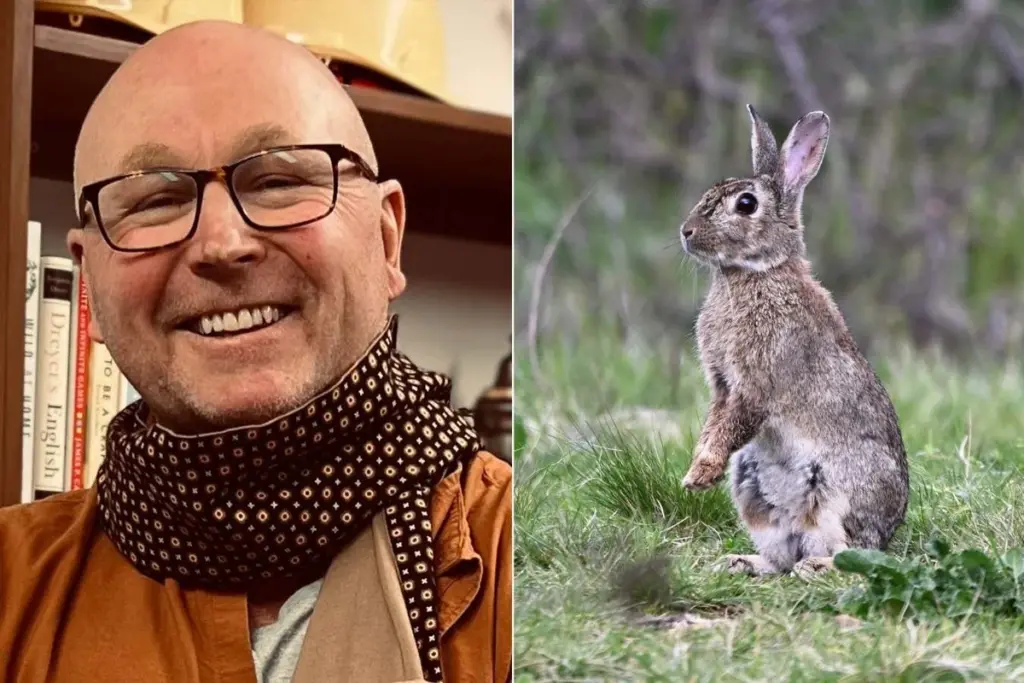
The news arrived on a quiet Sunday shift, a premonition I’d perhaps only experience a couple of times in my life. A biocontrol virus, intended to manage Australia’s vast feral rabbit population, had breached quarantine. It had traveled approximately 250 kilometers from the South Australian coast, reaching Yunta, a settlement so small it barely registers on the map. Authorities identified only two individuals who had visited both the newly quarantined area at Point Pearce and Yunta. I was one of them.
This incident occurred in October 1995. At the time, I was an emerging environment reporter based in Sydney for a prominent Australian newspaper. While my beat was active, one particular story seized my attention: the unfolding challenges with a significant initiative aimed at eradicating Australia’s extensive feral rabbit population, an introduced species from Europe.
The Commonwealth Scientific and Industrial Research Organisation (CSIRO), Australia’s primary federal science agency, managed this project. They were testing a lethal rabbit calicivirus disease within a quarantine facility located on Wardang Island, just off the South Australian coast. Before its widespread deployment, further research was necessary. Crucially, scientists sought to confirm the virus posed no threat to native fauna or the broader environment.
However, on October 10th, CSIRO released a statement indicating the virus had spread to two additional locations beyond its quarantine zone. Curiously, the statement maintained the virus had not escaped the island itself. A week later, upon arriving at my desk, I learned the virus had somehow transferred from Wardang Island to Point Pearce on mainland South Australia. I proposed to my editor that my photographer and I should immediately travel to Adelaide and proceed to Point Pearce.
By early afternoon, my photographer, Peter Rae, and I were in a rental car, navigating the arid terrain toward Point Pearce. Our destination was a meeting with the government researchers overseeing the quarantine operations.
A representative from the local Aboriginal community met us upon our arrival and guided us the final kilometers to rendezvous with the quarantine team. We were the sole journalists present. It was evident that a rabbit catastrophe had commenced; their carcasses were strewn across the paddocks. We interviewed and photographed the researchers, then joined them in a shed where post-mortem examinations were underway.
Investigating the Unfolding Crisis
Once the magnitude of our observations became apparent to our editors in Sydney, they requested a follow-up story exploring the implications should the virus continue to spread unchecked. I contacted a rabbit meat wholesaler, who, in turn, connected me with a fur trapper supplying pelts essential for manufacturing Australia’s iconic Akubra hats.
The following morning, we drove to Yunta, a location more than 300 kilometers north of Adelaide. There, we met rabbit shooter Clinton Degenhardt, whose appearance evoked characters from a “Mad Max” film. We spoke with him as he sat in his vehicle, his rifle resting beside him, addressing him through the windshield where glass should have been. Degenhardt and others involved in the rabbit meat and fur trades expressed considerable anxiety about their livelihoods.
The next day, our report was published as a prominent front-page picture story. From my perspective, my assignment was complete, and I prepared to head home. For the subsequent ten days, there was no significant development. Then came that Sunday, and the distressing news that the virus had made its substantial leap to Yunta.
South Australia’s chief veterinarian at the time informed reporters that Peter and I might have inadvertently contributed to the virus’s spread. A press release conveying a similar message was also distributed. My quiet Sunday shift was abruptly consumed by meetings as my editors sought to understand how two of their staff had become central to the narrative.
In the days that followed, the then-leader of Australia’s National Party, Tim Fischer, addressed the matter in Parliament. He suggested that if our involvement were proven, Peter and I should be assigned to work on the “dog control fence”—the 5,600-kilometer-long pest-exclusion barrier separating southeastern Australia from the rest of the continent.
Fortunately, the scientists responsible for quarantine soon proposed that blowflies, rather than humans, might have been the carriers of the virus, and the news cycle shifted. It has always struck me as peculiar, however, that among all the places the virus reached after Point Pearce, it appeared in Yunta, the precise location where we had interviewed the rabbit shooter. Was it coincidence, conspiracy, or a simple mistake? I never discovered the truth.
Community and Career Repercussions
Rival news organizations seized upon our significant scoop becoming a public embarrassment. Friends and colleagues also found amusement in teasing me. During the initial intense weeks following the accusation of spreading the virus, I received a copy of “Watership Down,” and numerous individuals found it comical to refer to me as “bunny killer.”
On the other hand, the situation was also confusing because nearly everyone harbored a dislike for feral rabbits, and most Australians were eager for the virus to be released. Farmers, endangered species researchers, and conservationists rejoiced that one of Australia’s most persistent pests was likely to be largely eradicated—at least until resistance began to develop. Indeed, within the first two months following that pivotal October, at least 10 million rabbits perished. Ultimately, hundreds of millions more would die across the continent.
Nearly four years later, I found myself at Erldunda Station, a 3,000-square-kilometer cattle farm situated near Alice Springs in Central Australia. Prior to the calicivirus escape, the property boasted 20,000 rabbit warrens. By the time of my visit, there were virtually none. Upon learning I was the reporter accused of spreading the virus, the owner, Bernie Kilgariff, quickly retrieved his visitors’ book. He insisted I sign as an honored guest, placing my entry even above that of the governor-general.