
Seventy-five years ago, a remarkable discovery was made deep within a Yorkshire peat bog: the exceptionally preserved remains of dozens of 11,000-year-old mushrooms. These polypores, carefully cut and intentionally scorched, are believed to have served as the earliest known portable fire kit for nomadic Mesolithic hunter-gatherers, providing essential tinder for their travels.
The preservation of fungi for archaeological analysis is exceedingly rare. Composed primarily of water, mushrooms typically decompose rapidly, making them almost entirely absent from the fossil record, as noted by Hannah O’Regan of the University of Nottingham. Consequently, the unexpected ways fungi have aided our ancient ancestors’ survival have largely remained hidden, lost to time for decades.
However, recent advancements in technology have finally enabled the identification of fungal DNA and micro-residues within the mouths, utensils, and clothing of prehistoric humans. These breakthroughs are illuminating the significant, yet often overlooked, role of the fungal kingdom in feeding, healing, and warming our Stone Age ancestors. Emerging discoveries even suggest that fungi played a crucial role as social facilitators, helping to unify early farming communities and thereby paving the way for the development of modern civilization.
“By uncovering the invisible evidence within the archaeological record, we can now appreciate how fungal connections fostered the earliest Neolithic communities’ understanding of their land and their societies,” states Li Liu at Stanford University. “These analytical methods were entirely new to archaeology.” The expanding diversity of fungi being unearthed is, according to Laura Weyrich of Pennsylvania State University, “helping to reshape our perspective on past human behaviors.”
The Dawn of Fungal Foraging
Until roughly a decade ago, discussions of prehistoric diets were predominantly confined to meat and plants, with mushrooms largely disregarded due to their scarcity in archaeological findings. “Neanderthals, for instance, have often been characterized as being as carnivorous as polar bears,” Weyrich remarks. Yet, in 2017, her team’s analysis of DNA extracted from Paleolithic dental plaque revealed that a group of Neanderthals in what is now Belgium consumed gray shag mushrooms alongside their meat-heavy diets. Individuals from a cave in northern Spain, meanwhile, were found to have eaten split gill mushrooms.
Evidence suggests one member of the Spanish group, who lived approximately 48,000 years ago, even chewed on grasses colonized by penicillin molds. This finding raises the possibility that this individual intentionally sought out the antibiotic fungus as a remedy for a dental abscess. “That particular individual would have experienced immense pain, and they are the only person in whom we detected [penicillin],” Weyrich explains. “This leads us to question whether they understood there to be some medicinal benefit from consuming it.”
While definitive proof of intentional self-medication with fungi by Neanderthals remains elusive, the discovery of mushroom consumption by two separate communities significantly altered the understanding of this ancient human species. Historically, stable isotope analysis, employed since the late 1970s to detect dietary markers in ancient bones, indicated Neanderthals were hypercarnivores due to exceptionally high nitrogen values. “But the contribution of mushrooms can also elevate those nitrogen values,” Weyrich notes. “In the environments Neanderthals inhabited, it is much more probable they consumed a variety of animals, plants, and mushrooms.”
The inability to detect fungi in ancient diets until recently stemmed from the lack of analyzed or cataloged isotopic values, creating an archaeological blind spot. “Isotope data has always been interpreted as, ‘this is meat, this is plants, and that’s what they ate’,” says Justina Stonytė. Her ongoing research at Lithuania’s Center for Physical Sciences and Technology is crucial in bridging this knowledge gap. By measuring mushroom isotopic signatures for the first time, her work demonstrates that their carbon and nitrogen values overlap with those of both plants and meat, suggesting fungi may have been present in dietary evidence all along.
This broad overlap makes pinpointing specific mushroom species from isotope data challenging. However, certain fungi emerge as strong candidates. “We have found that Boletus-type mushrooms share very similar nitrogen values to meat, and it is reasonable to assume ancient humans consumed them,” Stonytė reports. Boletus mushrooms, commonly known as porcini, are among the most popular edible fungi worldwide. Critically, spores from this group have been identified in the dental plaque of Paleolithic humans in Spain dating back approximately 15,000 years.
Following this 2015 discovery, O’Regan and her colleagues published a paper proposing that isotopic signals previously attributed to meat consumption might actually reflect the foraging of Boletus or other mushrooms. “We titled our paper ‘The missing mushrooms’,” she stated, “because they must have been present, but we couldn’t find them.”
Fungal Fire Starters
Aside from DNA evidence, those Boletus spores represent the only preserved remains confirming consumption in the deep past. No edible fungi have yet been found directly associated with human remains. In contrast, the fire fungi discovered in Yorkshire offer some of the most unambiguous evidence for prehistoric mushroom use.
The Mesolithic site of Star Carr, where the peat-coated tinder fungi were found in 1950, yielded a total of 82 ancient mushrooms, all remarkably preserved by their anaerobic, waterlogged conditions. Seventy-six of these have been identified as *Fomes fomentarius*, also known as the tinder fungus due to its flammability when processed into a felt-like material called amadou.
These fungi were both harvested and processed, according to Harry Robson of York University, who participated in excavations at Star Carr between 2008 and 2015. “Some showed very clear cut marks on the exterior, with pieces removed to access the internal structure of the fungus,” he described. A total of 54 fungi exhibited signs of being scraped and cut into amadou, while 41 were charred.
Researchers theorize these bracket mushrooms were vital for the survival of migrating hunter-gatherers, enabling them to stay warm and cook food while in transit. At Star Carr, they were discovered alongside rolls of paper-thin birch bark. Robson suggests they were likely used with this material to create a lightweight, compact, and highly dependable fire-starting kit, allowing for fire creation without disrupting movement. “If you have the equipment and apparatus to transport fire, that is a profound advantage for nomadic societies,” he emphasized.
Additional examples of tinder fungi have been unearthed from the boggy environments at the 7300-year-old site of La Draga in Spain, as well as at Mullerup in Denmark, Hohen Viecheln in Germany, and Vis I in Russia. The presence of amadou at such diverse archaeological locations indicates this portable pyro-technology was in use 11,000 years ago and continued to be utilized throughout the Neolithic period, underscoring its unique value to prehistoric peoples.
Perhaps the most famous instance of *F. fomentarius* use is associated with Ötzi the Iceman, who lived approximately 5300 years ago in the Italian Alps. In a leather pouch preserved alongside Ötzi, researchers found amadou crafted from this mushroom, along with his reliable pyrite strike-a-light. Fragments of pyrite were even discovered embedded within the spongy amadou fibers, leaving no doubt that the iceman’s fire fungi had been ignited during his solitary journeys.
Ötzi’s Fungal Companions
Amadou was not the sole fungal innovation Ötzi carried on his final trek. Threaded onto leather thongs, likely suspended from his belt, archaeologists discovered two dried birch polypore mushrooms.
The researchers who found these fungi in 1998 proposed a medicinal purpose, suggesting Ötzi might have ingested them to treat an intestinal whipworm infestation. Subsequent analyses have highlighted the anti-parasitic, antimicrobial, anti-cancer, and immune-boosting properties of birch polypore.
However, examination of Ötzi’s stomach contents revealed no indication of birch polypore ingestion, weakening the medicinal hypothesis. Now, ongoing research is presenting an alternative explanation.
Mariana Villani is currently investigating the traditional uses of various mushrooms Ötzi encountered as part of her research at Cardiff University and the Royal Botanic Gardens, Kew. Observing that Ötzi carried the birch polypore mushrooms on his hunting belt, she has developed a novel, unpublished theory regarding their function: as fishing floats.
Villani draws parallels between Ötzi’s fungi and others documented in an 18th-century Swedish ethnography, which describes their use as buoyancy aids for fishing nets. Both types of mushrooms possess a beaded shape, resembling traditional cork fishing floats and their modern plastic counterparts. She points out that Ötzi also carried cords, netting, and a bone awl that she notes “really looks like a fishing hook.” Villani has even experimented with dried birch polypore mushrooms as fishing floats, conducting trials in Ötzi’s native Alpine valley and in Brazil.
“I caught eight fish in 3 hours!” she exclaims. Villani found that, when coated in beeswax, the mushroom floats maintained buoyancy for several hours and could be redried and reused multiple times without losing effectiveness. “The way the mushrooms were just hanging on Ötzi’s belt would have been perfect for drying them after fishing,” she adds.
Regrettably, no fish were recovered from Ötzi’s stomach, suggesting his final meal did not include aquatic prey. Furthermore, direct evidence of Neolithic fishing practices in his native Schnalstal valley is sparse, although nets, fish traps, harpoons, and canoes have been found at Stone Age sites near several adjacent Alpine lakes.
Villani remains convinced. “He was such a skilled hunter and survivalist, but fishing has always been overlooked when it comes to Ötzi. If you look at these mushrooms, the most likely explanation for me is that they were used as fishing floats,” she asserts.
Fish may not have been the only food source Ötzi accessed with the assistance of fungi. Honey was likely a “staple food” for his community, according to Villani. Numerous recent ethnographic accounts describe hunter-gatherers burning *F. fomentarius* to smoke beehives for honey harvesting. Intriguingly, certain compounds within these tinder fungi provide protection to honeybees against the detrimental Varroa destructor mite, a significant threat to bee colonies globally.
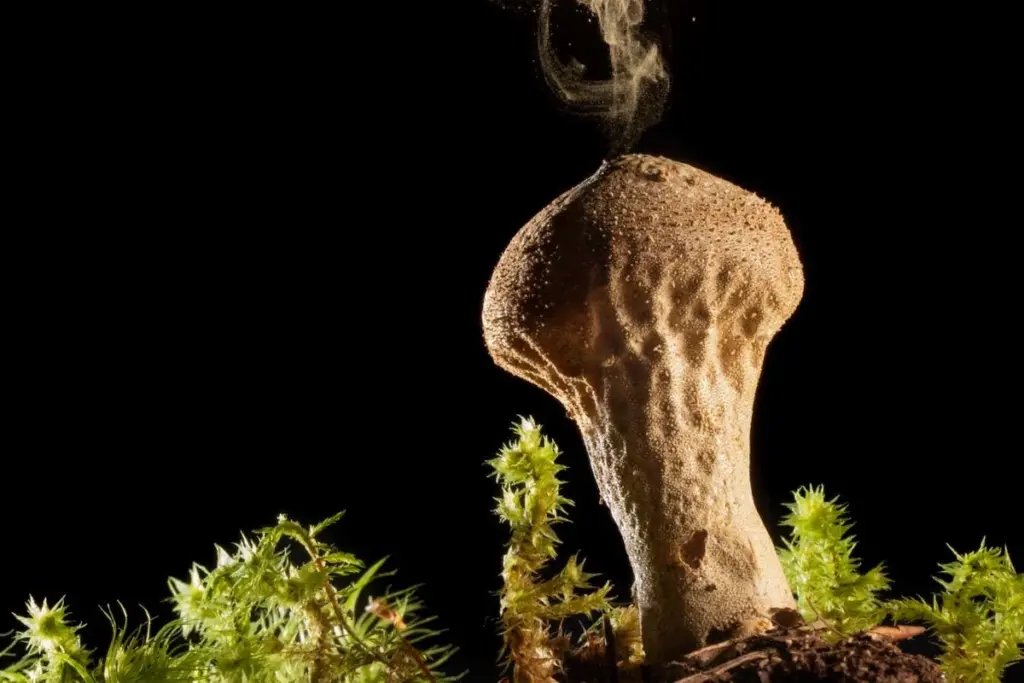
While direct evidence linking Ötzi to this practice is lacking, Villani’s research strengthens the possibility by highlighting the abundance of bee-friendly fungi in the Schnalstal valley. Puffballs, for example, are among the most prevalent local mushrooms. Indigenous communities worldwide burn these spore-filled spheres, often in conjunction with *F. fomentarius*, to temporarily anaesthetize bees during honey collection.
“Puffballs are one of the most useful mushrooms ever, so it’s very likely that they were used by Ötzi and his contemporaries,” Villani concludes.
Fungal Fermentation: The Basis of Early Brewing
Pastoral communities, akin to Ötzi’s, began to emerge as the last glacial period transitioned into the current Holocene Epoch around 11,700 years ago. Climate shifts facilitated humanity’s move from hunter-gatherer lifestyles to sedentary agriculture. While various factors contributed to this profound societal transformation, the emergence of new fungal allies remains a significantly underappreciated element.
Discoveries by Liu and her colleagues at Stanford University in 2024 demonstrated how fungi aided early rice cultivators in brewing some of the world’s earliest beers. As the climate became wetter and warmer, rice naturally attracted a red mold called *Monascus*. This mold secretes enzymes that break down starch into sugar, a precursor to alcohol fermentation by airborne yeasts. Liu’s team identified evidence of this two-stage fungal fermentation process in residues found on 10,000-year-old pottery, representing the oldest known rice beer from East Asia.
Using highly refined microscopy techniques, the researchers identified fragmented pieces of *Monascus* on the ancient vessels, alongside starch granules exhibiting clear signs of enzymatic degradation. “They were prevented from decomposing by falling into cracks and pores on the surface of the pottery, but it requires a certain skill to use microscopes to identify them,” Liu commented. “So, this field is still very niche, and only our team currently possesses the necessary expertise to effectively identify these molds.”
Textual records describing this fungal fermentation process, known as red *qu*, date back only a couple of millennia. Liu and her team’s findings thus necessitated a revision of historical timelines. “Most scholars believed that red *qu*-based alcohol was developed about 2000 years ago, so when we discovered that the earliest beers date back to 10,000 years ago, it was a surprise,” Liu stated.
These findings suggest alcohol production began concurrently with the rise of rice cultivation and the establishment of settled farming villages. This, in turn, implies a central role for alcohol in the prosperity of these early communities. Previously, historians recognized the significance of beer in facilitating political and religious gatherings within major civilizations, including the Egyptian and Inca empires. This new discovery, however, provides the first indication that alcohol was adopted for community-building purposes thousands of years before these empires flourished.
Some of the earliest traces of *qu* were found on pottery vessels recovered from burial pits, suggesting a connection between beer and mortuary practices. “This tradition likely helped to forge cultural identity and reinforce lineage,” Liu explained, indicating that these fungal-derived beers contributed to the consolidation of social, political, and religious structures.
Traditionally, archaeology has tended to emphasize the role of megalithic monuments in shaping group identity, perhaps because they are precise opposites of fungi: enduring, conspicuous, and readily revealing their stories. Now, a small but growing contingent of researchers is beginning to recount a more subtle narrative of human evolution, one in which mushrooms played a vital role in our ancestors’ survival through the last glacial period and in navigating the nascent stages of civilization. “Just as Stonehenge helped Neolithic communities to identify with their land or territory, *qu*-based alcohol enhanced the rituals that bound people to a particular place or group,” Liu observed.
With every new insight gained, our understanding deepens. The scarcity of fungi in the archaeological record reveals less about their importance to prehistoric humans and more about our own methodological limitations. The hidden kingdom was always present; we are only now developing the means to perceive it.