
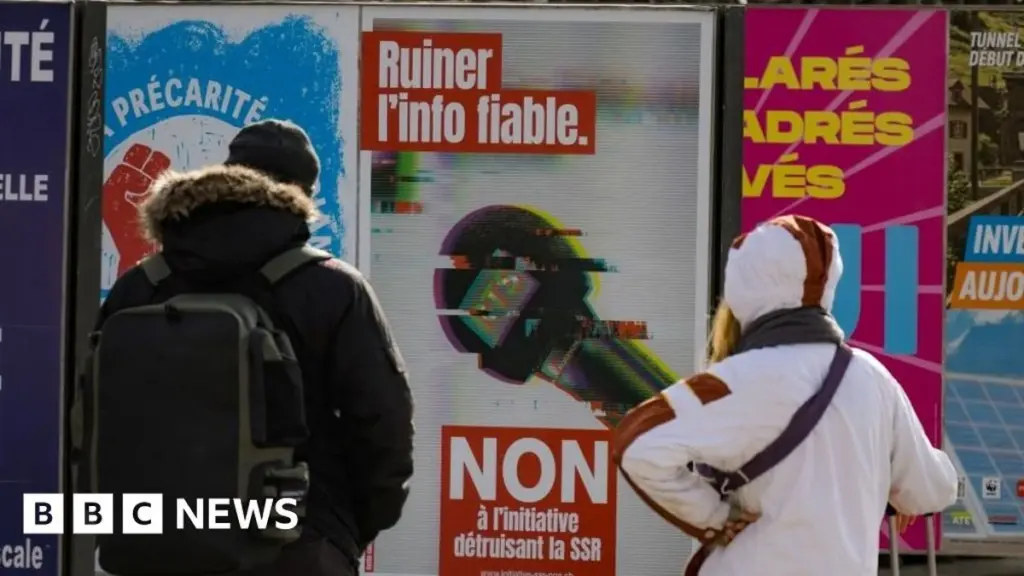
Initial projections indicate that Swiss voters have turned down a proposal aimed at significantly reducing the annual licence fee allocated to the national broadcaster, the Swiss Broadcasting Corporation (SBC).
This fee, which has seen reductions in recent years, currently amounts to 335 Swiss francs, approximately £320 or $435, per household annually.
Details of the Rejected Initiative
The initiative, championed by the right-wing Swiss People’s Party, sought to lower the fee to 200 Swiss francs (£190; $260) each year, while also exempting businesses from this payment.
However, the proposal faced defeat in Sunday’s referendum. Projections show it garnered only 38% of the vote, with 62% of ballots cast in favour of maintaining the licence fee at its existing levels.
Arguments Surrounding the Fee
The Swiss People’s Party contended that the fee was excessively high, particularly in light of rising living costs. They pointed out that the Swiss licence fee exceeds those in neighbouring countries such as Austria and Germany.
Conversely, the Swiss government and all other parliamentary parties opposed the initiative. Their primary argument centered on the licence fee’s crucial role in ensuring adequate representation of Switzerland’s four national languages: French, German, Italian, and Romantsch.
Concerns were also raised that a reduction in funding could negatively affect the broadcaster’s foreign news and sports coverage.
Government Adjustments to the Fee
Independent of the referendum, the Swiss government has already committed to a reduction in the licence fee, lowering it to 300 Swiss francs by the year 2029. This plan also includes provisions for more businesses to become exempt from the fee.
Referendum on Cash Availability
In a separate vote, Swiss citizens favoured enshrining the availability of cash in the constitution. Two distinct proposals were put before the electorate on this matter.
One was an initiative titled “Cash is Freedom,” put forth by a citizen movement known as MSL. The other was a counter-proposal from the government, which also advocated for cash’s constitutional protection.
Early projections suggest that approximately 70% of voters supported the government’s counter-proposal. This version stipulates that the Swiss National Bank would be responsible for guaranteeing the ongoing supply of cash.
The MSL, which specifically advocated for “coins and banknotes” rather than the broader term “cash” in its initiative, argued that the government’s proposal did not go far enough in its protections.