
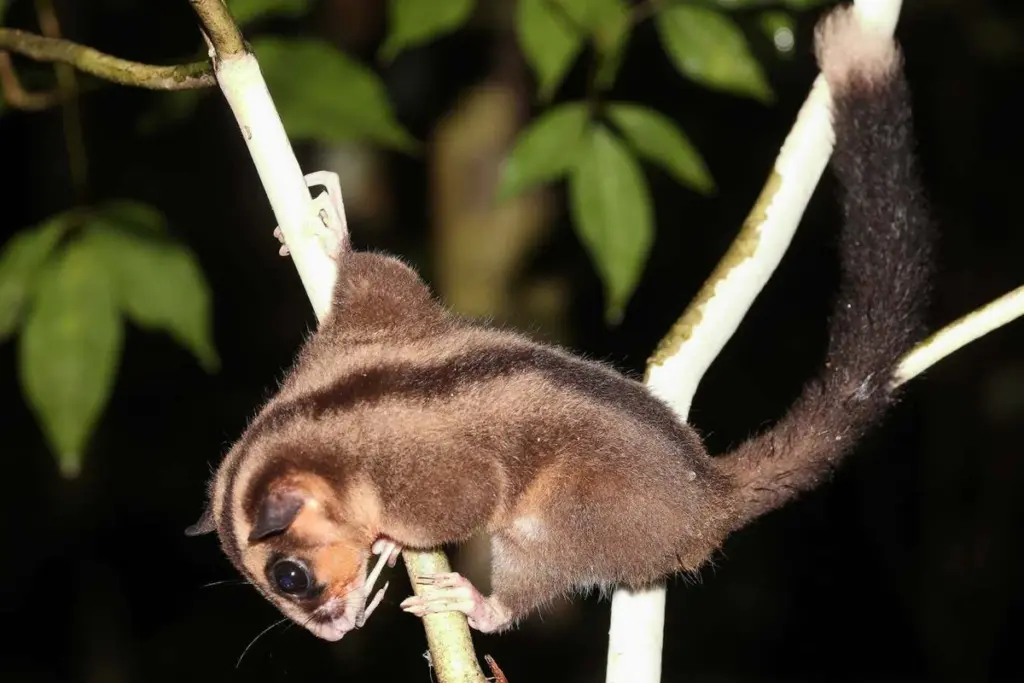
Two marsupial species, believed to have vanished from the Earth at least 6,000 years ago, have been located alive in the island of New Guinea. This significant discovery includes the ring-tailed glider and the pygmy long-fingered possum.
Previously, both species were known to science solely through fossilized remains unearthed in Australia. However, recent fieldwork in the Vogelkop peninsula, situated in Papua, Indonesia, has led to their rediscovery and photographic documentation. This undertaking was made possible through the crucial assistance of local Indigenous communities.
Tim Flannery, affiliated with the Australian Museum in Sydney, described the confirmation of these animals’ reappearance as a years-long investigative effort. His team’s work involved piecing together fragmented evidence, including tentative sightings, misidentified specimens held in museum collections, and the excavation of sub-fossil material.
Current photographic evidence, coupled with in-depth collaboration with local populations, has finally enabled researchers to certify the animals’ living status. Despite this remarkable find, their habitat faces considerable threats, primarily from logging activities. A significant challenge for conservation efforts lies in the limited scientific knowledge regarding their precise geographic distribution and ecological requirements.
Scott Hucknull from Central Queensland University in Australia, who was not directly involved in the research team, commented on the discoveries, stating their importance surpasses that of finding a living thylacine in Tasmania. This perspective underscores the profound implications of these marsupials’ reappearance.
Species Identification and Unique Characteristics
The ring-tailed glider, scientifically designated *Tous ayamaruensis*, shares ancestry with the three greater glider species found in Australia, belonging to the genus *Petauroides*. Nonetheless, it exhibits several fundamental distinctions, most notably a prehensile tail and ears completely devoid of fur. These characteristics prompted researchers to reclassify it under its own distinct genus.
It is understood that some Indigenous communities in the region hold the glider in high regard, considering it a sacred animal that should be both revered and protected. This cultural reverence may have played a role in its remaining unknown to the broader scientific community until this recent discovery.
Regarding its appearance, Flannery remarked, “It’s one of the most photogenic animals, most beautiful marsupials you’ll ever see.”
The pygmy long-fingered possum, known as *Dactylonax kambuayai*, presents as a strikingly striped creature. A defining feature is one digit on each of its hands, which is twice the length of its other fingers. These elongated digits appear to serve a specialized purpose.
Flannery further elaborated on the possum’s adaptations: “They’ve got a whole lot of specialisations in their ear region as well, which seem to be related to detection of low-frequency sound. So presumably they’re listening for wood-boring beetle larvae, and they then rip open the rotting wood and use that finger to fish out the grub.” This suggests a sophisticated auditory system and a unique foraging strategy.
Conservation Concerns and Past Fossil Record
The specific locations where these animals currently reside are being intentionally kept confidential. This measure is in place to mitigate the risk of wildlife traders targeting these newly rediscovered species. Flannery issued a stern warning to potential traders, emphasizing the animals’ unsuitability for captivity. “They would be incredibly difficult to keep in captivity, because their diet is so highly specialised. Advanced warning for anyone who’s thinking of keeping one as a pet: it won’t live long,” he stated.
The fossil record pertaining to the *Tous* genus is as obscure as its present-day existence, according to Hucknull. Fossilized teeth dating back 3 to 4 million years have been found at sites in Victoria and New South Wales, Australia. Following this, a considerable gap exists until around 280,000 years ago. Fossils discovered in Queensland’s Mount Etna and Capricorn caves suggest that the ancient *Tous* was a relatively common possum during that period.
Hucknull noted that the smallest fossilized species found is nearly identical to the *Tous* species now observed alive in West Papua. He further highlighted the significance of the pygmy long-fingered possum, stating, “The pocket-sized, bizarre and cute *Dactylonax kambuayai* is equally as important as *Tous*. With its massively elongated finger and a small size that would fit in the palm of your hand, it represents a peculiar ecological role.”
Broader Implications and Biodiversity Loss
David Lindenmayer of the Australian National University in Canberra described these findings as “fascinating and important discoveries.”
He also expressed significant apprehension regarding the extensive logging and land clearing occurring in New Guinea. This concern prompts reflection on potential biodiversity losses in Australia due to historical land clearing practices. The rediscovery raises questions about what other species might have been lost before they could be scientifically identified.