
The highly anticipated fourth installment in Adrian Tchaikovsky’s acclaimed Children of Time series, “Children of Strife,” is now available. This latest novel offers a compelling continuation of the series, and this review aims to provide insights while carefully avoiding spoilers for any of the four books.
The concept of science fiction featuring “uplifted” species is not new. However, Tchaikovsky approaches this theme with remarkable originality. The series began with “Children of Time,” detailing the journey of an ark ship reaching a terraformed world. The expectation was a planet prepared for human settlers, but instead, the narrative presents a significant deviation. A different species has ascended to a dominant position, notably including spiders in the initial installment.
The subsequent novel, “Children of Ruin,” explored another planet and introduced octopuses into the narrative of elevated lifeforms. Tchaikovsky, a prolific author with a diverse bibliography, demonstrates the zenith of his talent within this series. These books are quickly becoming modern classics, essential reading for enthusiasts of the science fiction genre and its capacity to examine cosmic, historical, and future themes.
While many renowned science fiction writers distinguish themselves through explorations of theoretical physics, Tchaikovsky has built his reputation by delving into the intricacies of biology. The imaginative depiction of societies developed by uplifted species, such as intelligent octopuses, is a particular source of reader delight.
The third book in the sequence, “Children of Memory,” took a different trajectory from its predecessors and, in comparison, felt somewhat less impactful. However, “Children of Strife” marks a significant return to the series’ established strengths. It’s plausible that readers could bypass the third book and still grasp the narrative of “Children of Strife,” though prior familiarity with the first two books is definitely recommended to avoid confusion. An individual encountering this fourth installment without prior context might find themselves questioning, for example, the role of the ants.
A Multi-Timeline Narrative Structure
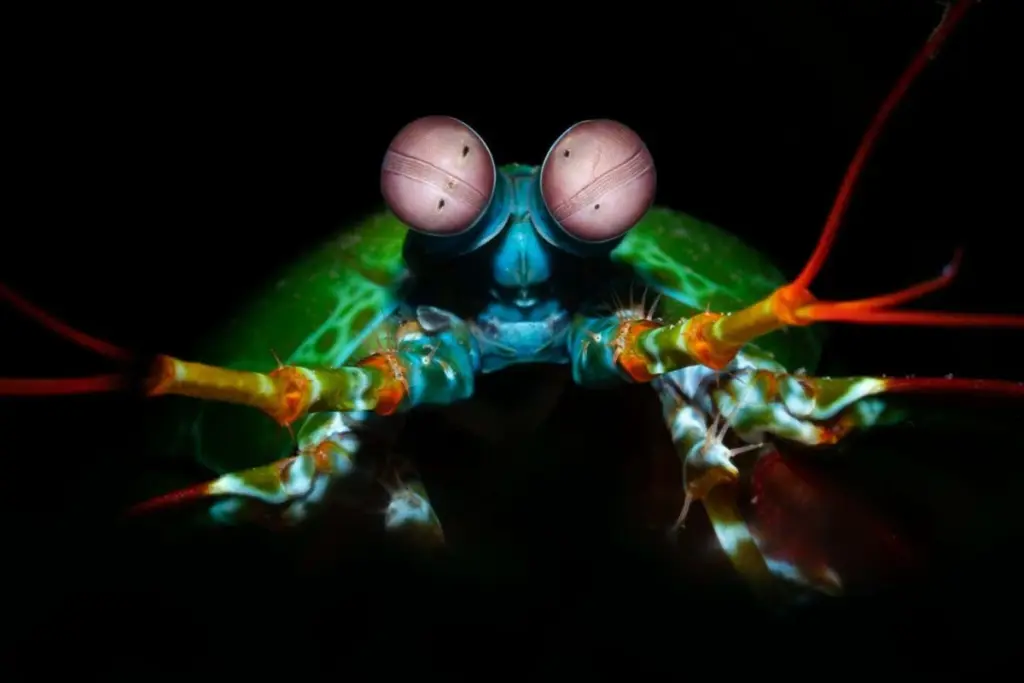
“Children of Strife” adopts an ambitious structure, weaving together three distinct timelines. The narrative fluidly transitions between these timelines, with each featuring its own set of characters. This installment centers on an uplifted mantis shrimp. On Earth, mantis shrimps are formidable carnivorous predators. The prospect of an uplifted version, human-sized and equipped with advanced weaponry, presents an intriguing narrative element. Some creatures, or at least species, featured in this novel will be familiar to long-time fans of the series.
A Unique and Challenging Planet
A substantial new element in “Children of Strife” is the planet itself. This world appears to have been terraformed to resemble Earth closely. From a distance, it possesses an idyllic, Eden-like quality. However, this planet is unlike any encountered in Tchaikovsky’s previous works. It is accurate to state, without revealing specific plot points, that this locale proves to be exceptionally challenging and inhospitable. The origins and reasons behind the planet’s current state are explored with considerable depth.
The character development is equally strong. Both human and non-human characters feel authentic and are meticulously crafted. Tchaikovsky’s signature “Big Biology” approach remains as ingenious as ever. The plot itself progresses at a commendably swift and logical pace, leading to a satisfying resolution.
If a minor critique were to be offered, the final sequence on the planet’s surface might be considered slightly extended. Nevertheless, this is a trivial observation in the context of an otherwise brilliant book.
Further Recommendations
Book: Children of Strife
Author: Adrian Tchaikovsky
Publisher: Tor
Release Date: March 26
Emily also recommends…
Book: The Uplift Storm Trilogy
Author: David Brin
Publisher: Open Road Media
This trilogy, set within David Brin’s “Uplift Universe,” offers exceptional storytelling. It features uplifted chimpanzees and dolphins within a sprawling space opera narrative. The three books—”Brightness Reef,” “Infinity’s Shore,” and “Heaven’s Reach”—collectively form a single, continuous story.
Emily H. Wilson is the author of the Sumerians series, including “Inanna,” “Gilgamesh,” and “Ninshubar,” all published by Titan. She is currently working on her debut science fiction novel. Previously, she served as an editor at New Scientist. She can be followed on Instagram at @emilyhwilson1.