
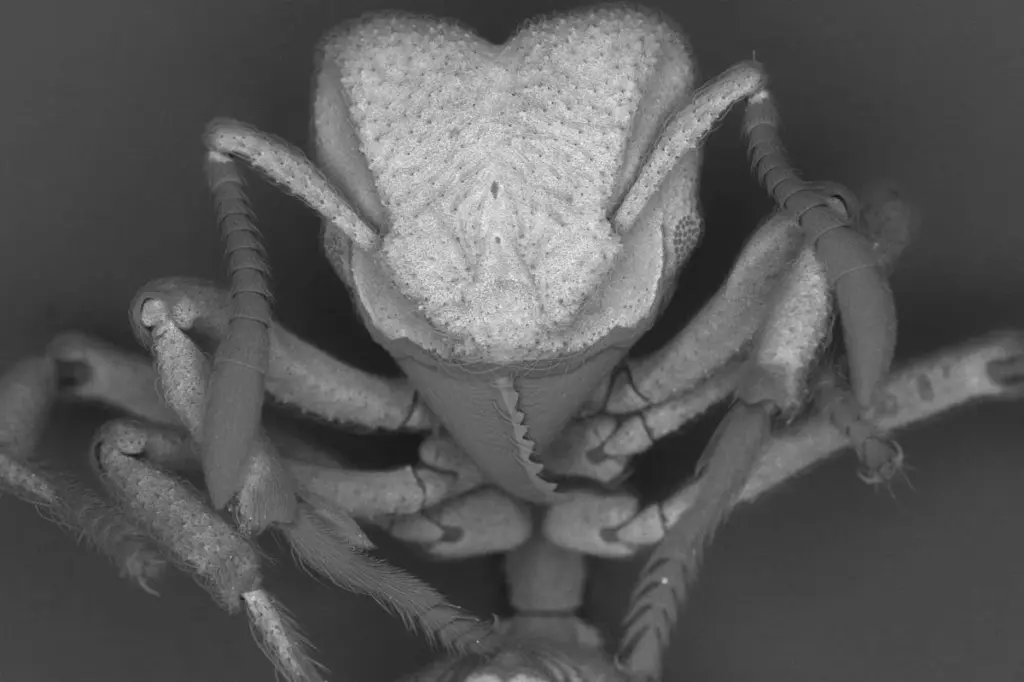
A specific species of ant has demonstrated a remarkable capacity to convert airborne carbon dioxide into dolomite, a mineral incorporated into its exoskeleton. This biological process offers a unique avenue for understanding how humans might effectively sequester greenhouse gases to combat the escalating climate crisis.
These specialized ants are known for cultivating fungus within their colonies, relying on vegetation gathered from their surroundings as sustenance for these fungi. The fungi, in turn, constitute the ants’ primary food source. The close proximity of a large ant population and their fungal crops generates environments with elevated concentrations of carbon dioxide within the nests.
In 2020, research led by Cameron Currie at the University of Wisconsin-Madison revealed that ants of the species Acromyrmex echinatior integrate a carbonate biomineral into their protective outer shell. This capability stems from a cooperative relationship with Pseudonocardia bacteria. These bacteria are instrumental in transforming CO2 into solid rock through specific chemical pathways that remain incompletely understood.
More recently, the same research team has identified another fungus-farming ant, Sericomyrmex amabilis, native to Central and South America. This species exhibits the ability to perform this CO2 mineralization without the assistance of symbiotic bacteria, marking it as the first known animal to have independently evolved such a trait.
Significantly, the mineral produced by these ants is dolomite. This compound is notoriously difficult for human chemists to synthesize in laboratory settings. Natural dolomite formations, such as those found in the Italian Dolomite mountains, typically require vast geological timescales and intricate natural processes for the precise alignment of calcium and magnesium atoms. The ants, however, achieve this feat rapidly and with apparent ease, even in the absence of high temperatures, as noted by Hongjie Li, a member of the research team from Zhejiang University in China.
Dolomite is composed of calcium, magnesium, and carbonate elements. The formation of dolomite in a lab is challenging because magnesium atoms have a strong affinity for surrounding water molecules. This attachment hinders their integration into the calcium carbonate structure, thereby slowing down crystal formation, according to Currie. To overcome these difficulties, he explained, scientists commonly employ high temperatures and pressures. The subsequent phase of the research will focus on unraveling the precise mechanisms by which the ants accomplish this complex task.
For fungus-farming ants, the conversion of CO2 into stone addresses at least two critical issues: it strengthens the ants’ exoskeletons, providing enhanced protection, and it prevents the potentially harmful buildup of toxic CO2 levels within the confines of their nests.
“We have identified a naturally occurring system that has, over millions of years, adapted to reduce the harmful accumulation of atmospheric CO2 within an ant colony,” Currie stated. This discovery highlights an evolved solution to environmental challenges encountered within their habitat.
In the ongoing global effort to mitigate climate change, researchers are actively investigating methods to convert atmospheric CO2 into carbonate minerals, effectively transforming gaseous carbon into solid rock. “These ants represent the first animal species demonstrated to engage in such a process, presenting promising potential as a model for human endeavors,” Currie commented. Their biological strategy offers a blueprint for synthetic applications.
Cody Freas, a researcher at the University of Toulouse in France who was not involved in the current study, characterized the ants’ ability to convert CO2 into dolomite as a “remarkable adaptation.” He elaborated, “Individual ants effectively become living carbon scrubbers, transforming airborne carbon dioxide into a mineral that serves as their protective armor.” This dual function, he noted, allows the ants to regulate their nest environment while simultaneously constructing a bioengineered physical defense system.
Reference:
bioRxiv DOI: 10.64898/2026.01.21.700952