
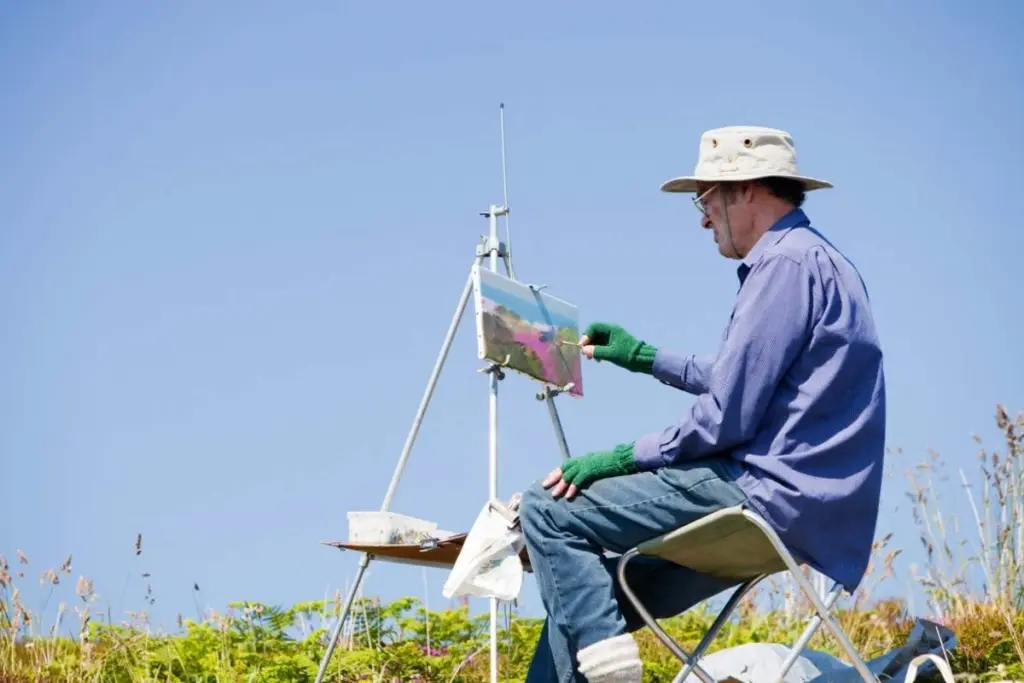
Russell hesitated at the doorway, a question forming in his mind about whether to proceed. The environment felt unfamiliar, not quite his usual setting. His presence there was solely due to a doctor’s recommendation.
His health crisis began with a stroke. While walking home from his job, a blockage occurred in the blood supply to the base of his brain. The world suddenly tilted, disorienting him completely. Following this event, he faced the arduous task of relearning fundamental abilities like walking and speaking. Months were spent confined to bed, staring at the ceiling and grappling with anxieties about his future. The onset of severe back pain made even sitting upright a challenge. His career was lost, his relationship with his partner dissolved, and he could no longer engage with his young son. Gaining weight became another concern, and sleep offered little relief. When he did manage to sleep, his breathing would repeatedly cease, necessitating the use of a mask at night to supply air and maintain open airways. Despite a regimen of numerous medications prescribed by his doctors, new health issues continuously emerged. He felt an overwhelming descent into depression.
The initial prescription from his doctor, for eight weeks of art classes, struck Russell as potentially a jest. He questioned how artistic pursuits could possibly offer aid. However, with little left to lose, he decided to enter.
His first class proved less intimidating than he had anticipated. He chose not to paint, but simply observed the other participants. Curiously, the mere presence of paints, vibrant colors, and the atmosphere of tranquility had a discernible effect. On his journey home, he noticed his breathing had become slower and deeper, and he felt a degree of calm that was absent on his arrival. The subsequent week felt less intimidating. He began to recognize some faces in the class. Again, he refrained from creating any art. That evening, unable to sleep, he quietly ventured outside and sat in the garden shed, sketching small caricatures of the individuals from the art group. During the third class, he finally picked up a paintbrush. Russell remains uncertain how events unfolded so rapidly thereafter. Yet, a few weeks later, he found himself addressing the art group, proposing an idea he had conceived: to create portraits of everyone present.
My initial encounter with Russell occurred at 6 a.m. in the basement cafeteria of a Premier Inn in Manchester. We were both scheduled to appear on the BBC Breakfast television program to discuss a new proposal for implementing “arts on prescription” within the National Health Service. Over cups of instant coffee, I attempted to fully comprehend the magnitude of the experience he was recounting.
At his next scheduled check-up, Russell explained, his doctor expressed satisfaction with his progress. His mood had improved, and his pain levels had decreased. Even his blood pressure showed positive changes. The art class provided a welcome structure to his week, and he found himself anticipating these sessions. During the subsequent review, discussions began regarding a reduction in his medications, as the doctor felt many were no longer necessary. His sleep quality also improved.
As his portrait work neared completion, Russell approached the Museum of Gloucester with a request to exhibit his paintings in their café. He titled the exhibition “We’re All Mad Here.” His classmates and his doctor were among the attendees. Shortly after, he received his first commission – a nurse who had visited the exhibition wished for him to paint her children. This marked the beginning of a new chapter.
Over the subsequent decade, Russell Haines has showcased his artwork across the United Kingdom, with exhibitions held at venues such as Gloucester Cathedral and the Tower of London. His artworks command prices in the thousands of pounds, provided one can acquire them quickly. He has also initiated his own classes within the community, and his doctor has been referring an increasing number of patients to him. He no longer takes any medication. In fact, he has not required a doctor’s visit for over a year.
I posed the question: “How significant a difference do you believe those art classes truly made for you? What was the scale of the impact?”
His response was immediate and unequivocal.
“They saved my life.”
This excerpt is from Daisy Fancourt’s book, *Art Cure: The Science of How the Arts Transform Our Health* (Cornerstone Press), the selected reading for the New Scientist Book Club in March. You can sign up to participate here.