
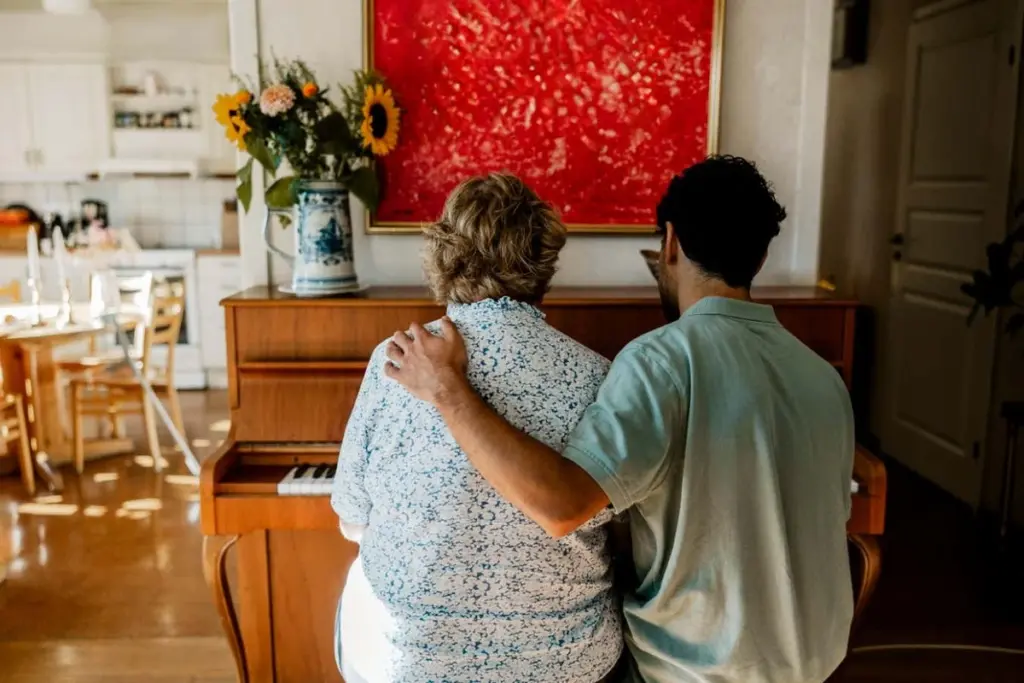
A single comment can pivot a career. For me, that moment arrived as I was starting out, freshly graduated and working within the National Health Service. My role involved managing the performing arts program at Chelsea and Westminster Hospital in London. Following a piano performance on the ward dedicated to dementia patients, a patient’s relative approached me. “What a lovely entertainment program you run,” she remarked kindly.
Her observation was well-intentioned, acknowledging the session’s pleasant nature. However, I already understood that the hospital’s arts program extended far beyond mere entertainment. During that very sing-along, I witnessed a patient, who struggled to recall her visiting relatives, flawlessly sing the lyrics to “The White Cliffs of Dover” and then recall childhood memories. Earlier that day, I had seen a child with burns in the accident and emergency department who required no morphine once a theatre group began their performance. A premature baby, previously inconsolable and refusing food, calmed significantly and began feeding only when her mother started singing. Another instance involved a stroke patient whose gait noticeably improved in speed and symmetry upon wearing headphones.
While the arts program undoubtedly provided enjoyment and a welcome alternative to television for many individuals, I was observing firsthand, on a daily basis, the tangible and significant positive impacts the arts had on patients’ health. This daily immersion spurred a deep desire to comprehend the mechanisms behind these effects—what was occurring within our brains and bodies? Consequently, I transitioned from the hospital to pursue these answers.
For over a decade since, my work has focused on psychobiology and epidemiology, investigating the influence of the arts on health. The findings emerging from research studies, both my own and those conducted globally, are increasingly compelling. Engaging with art—whether reading a book, listening to music, dancing, or participating in crafts—activates biological processes throughout the body, supporting various aspects of our well-being. These activities stimulate reward networks in the brain, elevating levels of hormones like dopamine, which are crucial for mood regulation and pleasure. They also help modulate the autonomic nervous system, leading to gradual reductions in heart rate and blood pressure. Furthermore, we observe decreases in stress hormones within the endocrine system and reduced inflammation in the immune system. Even gene expression can be altered, downregulating genes associated with stress response and upregulating those involved in beneficial cognitive processes such as neurogenesis.
Sustained engagement with the arts over months and years—through active participation or attendance at cultural events—can yield widespread, long-term physiological changes. Studies indicate an increase in grey matter volume in brain regions responsible for memory, auditory processing, and motor learning. Distinct protein patterns associated with enhanced cognitive function, reduced depression, and lower infection risk are also produced. Interestingly, individuals who regularly engage with the arts appear to age biologically slower. Emerging research utilizing “brain clocks,” epigenetic clocks, and physiological aging markers, which combine various biological data to assess aging rates against chronological age, consistently find that arts engagement predicts a younger biological age.
These cumulative changes contribute substantially to overall health. Individuals with regular arts engagement report higher levels of happiness, life satisfaction, and a greater sense of meaning and purpose. They also exhibit a reduced risk of developing depression, chronic pain, frailty, and even dementia. It is crucial to note that these associations are not attributable to wealth, demographic factors, prior medical history, or other lifestyle choices.
These insights are derived from a robust body of research, including randomized controlled trials, laboratory experiments, and large-scale epidemiological analyses that examine population-level impacts. Parallel to this, an extensive amount of research focuses on testing specific arts interventions within healthcare settings for diverse patient groups. Examples include singing classes for individuals recovering speech after a stroke, magic camps designed to improve hand function in children with cerebral palsy, and dance classes for those with Parkinson’s disease. Increasingly, comparative studies indicate that the arts may prove more effective than certain established treatments. For instance, in managing pre-operative anxiety, music appears to offer advantages over anti-anxiety medications like benzodiazepines, with the added benefit of fewer side effects.
It is vital to acknowledge the limitations of arts engagement. It is not a universal remedy, and instances of harm exist, either through deliberate misuse or from poorly conceived projects that neglect safety considerations. My book, “Art Cure,” addresses and debunks numerous unhelpful myths, such as the notion that arts enhance infant IQ or eradicate cancer cells. Many areas within this field are still in development, with promising initial studies awaiting larger-scale trials. Nevertheless, the current evidence base merits broader discussion and recognition.
Were a pharmaceutical drug to offer a comparable range of health benefits as the arts, public awareness and advocacy would undoubtedly be immense. We would see widespread promotion, urgent efforts to access it, premium pricing, daily adherence, and significant investment in further research. Therefore, it is a particular pleasure that the recommendations I outline in “Art Cure” center not on a pill or injection, but on enjoyable activities such as attending a concert, joining a dance class, or engaging with a book—perhaps even my own.